
Most Moms Report Slower Recovery After a Second Birth
Jul 19, 2026By Dr. Akanksha Priya
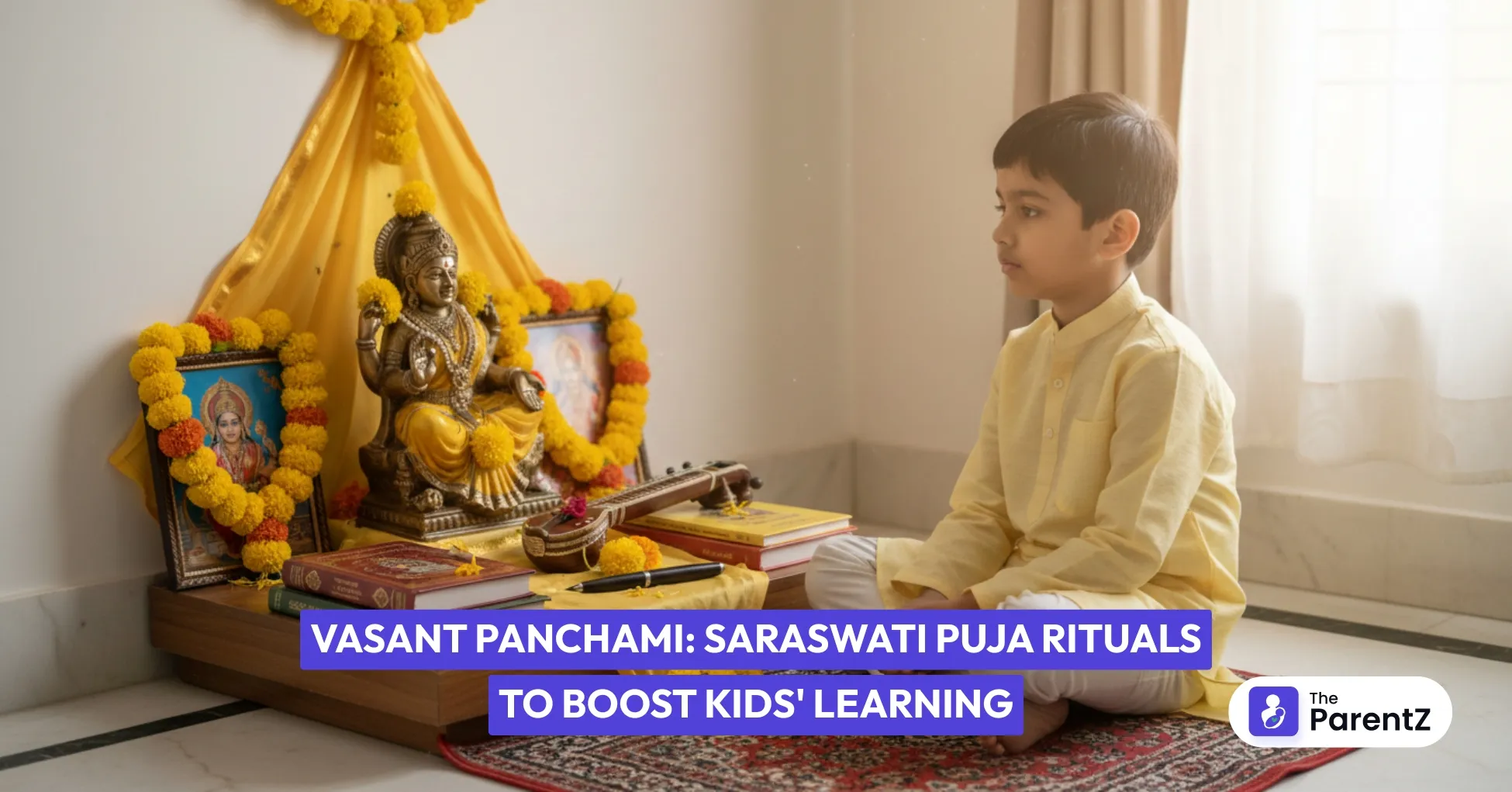
We spend thousands on tuitions, buy the latest study apps, and fill our homes with workbooks, but we often forget about the beautiful traditions our grandmothers followed to inspire learning in children. This Vasant Panchami, let's bring back some of that wisdom, without making your already busy life more complicated.
Vasant Panchami isn't just another festival where we dress kids in yellow and call it a day. There's something deeper here that connects beautifully with learning and education.
This festival, celebrated on the fifth day of Magha month, honors Goddess Saraswati, the deity of knowledge, wisdom, music, and arts. Think of her as the original patron of everything related to learning. When mustard fields turn golden across North India, and spring begins to whisper its arrival, Vasant Panchami reminds us that knowledge, like nature, needs the right environment to bloom.
The timing itself is significant. It marks a shift from winter's dormancy to spring's awakening, much like how we hope our children's minds will awaken to new ideas and understanding.
Learning isn't just about cramming facts. It's about reverence, discipline, and creating the right mindset. When children see books and study materials placed respectfully before Goddess Saraswati's image, something shifts in their perception. Education becomes sacred, not just a chore.
Goddess Saraswati is depicted in white, symbolizing the purity of thought. She holds a veena representing harmony in learning, sits on a lotus signifying wisdom rising above muddy waters, and has a swan beside her, the bird that can separate milk from water, just as we hope our children will distinguish truth from falsehood.
These aren't just pretty symbols. They're life lessons woven into imagery that children can understand and internalize.
You don't need expensive decorations, and you certainly don't need to stress about getting everything "perfect." Here's what you can actually do:
Wake up early and encourage your child to bathe. If you want to follow tradition, some families choose to add a pinch of turmeric to the water, as it's auspicious. Dress in yellow or white clothes. Already have a yellow t-shirt? Perfect. Don't have one? White works beautifully too.
Find a clean corner in your home. Spread a clean cloth. Place a picture or small idol of Goddess Saraswati that you might already have, or simply print a picture. Arrange fresh flowers around it, like marigolds, white flowers, or whatever's available in your garden or local vendor's stall.
Ask your children to gather their school books, notebooks, pencils, crayons, musical instruments (if they're learning any), or even their art supplies. Place these items near the Goddess's image. This simple act makes children realize their study materials deserve respect.
You don't need to know complicated mantras. A simple prayer works:
"Om Aim Saraswatyai Namah"
“ॐ ऐं सरस्वत्यै नमः”
Say it with your children three times. It means "Salutations to Saraswati". That's it. Simplicity is powerful.
Offer some fruits, sweets (anything yellow colored like boondi laddoo or even just bananas), and yellow flowers. Light a small diya. The whole setup shouldn't take more than 15-20 minutes.
Hold flowers in your joined palms along with your children. Close your eyes, think of Goddess Saraswati, and offer the flowers while saying the mantra again. Let your kids do this, as they'll remember this participation more than any lecture about studying hard.
If your child is between 2-5 years old, Vasant Panchami is considered an auspicious day for Vidyarambham or Aksharabhyasam, the initiation into learning.
Don't overthink this.
Take a plate of uncooked rice and spread it evenly. Guide your child's finger and help them write their first letter, it could be 'OM', their name's first letter, or the alphabet 'A'. The rice plate method is mess-free and memorable.
If you have a slate or even a piece of paper, that works too. The idea is to mark this moment, "Today, you began your journey with learning." Take a photo. Years later, both you and your child will cherish it.
Some parents prefer doing this in a Saraswati temple if there's one nearby. It's lovely if you can, but absolutely not necessary. Your home is equally sacred when you perform rituals with devotion.
Vasant Panchami’s rituals themselves take maybe 30 minutes. But the conversations around them, the stories we share about why we celebrate, the respect for knowledge that subtly gets transmitted, are what stay.
So, this year, tell your children about Goddess Saraswati's story. Explain how spring represents new beginnings, how nature teaches us about growth and patience. Ask them what they'd like to learn this year. Make it interactive, not preachy.
We live in a digital age. Books are becoming screens, notebooks are becoming apps. But the essence of Vasant Panchami, respecting knowledge, creating the right mindset for learning, and honoring wisdom, remains timeless.
You can place tablets and laptops near Saraswati's image too. It's not about rejecting modernity; it's about bringing intentionality and reverence to however we learn.
Some schools organize Saraswati Puja, which is wonderful. But even if they don't, a simple home celebration teaches children that education isn't just what happens in school; it's a lifelong journey that begins with respect and curiosity.
The next day, after the puja is complete, sit with your child and let them open their books again. Maybe start something new, like a new chapter, a new hobby, a new language. The Goddess's blessings are sought not for magical results, but for creating the clarity and dedication needed for learning.
And if your child asks for Saraswati's blessings before an exam throughout the year? Encourage it. These small moments of seeking divine grace build patience, reduce anxiety, and create a humble approach to knowledge.
Vasant Panchami doesn't need grand celebrations to be effective. It needs sincerity. A simple morning puja where children see their parents honoring knowledge, where books are treated with respect, where the pursuit of wisdom is celebrated, is enough.
This year, forget the pressure of perfect rituals. Focus on creating one meaningful memory with your child around learning. That's the real blessing of Vasant Panchami.
After all, the Goddess of Knowledge doesn't measure devotion by the price of flowers or the length of mantras. She measures it by the genuine desire to learn, grow, and share that wisdom with the world.
TheParentZ offers expert parenting tips & advice, along with tools for for tracking baby and child growth and development. Know more about Baby Growth and Development Tracker App.It serves as an online community for parents, providing valuable information on baby names, health, nutrition, activities, product reviews, childcare, child development and more
Disclaimer:
The views, thoughts, and opinions expressed in this article/blog are solely those of the author and do not necessarily reflect the views of The ParentZ. Any omissions, errors, or inaccuracies are the responsibility of the author. The ParentZ assumes no liability or responsibility for any content presented. Always consult a qualified professional for specific advice related to parenting, health, or child development.
Conversations (Comments) are opinions of our readers and are subject to our Community Guidelines.



Be the first one to comment on this story.