
Most Moms Report Slower Recovery After a Second Birth
Jul 19, 2026By Dr. Akanksha Priya
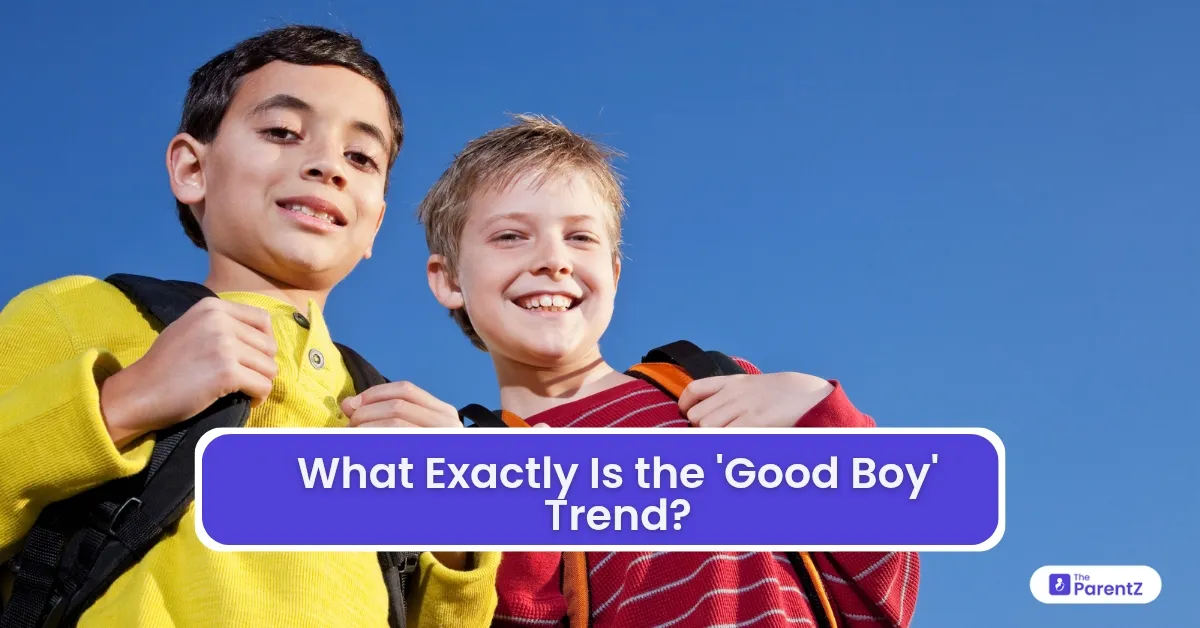
If your teen has been scrolling through TikTok lately or casually dropped the phrase “good boy era” in a conversation, you might be wondering—what in the world is the Good Boy trend? Is it about pets? Is it a joke? Is it something you should be worried about?
Because this trend, while it might sound harmless or even cute, opens up an important conversation about masculinity, emotional vulnerability, and how young people are reshaping gender roles—in both powerful and sometimes problematic ways.
Read this article to explore about the viral good boy trend.
The Good Boy trend is exactly what it sounds like—on the surface. It’s about boys (often teens or young men) who present themselves as sweet, sensitive, loyal, and non-threatening. Think: “I’ll walk you home,” “I love cuddles,” “I'm not like the others”—all dressed in soft lighting, acoustic music, and captions like “Just a good boy looking for love.”
But beyond that, you’ll see it’s part of a larger social commentary. It’s not just about being nice. It’s about how society views nice boys, soft boys, and how these identities are sometimes performed for validation—especially on social media.
The trend began as a subtle pushback against toxic masculinity. For years, social media was filled with "alpha male" content—hyper-masculine, emotionally unavailable, and proud of it. The Good Boy era swung the pendulum in the opposite direction.
Young men began showcasing their emotional side—posting about mental health, treating partners with care, and embracing vulnerability. On the surface, it looked like progress. And in many ways, it is.
Some young men have started using the Good Boy label as a brand. They know that kindness and sensitivity are now "attractive," and sometimes, these traits are exaggerated or faked for social points.
Just like the "bad boy" persona was once glamorized, the Good Boy can now be used to manipulate perception. Some videos even parody this, mocking boys who claim to be good but act selfishly behind the scenes.
Not every “good boy” online is actually walking the walk. And that matters—especially if your teen is dating, exploring identity, or simply consuming this content daily.
This trend taps into something bigger: the need for connection, approval, and identity. Today’s teens are not just watching trends—they're building their sense of self through them. The Good Boy persona can be empowering for boys who don't identify with traditional masculinity. But it can also be confusing, especially when they feel they need to perform goodness rather than just be good.
For girls and other kids watching these videos, it may set up unrealistic expectations of what emotional vulnerability looks like—or worse, open them up to emotional manipulation wrapped in a sweet guy package.
The Good Boy trend shows us that teens are craving kindness and softness—in themselves, in others, and in the world. That’s something worth celebrating. But like all social media trends, it comes with nuance, pressures, and questions.

TheParentZ offers expert parenting tips & advice, along with tools for for tracking baby and child growth and development. Know more about Baby Growth and Development Tracker App.It serves as an online community for parents, providing valuable information on baby names, health, nutrition, activities, product reviews, childcare, child development and more
Disclaimer:
The views, thoughts, and opinions expressed in this article/blog are solely those of the author and do not necessarily reflect the views of The ParentZ. Any omissions, errors, or inaccuracies are the responsibility of the author. The ParentZ assumes no liability or responsibility for any content presented. Always consult a qualified professional for specific advice related to parenting, health, or child development.
Conversations (Comments) are opinions of our readers and are subject to our Community Guidelines.


Be the first one to comment on this story.