
Most Moms Report Slower Recovery After a Second Birth
Jul 19, 2026By Dr. Akanksha Priya
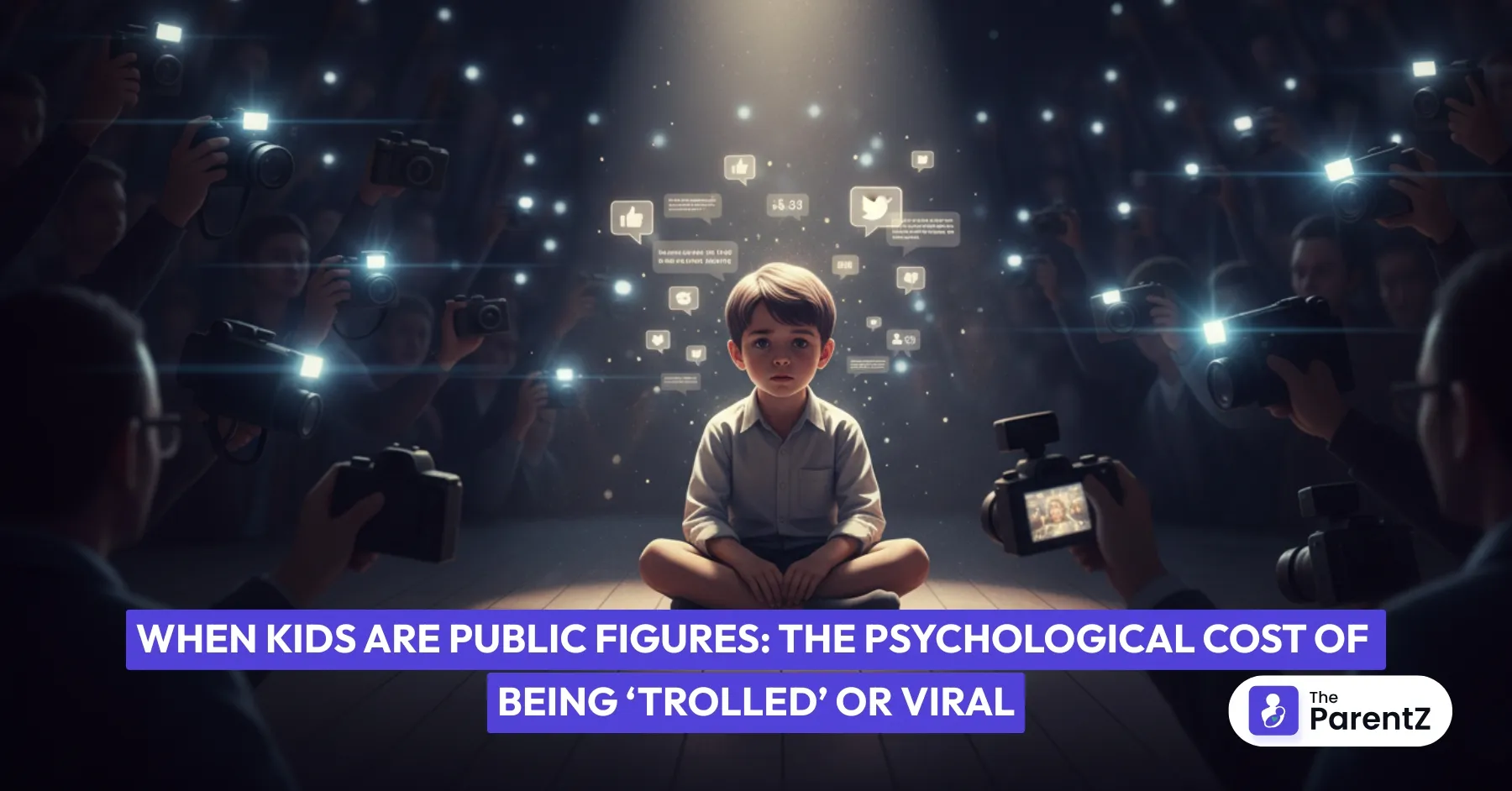
Let's talk about something that's happening right now, every single day, to kids all over the internet. And it's not pretty.
Remember Ishit Bhatt? The 10-year-old who appeared on KBC and said "Mujhe rules pata hain" to Amitabh Bachchan? Within hours, he wasn't just a kid on a game show anymore. He became "that rude kid." "That overconfident brat." "The example of bad parenting."
Think about that for a second. He's ten. He's in fifth grade. And suddenly, thousands of strangers are picking apart everything about him, including his tone, his words, his confidence, his upbringing, and his parents.
Here's what we forget: He's still a kid. He probably got nervous. Maybe he was trying to seem brave on national TV. But the internet doesn't care about context. It cares about the clip. The moment. The meme.
When a kid goes viral for the "wrong" reasons, the damage starts fast.
When thousands of people tell a kid they're a certain way, the kid starts to believe it.
If everyone calls you arrogant, you might become withdrawn and scared to show confidence ever again. If everyone says you're "cringe," you stop trying things. You stop being creative.
The internet literally shapes these kids' personalities, not through guidance, but through mass mockery.
Let us paint you a picture of what life becomes for a trolled kid:
This is his new normal. And he's ten.
This doesn't just affect the kid who went viral. It affects every kid watching.
Being trolled can mess up a kid in ways we're only beginning to understand. The psychological costs are real: anxiety that lasts years, trust issues, depression, identity shaped by strangers' cruelty, and a permanent record of their worst moment.
We're at a point where we need to decide what kind of internet we want. One where a 10-year-old being impatient on TV becomes a villain? Or one where kids get protection, grace, and space to be imperfect?
Right now, we're choosing the first option. And the kids are paying the price.
Every time you see a clip of a kid going viral for the "wrong" reasons, remember: that's not a meme. That's a child whose life just got incredibly hard. Every share, every comment, every laugh makes it harder.
Ishit is someone's son. Someone's classmate. Someone's friend. A person with dreams and fears, just like everyone who trolled him.
We can do better. We have to.
TheParentZ offers expert parenting tips & advice, along with tools for for tracking baby and child growth and development. Know more about Baby Growth and Development Tracker App.It serves as an online community for parents, providing valuable information on baby names, health, nutrition, activities, product reviews, childcare, child development and more
Disclaimer:
The views, thoughts, and opinions expressed in this article/blog are solely those of the author and do not necessarily reflect the views of The ParentZ. Any omissions, errors, or inaccuracies are the responsibility of the author. The ParentZ assumes no liability or responsibility for any content presented. Always consult a qualified professional for specific advice related to parenting, health, or child development.
Conversations (Comments) are opinions of our readers and are subject to our Community Guidelines.



Be the first one to comment on this story.