
Most Moms Report Slower Recovery After a Second Birth
Jul 19, 2026By Dr. Akanksha Priya
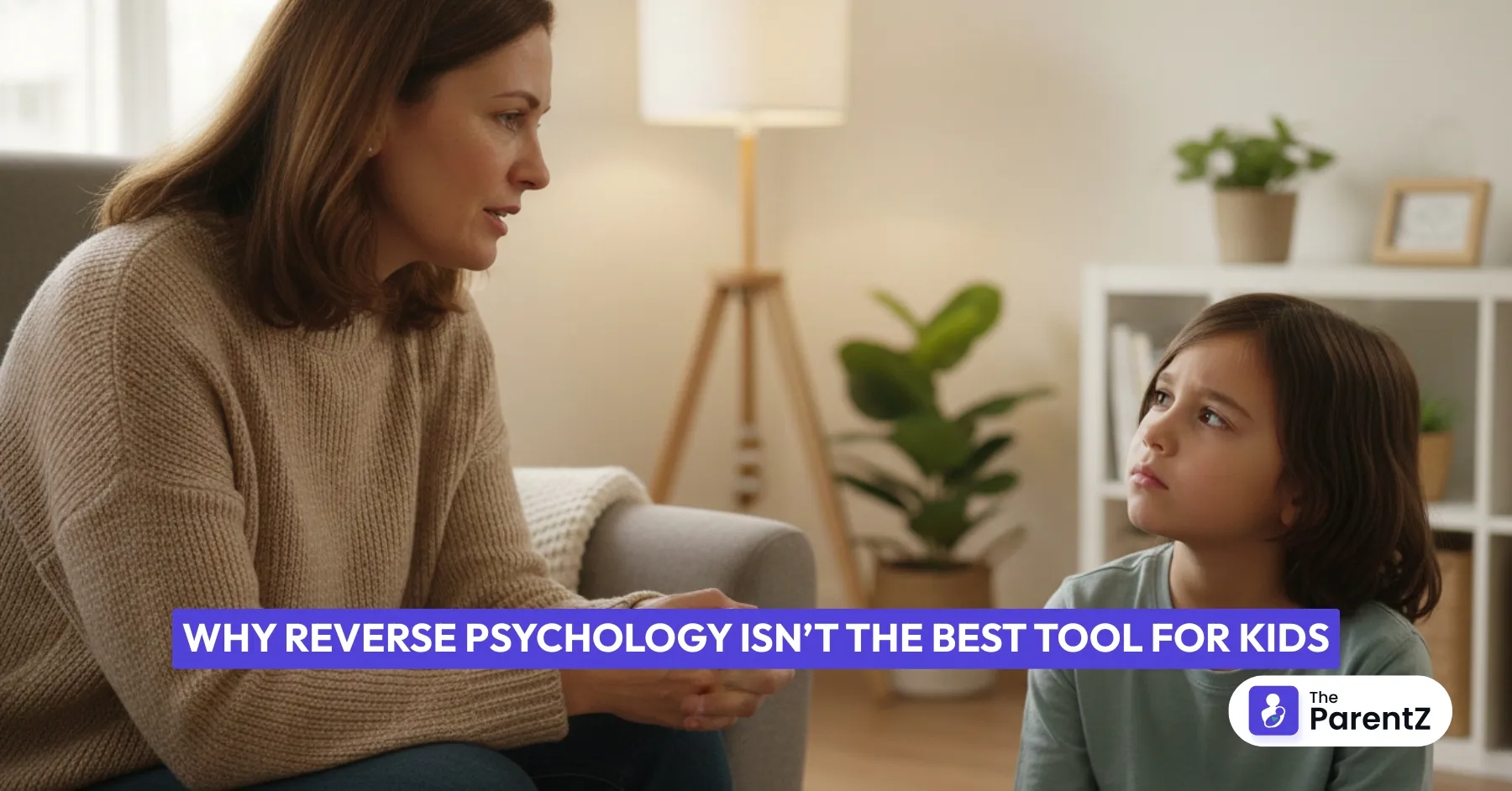
You know that moment when your child refuses to eat vegetables, and someone suggests, "Just tell them they can't have it!"? Many of us have tried reverse psychology; telling our child the opposite of what we want, hoping they'll rebel. Like saying "Don't eat that palak!" when you want them to, or "You can't clean your room" when you need them to tidy up.
Sounds clever? Here's why it's not the best approach.
When you're exhausted and have asked your child something ten times, reverse psychology feels like a lifesaver.
Young children, especially toddlers, naturally want independence. That's why "no" becomes their favorite word. Parents think that if the kids are going to do the opposite anyway, why not use that?
Sometimes it works initially, and your child eats vegetables or cleans their room. But at what cost?
Children's developing brains are trying to understand the world, learn to trust people, and figure out communication.
When we use reverse psychology, we send mixed messages. Imagine being five years old, and your parent says, "Don't eat those vegetables!" but looks pleased when you do. What do you believe? The words or the face?
This confusion doesn't disappear. When our words don't match intentions, we teach children that communication is a puzzle to decode rather than a straightforward exchange.
Reverse psychology is manipulation, even with good intentions. Children learn that people they trust most don't always mean what they say. Research shows trust is the foundation of healthy emotional growth.
When children realize they're being manipulated:
Reverse psychology has a short lifespan. As children grow and their thinking becomes sophisticated, they see through it.
Imagine your eight-year-old son looking at you and saying, “Mummy, I know what you're doing. Just say that you want me to study.” You might feel embarrassed.
The older children get, the more they recognize manipulation. When they do, they often feel hurt.
Saying "You probably can't do this" might make a child prove you wrong momentarily, but the words stay in their mind and chip away at confidence. Children believe what we tell them, even when we're pretending.
Clear, honest, direct communication is your best option. We understand that it requires more patience. But research shows positive parenting methods work better long-term.
Instead of: "You can't have these vegetables!" Try: "We're having palak today. You need three bites. Which part first?"
Instead of: "I bet you can't clean your room!" Try: "Let's clean together. You put toys away, I'll arrange books."
Instead of: "Fine, don't bathe. Go to bed." Try: "I know you don't want to bathe. But we bathe every night. Would you like to do it now or in five minutes?"
You're being honest while giving respect and some control.
On difficult days:
You're building a lifelong relationship. Trust built now becomes the foundation for the teenager who seeks your advice. Is getting them to eat vegetables worth risking that trust?
Don't panic. You can change starting today. Children are resilient. By switching to honest communication, you can rebuild and strengthen your relationship.
Reverse psychology might seem like a shortcut, but parenting takes patience and genuine communication. Your child needs to trust your words. Being clear takes effort, but you get something more valuable: a child who trusts and respects you.
You're doing great, as the fact that you're reading this shows you care. Be honest. Be patient. Your child doesn't need perfect parents, just real ones who help them grow into confident, trusting, happy individuals. That's the best tool you can give them.
TheParentZ offers expert parenting tips & advice, along with tools for for tracking baby and child growth and development. Know more about Baby Growth and Development Tracker App.It serves as an online community for parents, providing valuable information on baby names, health, nutrition, activities, product reviews, childcare, child development and more
Disclaimer:
The views, thoughts, and opinions expressed in this article/blog are solely those of the author and do not necessarily reflect the views of The ParentZ. Any omissions, errors, or inaccuracies are the responsibility of the author. The ParentZ assumes no liability or responsibility for any content presented. Always consult a qualified professional for specific advice related to parenting, health, or child development.
Conversations (Comments) are opinions of our readers and are subject to our Community Guidelines.



Be the first one to comment on this story.