
Most Moms Report Slower Recovery After a Second Birth
Jul 19, 2026By Dr. Akanksha Priya
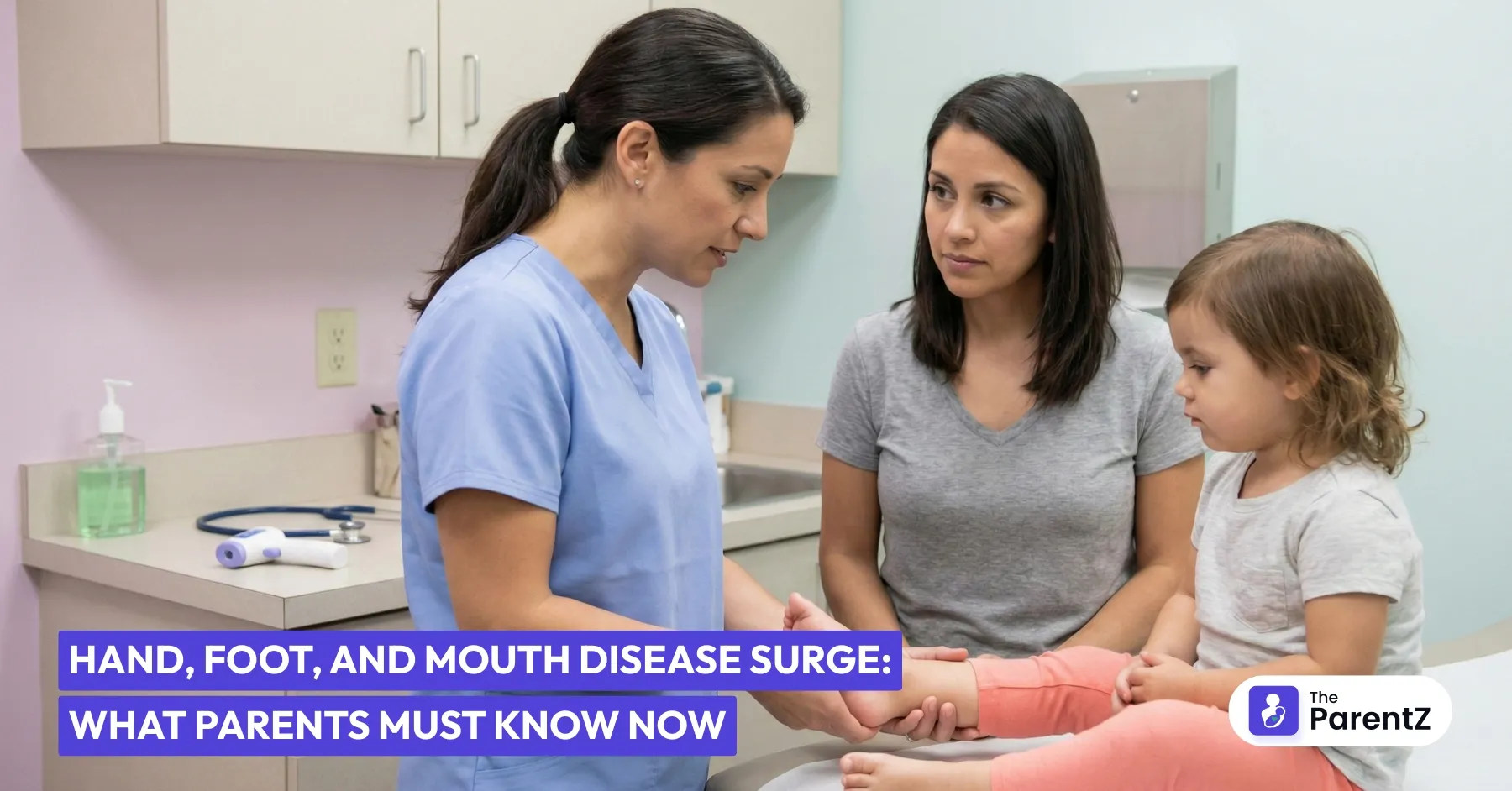
If you've gotten an alert from your child's daycare or school about hand, foot, and mouth disease lately, you're not alone. Cases are spiking across the US and other countries right now, leaving many parents wondering what they're up against.
Virginia has reported 198 outbreaks of hand, foot, and mouth disease this year, compared to the typical 45 to 65 outbreaks seen annually, according to the Virginia Department of Health. That's a huge jump. National data from Epic Research shows that medically attended HFMD has risen threefold compared with last year.
This is not confined to one state; several U.S. states (for example, Alabama and West Virginia) have reported increased HFMD activity and daycare alerts, and surveillance and news reporting show elevated activity in other countries and regions in 2025.
The experts point to a few factors. Enteroviruses spread more easily in warm temperatures and high humidity, says Dawn Saady from the Virginia Department of Health. Add in close-contact settings like schools, daycares, and summer camps, and you've got the perfect storm for spread.
There's also something called an "immunity gap" at play. After a relatively mild 2024 season, fewer kids were exposed to the virus, meaning more children are vulnerable now.
It is a viral illness caused by enteroviruses, most commonly something called coxsackievirus. It's not the same as the foot-and-mouth disease that affects farm animals (that one doesn't infect humans at all).
The name comes from where the symptoms show up: small, blister-like sores in the mouth and a rash on the hands and feet. Sometimes the rash appears on the buttocks or legs too.
HFMD is highly contagious but usually a mild illness, and most children recover very well, according to Dr. E. Caroline McGowan, a board-certified pediatrician with UCR Health.
Your child won't suddenly wake up covered in spots. The illness typically unfolds over a few days:
Some kids get the mouth sores without the rash. Others get the rash without the sores. Every case is a little different.
In younger children, increased drooling can be an early sign because those mouth lesions are painful and stimulate saliva.
Yes, the virus can be shed in the stool for several weeks after symptoms begin, which means you might catch it from your child even when they seem to be getting better.
Adults usually have milder symptoms, maybe just a sore throat or a mild rash. But you can still spread it to others, including younger siblings or other children.
There's no medication that cures HFMD because it's viral (antibiotics won't help). But here's what actually works to get your family through it:
1. For the pain and fever: Acetaminophen (Tylenol) or ibuprofen (Motrin) works well. Never give aspirin to children.
2. For those brutal mouth sores: This is where parents need to get creative. Cold foods and drinks are your friends. Think:
Skip anything hot, acidic (like orange juice), or salty; these will make the pain worse.
3. The hydration battle: This is the most important thing. Mouth sores make it painful to swallow, so children may not want to drink much. Watch for signs of dehydration: fewer wet diapers than usual, a dry or sticky mouth, sunken eyes, or unusual sleepiness.
If your child refuses regular drinks, try those popsicles or even ice chips. Some parents have luck with a straw or sippy cup when drinking from a regular cup hurts too much.
Most cases clear up on their own in 7 to 10 days. But call your pediatrician if:
Trust your gut. If something feels off, it's always okay to reach out to your doctor.
The CDC guidance says children can return to school or daycare once they no longer have a fever, feel well enough to participate in normal activities, and can manage mouth sores without excessive drooling.
You don't need to keep them home until every single blister is gone (that could take weeks). But do check with your specific school or daycare, as some have stricter policies, especially during an outbreak.
And yes, you should tell the school or daycare when your child has HFMD. Other parents need to know to watch for symptoms.
It's challenging to fully control transmission among young children who drool, explore the world by putting objects in their mouths, and aren't yet great at hand hygiene. But you can stack the odds in your favor.
Hand washing is king
This is the single most effective thing you can do. Wash hands with soap and water for at least 20 seconds:
Hand sanitizer is okay in a pinch, but soap and water work better for HFMD.
Clean high-touch surfaces
Doorknobs, light switches, toys, tablets, remotes; disinfect these daily when someone's sick. The virus can live on surfaces.
During an outbreak:
The diaper-changing reality
The virus lives in stool, and it can be present there for weeks. Wash your hands thoroughly after every diaper change, even when your child seems better.
K-12 schools and childcare centers have reported the majority of outbreaks. It's not because these places are dirty; it's just that young kids are in close contact, sharing toys, and not always great at hygiene yet.
Ask your daycare about their cleaning protocols. Good centers will:
HFMD cases are definitely up right now, and it's miserable for kids (and parents) to go through. But the vast majority of cases are mild, according to Dr. Dean Blumberg from UC Davis. Most kids bounce back within a week or so with just supportive care at home.
The key is knowing what to watch for, keeping your child comfortable and hydrated, and knowing when to call the doctor. Stock up on popsicles, be prepared for some cranky days, and remember that handwashing really is your best defense.
TheParentZ offers expert parenting tips & advice, along with tools for for tracking baby and child growth and development. Know more about Baby Growth and Development Tracker App.It serves as an online community for parents, providing valuable information on baby names, health, nutrition, activities, product reviews, childcare, child development and more
Disclaimer:
The views, thoughts, and opinions expressed in this article/blog are solely those of the author and do not necessarily reflect the views of The ParentZ. Any omissions, errors, or inaccuracies are the responsibility of the author. The ParentZ assumes no liability or responsibility for any content presented. Always consult a qualified professional for specific advice related to parenting, health, or child development.
Conversations (Comments) are opinions of our readers and are subject to our Community Guidelines.



Be the first one to comment on this story.