
Most Moms Report Slower Recovery After a Second Birth
Jul 19, 2026By Dr. Akanksha Priya
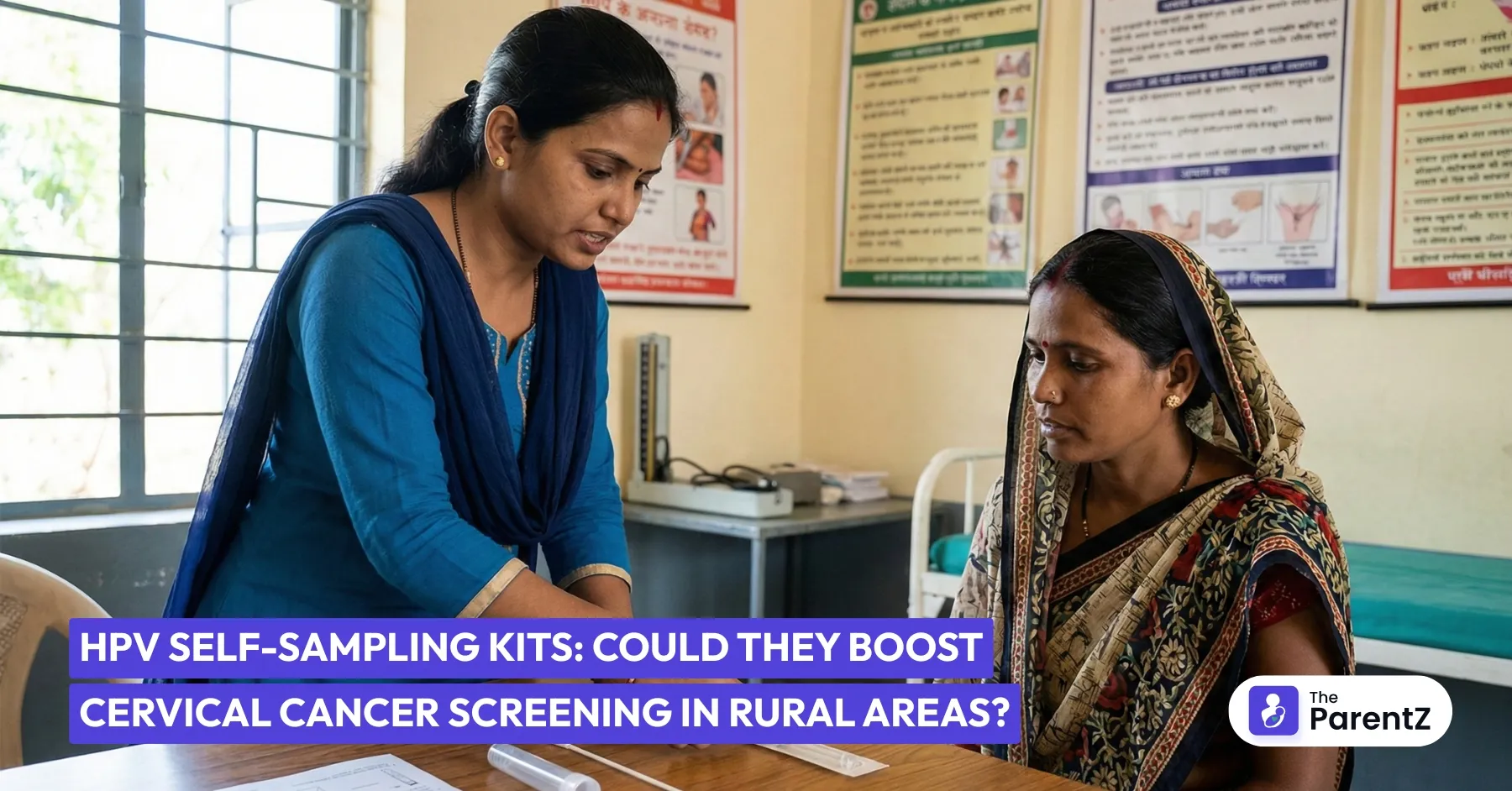
Human Papillomavirus (HPV) has been a growing health concern in India. The reasons behind the onset of cervical cancer are diverse, but in recent years, it has emerged as a significant challenge for the healthcare system. One solution showing strong potential is the HPV self-test India.
This self-sampling approach allows women to collect their own samples using a simple kit and send them for high-risk HPV (hrHPV) testing. The method promises greater accessibility, privacy, and early detection, key factors in reducing cervical cancer mortality. However, awareness and education remain equally crucial. At Parentz, we have taken an active role in informing women about self-sampling methods, available healthcare programs, and the policy landscape that supports effective screening. Let us understand more in detail.
Cervical cancer continues to be one of the leading causes of cancer deaths among Indian women. Reports from the IARC/GLOBOCAN Cervix Data highlight the high number of new cases and fatalities recorded annually in India. The disease remains particularly prevalent among under-screened populations, especially in rural regions.
To address this gap, introducing a cervical screening home kit can help design a self-sampling strategy tailored to Indian communities. Early and reliable screening can significantly reduce both disease incidence and mortality, contributing to faster diagnosis and timely treatment.
HPV self-sampling (also known as self-collection) enables women to collect a vaginal sample at home or in a community setting using a swab or brush. This sample is then tested in a laboratory for high-risk HPV types.
The World Health Organization (WHO) recognizes self-sampling as an evidence-based method to extend screening coverage and help meet the global target of achieving 70% screening coverage by 2030. This endorsement provides a strong foundation for countries like India to revise national screening policies and include self-sampling as a standard option.
Accuracy is critical for any screening method. Studies and meta-analyses have shown that when molecular PCR-based hrHPV assays are used, self-collected samples provide sensitivity comparable to clinician-collected samples for detecting high-grade lesions.
Earlier, some signal-based assays produced less reliable results for self-samples. However, with modern PCR assays, accuracy has become almost equivalent. Thus, success depends on pairing self-collection with validated PCR-based tests and maintaining stringent laboratory quality controls.
Several Indian pilot projects and reviews demonstrate high acceptability of self-sampling among women. Research from multi-center studies has found that women in India view self-sampling as both feasible and comfortable.
Research has also summarized implementation challenges specific to the Indian context, logistics, awareness, follow-up, and laboratory capacity. Despite these hurdles, the studies concluded that self-sampling remains a promising approach, provided these issues are strategically addressed.
Rural Indian women face multiple barriers to screening—distance to clinics, travel costs, household responsibilities, limited female healthcare providers, and social stigma. HPV self-sampling addresses many of these issues directly:
Global pilot programs and Indian projects consistently show that self-sampling increases participation among previously unscreened women, which is crucial for large-scale public health success.
While promising, self-sampling must be thoughtfully implemented. The main challenges and their solutions include:
For India’s rural areas, a phased, evidence-based rollout strategy can ensure success. A few essential steps include:
Modeling studies in low- and middle-income countries (LMICs) indicate that switching to primary HPV self-test in India can be cost-effective compared to traditional screening methods like VIA or Pap smears.
The key advantage lies in reaching previously unscreened women. However, the health benefits depend on ensuring that screen-positive individuals receive prompt follow-up care. Without an effective linkage-to-care mechanism, the value of early detection diminishes.
With the WHO’s endorsement and growing global evidence, many countries have already adopted self-collection in their national screening programs.
For India, policymakers must take the following steps:
Through coordinated action, India could achieve a significant increase in cervical cancer screening coverage within the next few years.
For effective large-scale implementation, program leaders should prioritize the following:
HPV self-sampling kits represent a powerful, evidence-based innovation that can transform India’s approach to cervical cancer prevention. Particularly in rural areas, where barriers of distance, cost, and social stigma persist, self-sampling offers a scalable, private, and cost-effective solution.
By ensuring validated testing, strong laboratory support, community education, and reliable follow-up systems, the HPV self test India can evolve from an experimental concept into a cornerstone of national cervical cancer control. The potential is undeniable, but success depends on attention to accuracy, logistics, and equitable implementation.
Parentz is committed to improving women’s health literacy and promoting preventive care through education and awareness. Join Parentz’s initiative to learn more about HPV self-sampling, screening access, and women’s health programs designed for every community, urban and rural alike.
Visit TheParentz today to discover how small steps in awareness can lead to life-changing results.
TheParentZ offers expert parenting tips & advice, along with tools for for tracking baby and child growth and development. Know more about Baby Growth and Development Tracker App.It serves as an online community for parents, providing valuable information on baby names, health, nutrition, activities, product reviews, childcare, child development and more
Dr. Shreya Karan is a dedicated oral and maxillofacial surgeon who brings over ten years of experience to her practice, combining surgical expertise with genuine care for her patients.
Disclaimer:
The views, thoughts, and opinions expressed in this article/blog are solely those of the author and do not necessarily reflect the views of The ParentZ. Any omissions, errors, or inaccuracies are the responsibility of the author. The ParentZ assumes no liability or responsibility for any content presented. Always consult a qualified professional for specific advice related to parenting, health, or child development.
Conversations (Comments) are opinions of our readers and are subject to our Community Guidelines.



Be the first one to comment on this story.