
Most Moms Report Slower Recovery After a Second Birth
Jul 19, 2026By Dr. Akanksha Priya
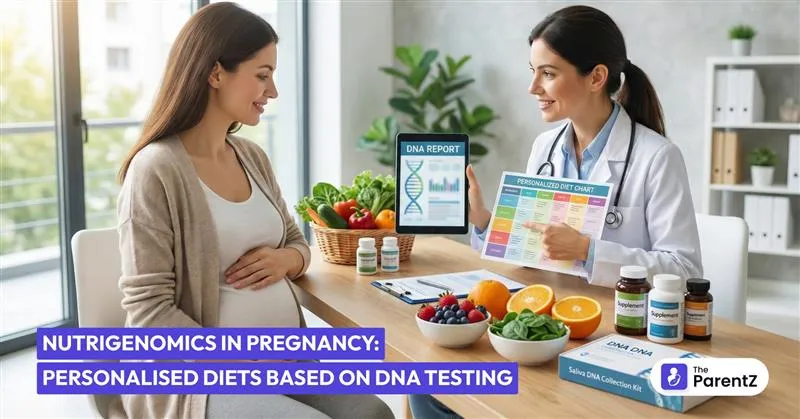
Every mother wants to give her baby the best start in life. You religiously take your prenatal vitamins, avoid certain foods, and follow general pregnancy nutrition guidelines. But what if your body processed the nutrients differently from other mothers? What if your genes held the key to really personalized pregnancy nutrition?
Now, imagine having a nutrition plan designed just for you, curated by your DNA. Nutrigenomics during pregnancy is available in India, offering science-backed, personalized nutrition plans for expecting mothers to optimize health outcomes based on their unique genetic makeup.
Dietary deficiencies remain common in pregnant women in India. A review of diets in pregnant women showed that most pregnant women have low dietary intakes of energy and imbalanced supplies of macronutrients, along with deficient levels of micronutrients in their diet. A low intake of iron, folate, and calcium, among other micronutrients, remains a significant problem.
If you're considering genetic testing, it's best to discuss it with your obstetrician or certified genetic counselor. They can explain whether testing would be applicable in your situation, especially since you might have a history of pregnancy complications, recurrent miscarriages, or a family history of genetic conditions.
Nutrigenomics is the study of how your genes interact with the food you eat; think of it as your body's individual instruction manual. Every pregnancy is unique, and the same goes for how your body takes up, absorbs, and digests nutrients throughout this time. Nutrigenomics pregnancy research in India is now showing how these genetic variations specifically affect pregnant mothers within the Indian population, most especially on vegetarian diets so common in the region.
Your genetic makeup determines how well you process certain vitamins, minerals, and other nutrients that are important for optimal health. For example, some women can efficiently convert folate from food sources into its active form, while others may not due to specific genetic variations. This becomes particularly key during pregnancy when nutritional needs shoot up to support your growing unborn child and his or her development.
Recent studies highlight that maternal nutrition not only impacts pregnancy outcomes but also alters genetic expression in the unborn child, a process termed DNA methylation. Thus, food behavior during pregnancy can have lifetime effects on your unborn child's health regarding susceptibility to diseases such as obesity, diabetes, and heart conditions at later life stages. This calls for an increased need for the development of a genetic diet plan that expectant mothers can follow.
One of the most important genes related to nutrition and pregnancy is MTHFR. This gene controls how your body converts folate (also known as vitamin B9) into its active state, so the developing child can avoid neural tube defects.
Some variants may slightly reduce how efficiently folic acid is converted to its active form. In special situations, a doctor may consider different formulations (such as methylfolate) or adjusted doses; however, routine MTHFR testing and high-dose supplements are not recommended for all pregnant women. Most women do very well with standard prenatal folic acid without any genetic testing.
Researchers have identified gene variants that may influence iron status, vitamin D metabolism, and omega‑3 utilization. In the future, these markers might help fine‑tune prenatal nutrition, but currently most obstetricians rely on blood tests (like hemoglobin, ferritin, and vitamin D levels) and clinical assessment rather than gene tests alone.
As a part of nutrigenomics pregnancy in India, experts analyze your genes to detect any potential nutrient gaps right at the start. That means timely dietary guidance before any nutrient deficiency becomes a cause for concern.
What if your genes held the key to the truly personalized pregnancy diet? That is where genetic diet plans for expectant mothers come into play, using DNA insights to help you come up with nutrition strategies tailor-made for your needs. The customized and gene-based diet plan may in
For instance, a pregnant woman who has a genetic predisposition toward poorer glucose regulation may benefit from a diet low in refined carbohydrates and higher in fibre and complex carbohydrates.
She might emphasize traditional Indian whole grains, such as millet and ragi, combined with legumes, as the staple rather than white rice, and this would still be culturally appropriate to the local food culture. This is an example of a genetic diet plan for expectant mothers.
Your healthcare team may use your genetic test results to personalize a diet based on your genetic predispositions. This may involve supplementing with methylfolate instead of synthetic folic acid, consuming iron from various sources based on your genes' absorption capabilities, or adjusting your intake of omega-3 essential fatty acids according to how your body processes these essential fats.
The beauty lies in how nutrigenomics intertwines with the traditional Indian way of dieting. Whether it be dal and rice, idli and sambar, or roti and sabzi, your genetic diet plan can include culturally familiar foods that meet your unique nutritional needs.
Nutrigenomics is a rapidly growing scientific field; genetic testing is becoming increasingly sophisticated and affordable. Researchers are building comprehensive databases considering a variety of populations, including Indian genetic profiles. As this field of science evolves, personalized nutrition based on genetic testing may become a standard component of prenatal care.
Still, one has to be grounded in reality. The genes are only one piece of the jigsaw, although nutrigenomics provides very useful information. Environmental factors, lifestyle decisions, stress levels, and overall health also play a significant role in pregnancy outcomes. Genetic testing should not replace comprehensive prenatal care and healthy nutrition, but rather supplement them.
With the rise of nutrigenomics pregnancy in India, newer possibilities have opened up in prenatal care, wherein nutrition plans according to a mother's genes and not generic guidelines come into practice. Your DNA may reveal the specific support your baby needs for growing strong and healthy.
As an expecting mother, you deserve nutrition guidance as unique as you are. Discuss nutrigenomic testing with your healthcare provider, whether you are already pregnant or planning a pregnancy. There is valuable information within your genes that could alter the course of your pregnancy and ensure that you and your unborn child receive exactly what they need to enjoy good health..
If personalized nutrition can make your pregnancy experience better, then why not give it a try? Ask your doctor and listen to what your genes have to say.
Ready to track your pregnancy journey? Download The ParentZ app for personalized health tracking, vaccination reminders, and expert parenting advice. Or visit www.theparentz.com for pregnancy tools, nutrition guides, and thousands of helpful articles for expectant mothers.
References

TheParentZ offers expert parenting tips & advice, along with tools for for tracking baby and child growth and development. Know more about Baby Growth and Development Tracker App.It serves as an online community for parents, providing valuable information on baby names, health, nutrition, activities, product reviews, childcare, child development and more
Dr. Shreya Karan is a dedicated oral and maxillofacial surgeon who brings over ten years of experience to her practice, combining surgical expertise with genuine care for her patients.
Disclaimer:
The views, thoughts, and opinions expressed in this article/blog are solely those of the author and do not necessarily reflect the views of The ParentZ. Any omissions, errors, or inaccuracies are the responsibility of the author. The ParentZ assumes no liability or responsibility for any content presented. Always consult a qualified professional for specific advice related to parenting, health, or child development.
Conversations (Comments) are opinions of our readers and are subject to our Community Guidelines.



Be the first one to comment on this story.