
Most Moms Report Slower Recovery After a Second Birth
Jul 19, 2026By Dr. Akanksha Priya
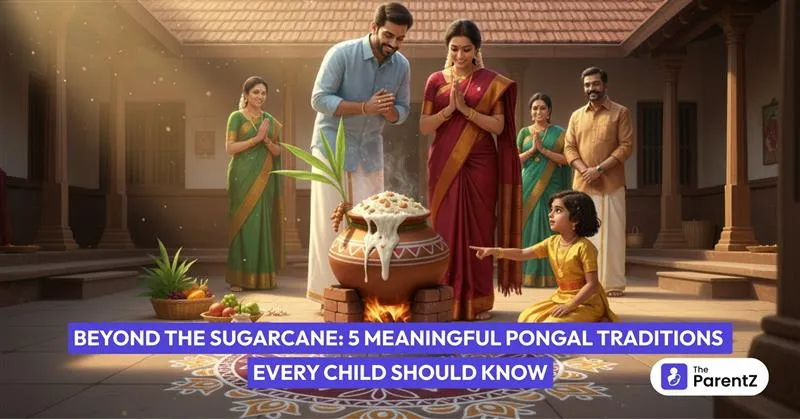
When we think of Pongal, most of us picture sugarcane sticks leaning against the wall, the smell of freshly cooked sweet pongal, and that familiar “Pongalo Pongal!” echoing in the neighbourhood. For children today, Pongal can sometimes feel like just another holiday with special food.
But Pongal is much more than that.
It’s a festival about gratitude. About slowing down. About helping children understand where food comes from, why we respect nature, and how simple traditions can bring families together. The good news? You don’t need grand arrangements or extra spending to pass these lessons on.
Today, we are going to explore five meaningful Pongal traditions every child should know, and easy ways you can keep them alive at home.
At its heart, Pongal is a harvest festival. And the biggest force behind every harvest is the Sun.
On Surya Pongal, families traditionally cook pongal as the sun rises and offer it to Surya, thanking him for warmth, light, and life. This is a powerful idea for children: gratitude for something we often take for granted.
You don’t need elaborate rituals. Just take your child outside for a few minutes in the morning sun. Let them feel the warmth. Explain, in simple words, how plants grow because of sunlight and how food reaches our plates. Ask them one thing they are thankful for today.
That’s enough.
Traditionally, pongal is cooked outdoors in a new pot, often with family members gathered around. The moment the milk overflows is celebrated, as it symbolises abundance.
Children may not remember the recipe, but they remember being part of it.
So, invite your child into the kitchen. Let them wash rice, stir the pot, or add jaggery (with supervision). Tell them why the dish is called “Pongal” and why overflow is considered lucky.
These small moments teach patience, teamwork, and respect for food, without any lectures.
Mattu Pongal reminds us that farming doesn’t happen by magic. Cows, bulls, and farmers play a huge role in bringing food to our homes. Traditionally, cattle are bathed, decorated, and thanked for their hard work.
In cities, this tradition often gets skipped. But its message is still important.
Talk to your child about farmers. Show them where rice, vegetables, and milk come from. If possible, feed a cow, donate fodder, or simply explain why animals deserve kindness and care.
This helps children grow up with respect for labour, animals, and the food they eat.
Kolam isn’t just decoration. It’s a welcoming sign, a symbol of positivity, and a quiet prayer for prosperity. In many homes, children watch elders draw kolams every morning during Pongal.
It’s art with meaning.
Give your children chalk, rice flour, or even crayons. Let them create simple kolams at the entrance or inside the house. Don’t correct them. Let it be messy.
While they draw, share stories about how kolams welcome good energy, guests, and happiness. These conversations stay longer than perfect designs.
One beautiful part of Pongal is sharing. Neighbours exchange food. Extra pongal is offered to visitors. Joy is meant to be passed on. For children, this is where empathy grows.
Encourage your child to help pack pongal for neighbours, helpers, or security staff. Let them hand it over themselves. Explain that festivals are happier when shared.
This simple act teaches generosity without spending extra money.
You don’t need to follow everything perfectly. Festivals aren’t exams. What children remember is how they felt safe, included, and connected.
Talk to them. Tell them stories from your childhood Pongals. Let them ask questions. Let traditions evolve while keeping their meaning intact.
Because one day, when they grow up, they won’t just remember the sugarcane or the sweets. They’ll remember the warmth. The stories. And the feeling of belonging.
That is the real gift of Pongal.
TheParentZ offers expert parenting tips & advice, along with tools for for tracking baby and child growth and development. Know more about Baby Growth and Development Tracker App.It serves as an online community for parents, providing valuable information on baby names, health, nutrition, activities, product reviews, childcare, child development and more
Disclaimer:
The views, thoughts, and opinions expressed in this article/blog are solely those of the author and do not necessarily reflect the views of The ParentZ. Any omissions, errors, or inaccuracies are the responsibility of the author. The ParentZ assumes no liability or responsibility for any content presented. Always consult a qualified professional for specific advice related to parenting, health, or child development.
Conversations (Comments) are opinions of our readers and are subject to our Community Guidelines.



Be the first one to comment on this story.