Most Moms Report Slower Recovery After a Second Birth
Jul 19, 2026By Dr. Akanksha Priya
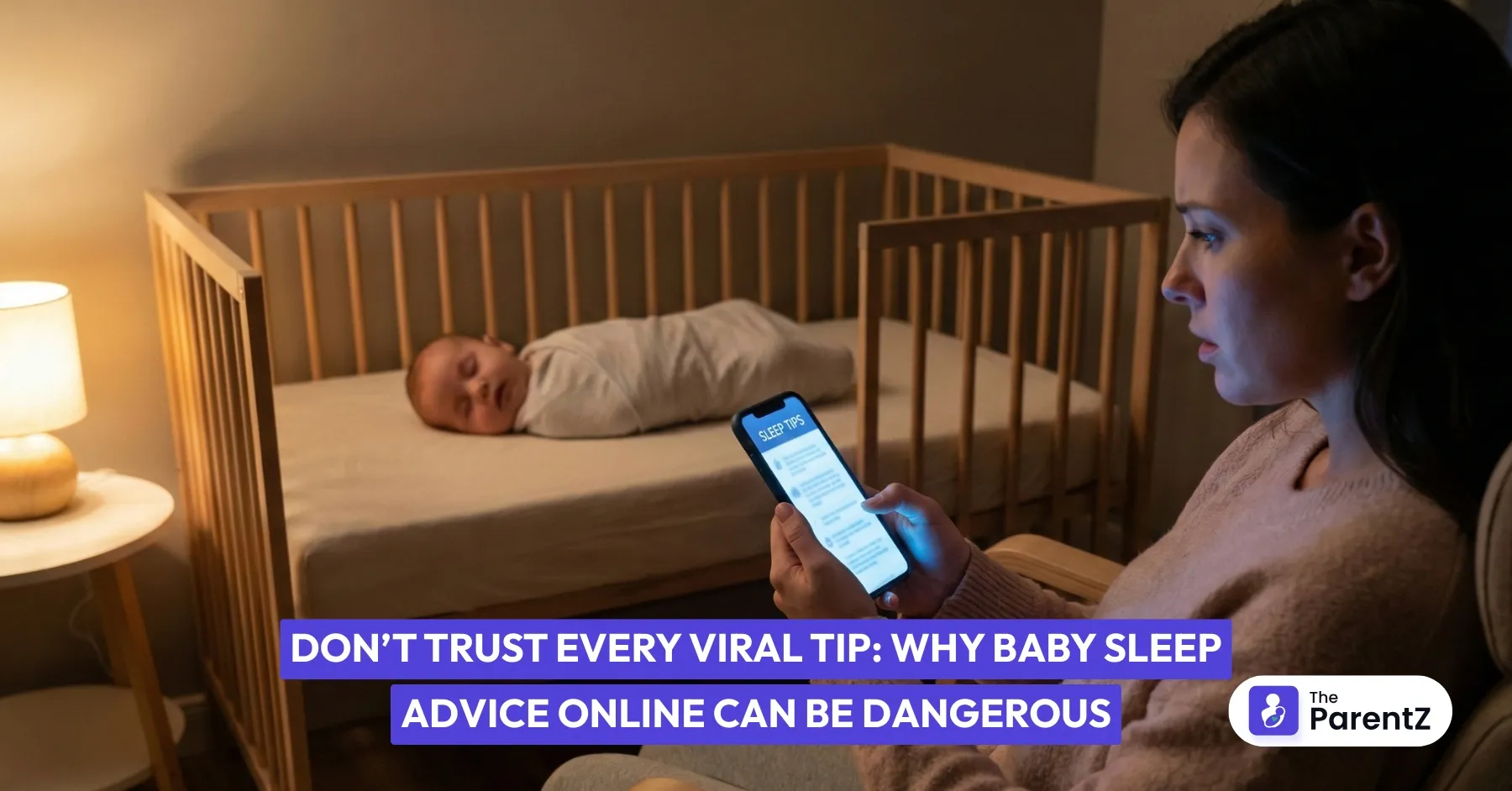
It's 3 AM. You're exhausted. Your baby won't sleep. So you grab your phone and search for answers. A quick scroll through Instagram or TikTok will show you what other parents are doing.
We get it. We've been there too. When you're sleep-deprived and desperate, the internet feels like your best friend. But what if we told you that some of the most popular baby sleep advice online could actually put your baby in danger?
In 2022, about 3,700 infants died unexpectedly while sleeping in the United States; that's roughly 10 babies every single day (CDC, 2022). Even more concerning? These death rates have been increasing since 2020, not decreasing like we'd all hope.
At the exact same time these deaths are rising, a 2024 study found that only 14 percent of baby sleep photos shared by parents on Facebook showed a safe sleep environment. The majority of images parents are seeing, and possibly copying, show unsafe sleep setups.
Remember when you could trust that health campaigns would give you clear, accurate information? Well, things have changed. The federal programs that used to champion safe sleep practices have been cut back or shut down entirely. At the same time, social media and AI are feeding us whatever keeps us scrolling, not necessarily what keeps our babies safe.
Dr. Marybeth Howard, who teaches at Johns Hopkins University School of Medicine, puts it perfectly: "Viral does not mean verified."
Here's how it works: You search for “how to make baby sleep better.” The algorithm reads your intent and immediately feeds you what it thinks you want, even if the advice is unsafe. It doesn’t check whether the information follows medical guidelines. It just checks whether it’s trending, attractive, or promises quick fixes.
The same thing happens with AI. If you ask directly about infant loungers for sleep, it might start by telling you they’re not safe. But the moment you reframe the question, like asking what to buy for “safe bed-sharing,” the model may end up recommending those exact loungers again. It’s not being medically consistent. It’s just following your lead and trying to be helpful, even if that means contradicting itself and drifting away from safety rules.
These aren't just statistics or hypothetical dangers. Real families have lost their babies because of products and advice they found online.
In 2016, 18-month-old Deacon Morin died when he was strangled by a Baltic amber teething necklace during naptime at his daycare. His mother, Danielle (now Dani) Morin, had received the necklace as a gift from a Facebook group of moms who swore by it. The product packaging and online receipt described it as "safe for your baby, natural and healing", but it wasn't safe at all.
Today, Dani is a social media content creator with hundreds of thousands of followers, dedicating her life to helping other parents avoid the same tragedy. She shares the ABCs of safe sleep and fights against the misinformation that cost her son's life.
Her story isn't unique. It's happening because well-meaning parents trust what they see online without realizing that beautiful photos and viral videos aren't vetted by doctors or safety experts.
Nobody's judging you for wanting solutions. Parenting a newborn is brutally hard. You're running on two hours of sleep, your baby is crying, and someone on Instagram looks completely put-together with their three-month-old sleeping peacefully in what looks like a cozy setup.
What that photo doesn't show is whether that setup is safe, whether it's just staged for the photo, or whether that baby actually sleeps like that every night.
The problem is that our brains are wired to look for quick fixes when we're exhausted. Research shows that the more tired parents are, the less likely they are to follow safe sleep guidelines. It's not that you're a bad parent; it's that exhaustion literally affects your decision-making.
Forget the aesthetic nursery photos for a minute. Here's what actually keeps babies safe, according to the American Academy of Pediatrics:
The ABCs of Safe Sleep:
That's it. It's not Instagram-worthy. It's not fancy. But it works.
What's NOT safe:
We know what you're thinking: "But my friend's baby sleeps in a lounger, and she's fine." Or "My mother-in-law raised three kids and used blankets."
What we need to understand is that recommendations have changed because we've learned more about what causes infant deaths. What worked (or seemed to work) 20 or 30 years ago isn't considered safe anymore based on current research.
After the "Back to Sleep" campaign launched in the 1990s, SIDS rates dropped dramatically by over 50%. Following these guidelines genuinely saves lives.
And yes, some babies do "seem fine" with unsafe setups, until they're not. The risk might seem small, but when we're talking about your baby's life, even a small risk is too much.
Not all families are equally affected. Black families experience sudden infant death at three times the rate of white families. Why? Often, this is because of unequal access to healthcare, which means less access to current safety information.
This makes the spread of online misinformation even more dangerous. If families aren't getting accurate information from healthcare providers, they're left relying on what they see online, and as we've established, that information isn't always safe.
Forget the mom influencers for a second (unless they're sharing medical guidelines. Here's where to get reliable information:
If you see something on social media that seems too good to be true, a product that promises better sleep, a "hack" that goes against what your doctor said, it probably is too good to be true. Always verify with a medical professional before trying it.
The internet isn't going anywhere, and neither are the dangerous products and advice. But now you know how to spot them. You know where to find real, verified information. And you know that "viral" and "verified" are two very different things.
When you're exhausted at 3 AM and reaching for your phone, remember: the algorithm doesn't love your baby. It doesn't know your baby. But you do. And now you know how to keep them safe, even when everyone else online seems to be doing something different.
TheParentZ offers expert parenting tips & advice, along with tools for for tracking baby and child growth and development. Know more about Baby Growth and Development Tracker App.It serves as an online community for parents, providing valuable information on baby names, health, nutrition, activities, product reviews, childcare, child development and more
Disclaimer:
The views, thoughts, and opinions expressed in this article/blog are solely those of the author and do not necessarily reflect the views of The ParentZ. Any omissions, errors, or inaccuracies are the responsibility of the author. The ParentZ assumes no liability or responsibility for any content presented. Always consult a qualified professional for specific advice related to parenting, health, or child development.
Conversations (Comments) are opinions of our readers and are subject to our Community Guidelines.

Be the first one to comment on this story.