
Most Moms Report Slower Recovery After a Second Birth
Jul 19, 2026By Dr. Akanksha Priya
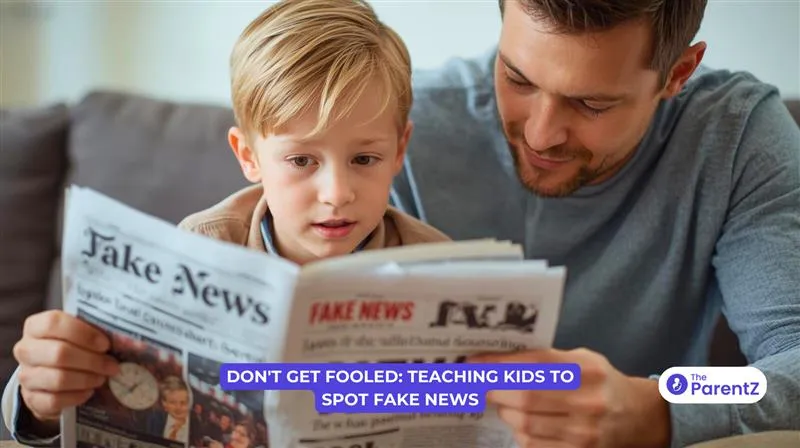
Your 10-year-old runs up to you, phone in hand, eyes wide. "Mom, did you know that drinking lemon water can cure any disease? I saw it on TikTok!" Or maybe your teenager is sharing a dramatic Instagram reel about a celebrity scandal that never actually happened.
Welcome to parenting in this age, where news doesn't come from the evening broadcast anymore. It comes through memes, 15-second reels, podcast clips, and screenshots shared in group chats. And your kids are swimming in this ocean of information every single day, and not all of it is true.
The way our kids consume information is completely different from how we grew up. They're not sitting down to read a full article. They're scrolling through TikTok, watching YouTube Shorts, listening to podcast snippets, and seeing "news" through meme accounts. According to research, over 40% of young people now get their news primarily from social media platforms, with short-form video being the dominant format.
The problem? Anyone can create content that looks legitimate. A false health claim can get millions of views before it's debunked. A manipulated video can spread faster than the truth. And kids, with their still-developing critical thinking skills, are particularly vulnerable.
This isn't about making them paranoid or cynical. It's about giving them tools to understand their world confidently and safely.
Before we talk solutions, let's understand what's happening in their feeds. Misinformation today is sophisticated. It's not just obviously fake articles anymore. It's:
Your child isn't necessarily reading fake news sites. They're seeing misinformation packaged as entertainment, shared by accounts they trust, and presented in formats designed to stop their scroll.
Forget long lectures about media literacy. Kids learn by doing, not by listening to us talk at them.
People create content for different reasons. Some want to inform you. Some want to entertain you. Some want to sell you something. And some want to manipulate how you feel or what you believe. None of this makes you dumb if you fall for it; these are designed to fool people. But you can learn to spot the tricks. So, give your kids a simple mental checklist. Just three questions:
If they can't answer these easily, it's worth more digging.
This isn't just about protecting them from fake news today. You're building critical thinking skills they'll use forever. In job interviews. In relationships. In making financial decisions. In voting.
The digital world will keep changing. New platforms will emerge. New types of misinformation will develop. But if your child learns to pause, question, and verify now, they're set.
Start small. Pick one strategy from this article and try it this week. Maybe it's doing the "breakfast test" together, or fact-checking something as a family. You don't need to be a media expert. You just need to be curious alongside them.
Because raising digitally smart kids isn't about controlling everything they see; it's about teaching them how to think about what they see.
TheParentZ offers expert parenting tips & advice, along with tools for for tracking baby and child growth and development. Know more about Baby Growth and Development Tracker App.It serves as an online community for parents, providing valuable information on baby names, health, nutrition, activities, product reviews, childcare, child development and more
Disclaimer:
The views, thoughts, and opinions expressed in this article/blog are solely those of the author and do not necessarily reflect the views of The ParentZ. Any omissions, errors, or inaccuracies are the responsibility of the author. The ParentZ assumes no liability or responsibility for any content presented. Always consult a qualified professional for specific advice related to parenting, health, or child development.
Conversations (Comments) are opinions of our readers and are subject to our Community Guidelines.


Be the first one to comment on this story.