
Most Moms Report Slower Recovery After a Second Birth
Jul 19, 2026By Dr. Akanksha Priya
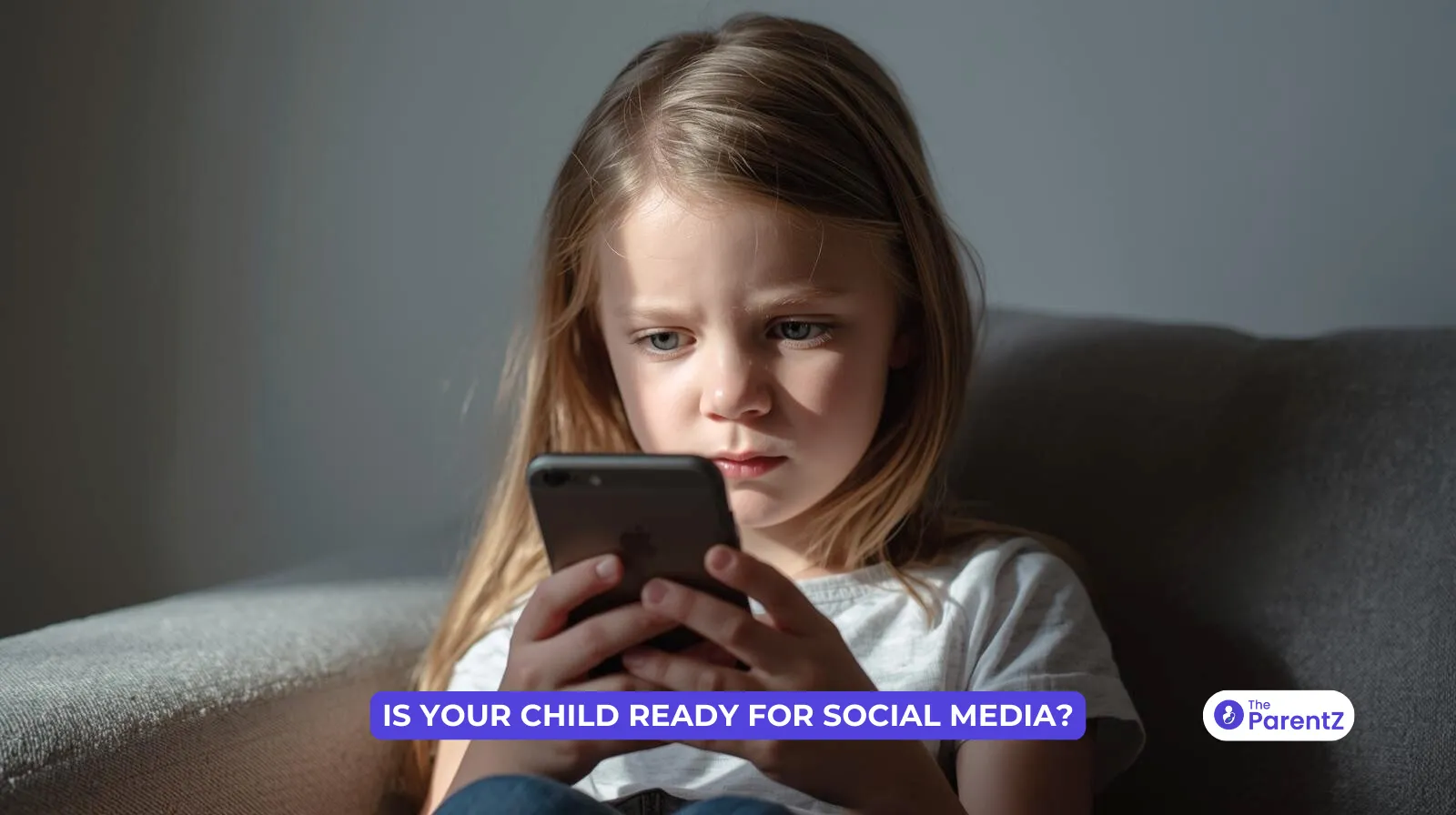
You know that moment when your 10-year-old comes to you with puppy eyes, saying, "But everyone in my class has Instagram!" and you're left wondering if you're being the strict parent or the smart one?
Unfortunately, there's no magical age when kids suddenly become "ready" for social media. It's not like turning 13 and boom, they're good to go. We have all seen 15-year-olds who shouldn't be anywhere near social media and some 14-year-olds who handle it better than adults. So how do you really know?
Before we jump into whether your child is ready, let's be honest about what we're actually handing them. Social media isn't just a fun app to share photos. It's a place where:
We are not trying to scare you. We are just trying to be real with you. Because once you say yes, there's no going back to simpler times.
When your child posts a drawing or shows you their dance, and it doesn't get the reaction they hoped for, what happens? Do they brush it off, or does it stay with them for days?
On social media, this happens constantly. Posts that get no likes. Friends who don't follow back. Comments that sting. Group chats where they're left out. If your child's self-worth is still shaky, social media will make it worse, not better.
Try this conversation: "If you post something today, it could show up in your job interview 10 years later." Do they get it? Or do they look at you like you're speaking another language?
Kids live in the now. That funny video making fun of their teacher, that angry rant about a friend, that photo they thought was cool at 1 am, it all feels temporary to them. But it's not. Screenshots exist. Nothing truly disappears.
Let's address the elephant in the room: "everyone has it."
First, everyone doesn't have it. There are still parents saying no, but kids won't advertise that they're not on social media.
Second, even if everyone did have it, so what? Everyone also watches things they shouldn't, skips homework, and eats too much junk food. Since when did "everyone's doing it" become a parenting guideline?
Your child needs to learn this hard truth now: sometimes you'll be different from your friends, and that's okay. Actually, it's more than okay. Because the choices that are right for you aren't always popular.
Notice what happens during dinner when you ask them to put the phone aside. Or during study time. Or before bed.
If taking the phone away feels like you're removing a body part, that's your answer right there. They're not ready. Because social media will only make that attachment stronger.
Also, watch how they react to notifications. Does every ping need immediate attention? Do they check their phone every few minutes? These are addiction patterns, and social media apps are designed to create exactly this behavior.
Ask your child: "Should strangers know where you go to school, where you live, or where you'll be this weekend?"
The answer should be an immediate no. But on social media, kids share this information without thinking. Location tags, school uniforms in photos, talking about vacation plans; it's all out there.
If they don't understand why this is dangerous, or if they think "it won't happen to me," they're not ready.
We are not saying social media is all bad. It helps kids stay connected, express creativity, learn new things, and find communities. These are real benefits.
But these good things don't disappear if your child waits a couple more years. They'll probably enjoy and use these benefits better when they're more mature.
Can't decide? Try delaying as long as possible, and when you do say yes, start slow.
Maybe begin with a family YouTube channel you manage together. Or a private Instagram account with only family members. Let them learn how it works while you're still in full control.
Set clear rules from day one, like who they can follow, what they can post, when they can use it, and most importantly, that you'll have access to check anytime. No negotiations.
You know your child better than any article ever will. If something in your gut says "not yet," listen to that. There's no award for being the first parent to say yes.
The kids who start social media at 16 instead of 11 don't miss out on life. They actually skip a lot of unnecessary drama and stress.
So take a breath. There's no rush. And whatever you decide, make sure it's because your child is truly ready, and not because you're tired of hearing "everyone else has it."
Your job isn't to be the cool parent. It's to be the parent who keeps them safe, even when they don't understand why.
TheParentZ offers expert parenting tips & advice, along with tools for for tracking baby and child growth and development. Know more about Baby Growth and Development Tracker App.It serves as an online community for parents, providing valuable information on baby names, health, nutrition, activities, product reviews, childcare, child development and more
Disclaimer:
The views, thoughts, and opinions expressed in this article/blog are solely those of the author and do not necessarily reflect the views of The ParentZ. Any omissions, errors, or inaccuracies are the responsibility of the author. The ParentZ assumes no liability or responsibility for any content presented. Always consult a qualified professional for specific advice related to parenting, health, or child development.
Conversations (Comments) are opinions of our readers and are subject to our Community Guidelines.



Be the first one to comment on this story.