Most Moms Report Slower Recovery After a Second Birth
Jul 19, 2026By Dr. Akanksha Priya
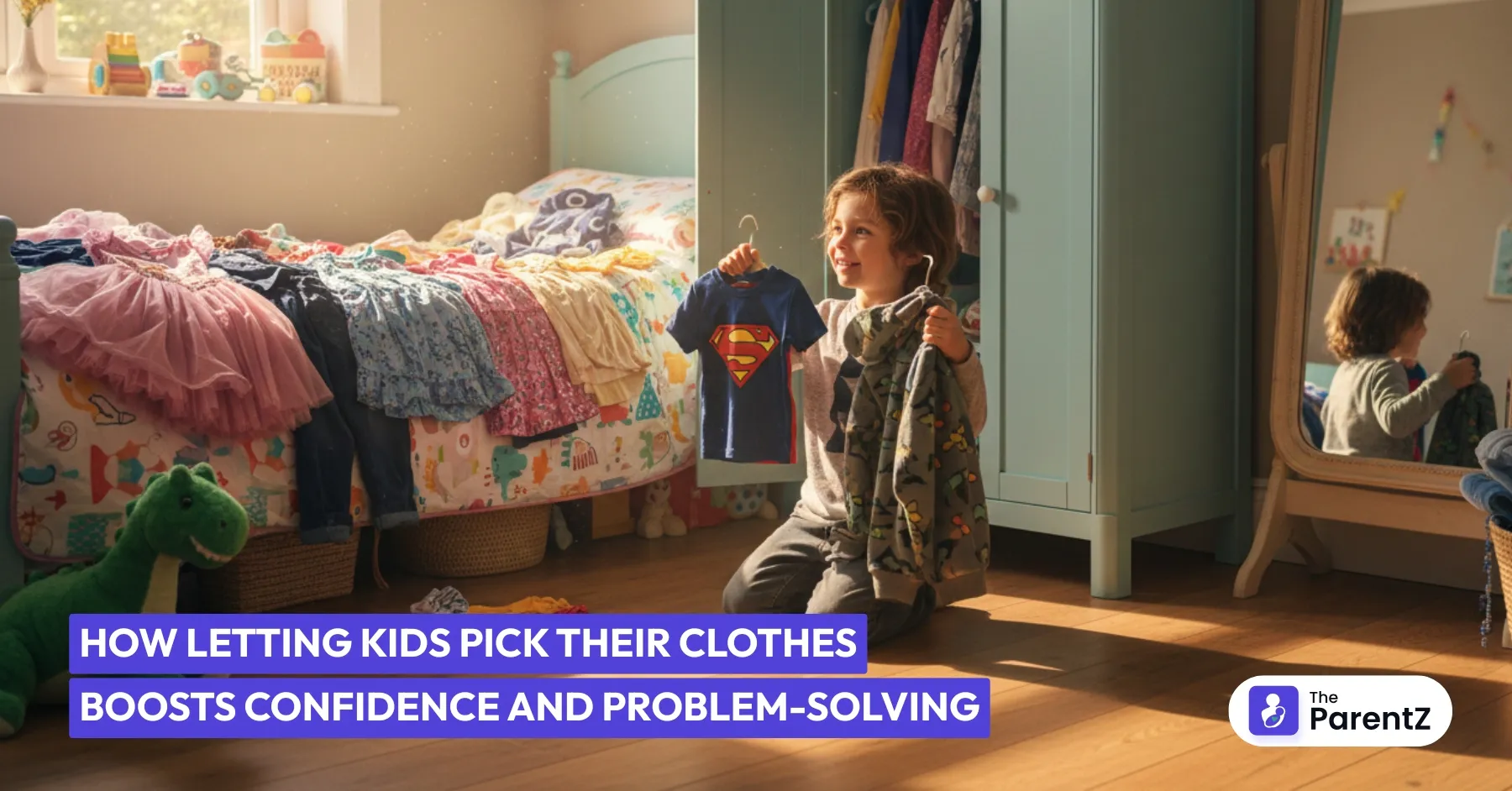
It's 8:15 AM, the school bus arrives in 15 minutes, and your six-year-old wants to wear a bright pink shirt with orange floral pants. The outfit makes your eyes hurt, and worse, what will other parents think at the school gate?
If this scenario plays out in your home every morning, take a deep breath. That "terrible" outfit choice might actually be one of the smartest things happening in your child's development right now.
When your child insists on wearing that superhero cape to the grocery store or refuses to wear anything except that one stained T-shirt, it's not about the clothes. It's about autonomy.
Children spend most of their day being told what to do, like when to wake up, what to eat, which homework to complete, and when to sleep. Their clothing is one of the few areas where they can actually exercise control. When parents fight this, kids don't learn better fashion sense. They just learn that their opinions don't matter.
Research consistently shows that children who make age-appropriate decisions develop stronger problem-solving abilities, better self-regulation, and higher confidence levels. The morning outfit is a perfect, low-stakes training ground for these critical life skills.
Every time your child chooses between the blue kurta or the yellow T-shirt, their brain is actively working through a decision-making process. They're considering comfort, preference, weather (hopefully!), and sometimes even social factors. This might seem trivial to adults, but for a developing brain, it's serious cognitive work.
Think about it: today they're choosing clothes, tomorrow they're choosing friends, study methods, career paths, and life partners. The foundation starts here, with small decisions that feel safe to mess up.
Remember that time your child insisted on wearing a heavy sweater during summer? They probably learned more about appropriate clothing from feeling hot and uncomfortable for two hours than from a year of parental advice.
When children experience the natural consequences of their choices, whether it's feeling too cold, too hot, or socially awkward, they develop a genuine understanding. This is far more effective than any explanation parents can provide.
Around age three to four, children start developing a sense of self that's separate from their parents. Clothing choices become an expression of their emerging personality. The child who loves dinosaurs wants dinosaur prints everywhere. The one who feels powerful in bright colors gravitates toward them naturally.
This self-expression is crucial for healthy identity development. When parents constantly override these choices, children receive the message that their preferences are wrong, which can impact self-esteem long-term.
Let's address the massive concern that keeps parents up at night: societal judgment. What will relatives say? What will neighbors think? Won't the teachers judge our parenting?
You need to accept that those judging eyes are usually projecting their own insecurities. Most people are too busy worrying about their own lives to care deeply about your child's mismatched socks.
More importantly, teaching your child that external opinions matter more than their own comfort and preferences sets them up for a lifetime of people-pleasing.
That said, cultural context matters. If you're attending a wedding, Diwali puja, or a formal school function, it's perfectly reasonable to set boundaries. The key is balance, not complete surrender.
The theory sounds great, but how does this actually work when facing a Monday morning deadline?
Don't suddenly give your five-year-old unrestricted access to the entire wardrobe. Start small. Offer two pre-selected outfits and let them choose. As they demonstrate better judgment, gradually expand their options.
For younger children (ages 2-4), limit choices to two options. For ages 5-7, they can pick from a designated section of weather-appropriate clothes. By age 8 and above, most children can handle full wardrobe access with occasional guidance.
Morning chaos is real. Busy mornings with breakfast preparation, lunch packing, and inevitable crises aren't the ideal time for outfit contemplation. Establish a routine where children lay out their clothes the night before.
This simple shift eliminates morning power struggles, teaches planning skills, and gives you time to gently redirect truly inappropriate choices without time pressure.
Organize your child's wardrobe so that one drawer or section contains only season-appropriate, school-appropriate, comfortable clothes. Everything in this section is pre-approved by parents. Within this curated collection, children have complete freedom.
This approach respects both parental concerns and children's autonomy. Parents sleep better knowing everything in the "yes drawer" works. Children feel empowered choosing freely within it.
Make weather awareness part of the routine. Before choosing clothes, check the weather together, look at a weather app, or discuss what the day involves. This teaches contextual decision-making rather than arbitrary rules.
Some situations genuinely require parental intervention. If your child wants to wear a Halloween costume to a funeral, intervention is appropriate. The key is explaining the reasoning, not just imposing authority.
Some children want to wear the same outfit for days. While picking battles is important, hygiene isn't negotiable. Frame it as care, not control: "This shirt needs rest and washing now. Which of your other favorites should we wear today?"
Having multiple copies of beloved items can help. If your child lives in that one blue T-shirt, buying two or three identical ones prevents daily laundry battles.
Loose strings, choking hazards from buttons, or inappropriate footwear for certain activities are legitimate safety concerns. Explain these clearly: "These shoes are great, but for climbing at the playground, we need shoes that stay on tight. Which of your sports shoes feels good today?"
Be clear and consistent about occasions requiring specific dress codes. "For Diwali puja at Nani's house, we wear traditional clothes. You can choose which of your ethnic outfits you'd like—the green kurta pajama or the blue one?"
Children understand and respect boundaries when they're consistent and explained with genuine reasoning rather than "because I said so."
When parents step back from micromanaging wardrobe choices, children develop multiple transferable skills:
These aren't just clothing skills. They're life skills. The child who learns to make decisions, handle consequences, and adjust their approach based on experience becomes an adult who can handle life's bigger challenges.
Interestingly, some children feel overwhelmed by too many choices. This is also developmentally normal and should be respected. Not every child wants clothing autonomy at the same age.
If your child prefers when parents pick their clothes, that's perfectly fine. Forcing independence is as problematic as preventing it. Offer the option regularly, but don't push. "Would you like to choose today, or should I help you?" respects their current comfort level.
Some children thrive with structure and actually feel more secure when parents make certain decisions. This isn't a failure; it's individual temperament, and good parenting means recognizing and honoring that.
Shifting from controlling your child's wardrobe to guiding them takes adjustment. There will be awkward outfits. There will be days you wish you'd just picked the clothes yourself. There will be moments of wondering if you're doing the right thing.
But remember that confident adults who trust their judgment, express themselves authentically, and make decisions independently weren't raised by parents who controlled every detail. They were raised by parents who gradually released control and allowed them to develop these skills through practice.
Your child's questionable outfit today is building their confident future tomorrow. That trade-off is worth it, even if the orange and pink combination makes you wince.
Start small, stay consistent, and trust the process.
TheParentZ offers expert parenting tips & advice, along with tools for for tracking baby and child growth and development. Know more about Baby Growth and Development Tracker App.It serves as an online community for parents, providing valuable information on baby names, health, nutrition, activities, product reviews, childcare, child development and more
Disclaimer:
The views, thoughts, and opinions expressed in this article/blog are solely those of the author and do not necessarily reflect the views of The ParentZ. Any omissions, errors, or inaccuracies are the responsibility of the author. The ParentZ assumes no liability or responsibility for any content presented. Always consult a qualified professional for specific advice related to parenting, health, or child development.
Conversations (Comments) are opinions of our readers and are subject to our Community Guidelines.


Be the first one to comment on this story.