
Most Moms Report Slower Recovery After a Second Birth
Jul 19, 2026By Dr. Akanksha Priya
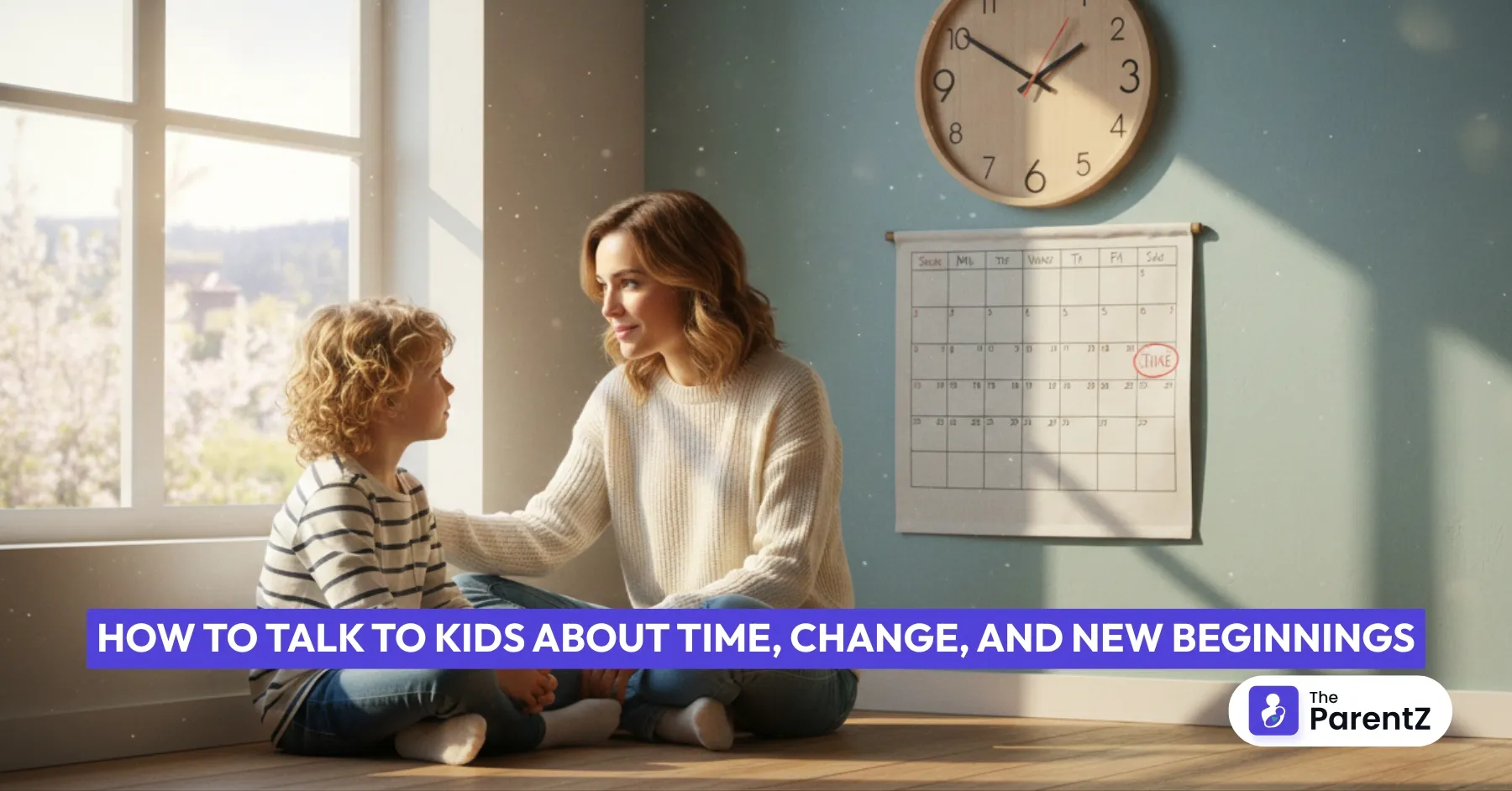
Kids live in the now. Yesterday feels like forever ago, and tomorrow might as well be next year. So when we're trying to help them understand that things change, that time moves forward, or that we're starting something new, we're basically asking them to grasp something completely abstract.
But January rolls around (or a new school year starts, or you're moving houses, or literally anything changes), and suddenly we need to have these conversations.
You don't need a formal sit-down talk with charts and calendars. Kids learn best through what they're already experiencing. Your five-year-old might not understand "next month," but they definitely understand "after we finish all the mangoes" or "when it gets cold enough for sweaters."
Use their world. Their routines. Their favorite things.
If you're talking about time passing, connect it to something they've watched grow. Remember when the plant was tiny? Remember when you couldn't ride that bike? Remember when you were scared of the dark? That's time. That's change. And they made it through.
Change freaks kids out because they can't control it. And let's be real, it freaks us out too for the same reason. So instead of pretending everything's going to be perfect and amazing, just be honest within limits.
"Yes, things will be different at the new school. You might feel nervous the first few days. But remember how you felt nervous about swimming class? And now you love it."
You're not promising it'll be easy. You're reminding them they've handled hard things before. There's a massive difference.
Let them feel their feelings about the change. If they're sad about leaving their old classroom, that's okay. Sadness isn't something to fix immediately. It's something to sit with for a bit. "I know you'll miss your friends. That's because you really loved spending time with them. We can still meet them at the park."
New year, new you. Fresh start. Clean slate. We love these ideas as adults, but for kids, they can feel like pressure to suddenly be different or better.
Instead of "This year you're going to be a big kid who doesn't throw tantrums," try "What's something you want to try this year?" Let them lead. Maybe they want to learn to whistle. Maybe they want to make a new friend. Maybe they want to eat more parathas. Whatever it is, it's theirs.
New beginnings don't have to be about fixing what's "wrong." They can just be about adding something new to what's already good.
Kids zone out during lectures. But stories? They're in.
Tell them about when you were little, and something changed. "When I was your age, we moved houses, and I was so worried I wouldn't make friends. But then I met Priya aunty on the first day, and we're still friends now."
Or read books together where characters go through changes. Talk about how the character felt. What helped them? Let your child make the connections themselves.
Kids understand rituals way before they understand abstract time concepts. You don't need anything elaborate. Just small, repeatable things that mark moments.
Every Sunday, look at the week ahead together. Every month, do something special as a family. When something ends, celebrate it. When something begins, mark it with maybe a special breakfast or choosing a new book together.
These rituals become anchors. They make time feel less like this endless, confusing thing and more like something with rhythm and pattern.
"Will I be seven forever?"
"What if I don't like being eight?"
"Can we go back to last week?"
These questions might sound silly, but they're your child trying to make sense of something complicated. Answer them simply. Admit when you don't know.
You don't need perfect answers. You need honest ones.
If you're anxious about the change, your kid will pick up on it. If you're treating this new beginning like some high-stakes performance, they'll feel that pressure too.
But if you're approaching it like "Hey, something's different now, and we'll figure it out together," that's what they'll absorb.
There's no script for these conversations. Every kid is different. Every family is different. What works for your friend's child might not work for yours.
The goal isn't to make your child understand time like an adult or be excited about every change. The goal is to help them feel secure enough to handle whatever comes next. To know that even when things are different, some things stay the same, like your love, your presence, and your willingness to answer their questions.
Start small. Start where you are. Start with the conversations that matter in your house, not the ones that look good on Instagram. You're not raising a child who never struggles with change. You're raising a child who knows they can handle it.

TheParentZ offers expert parenting tips & advice, along with tools for for tracking baby and child growth and development. Know more about Baby Growth and Development Tracker App.It serves as an online community for parents, providing valuable information on baby names, health, nutrition, activities, product reviews, childcare, child development and more
Disclaimer:
The views, thoughts, and opinions expressed in this article/blog are solely those of the author and do not necessarily reflect the views of The ParentZ. Any omissions, errors, or inaccuracies are the responsibility of the author. The ParentZ assumes no liability or responsibility for any content presented. Always consult a qualified professional for specific advice related to parenting, health, or child development.
Conversations (Comments) are opinions of our readers and are subject to our Community Guidelines.



Be the first one to comment on this story.