
Most Moms Report Slower Recovery After a Second Birth
Jul 19, 2026By Dr. Akanksha Priya
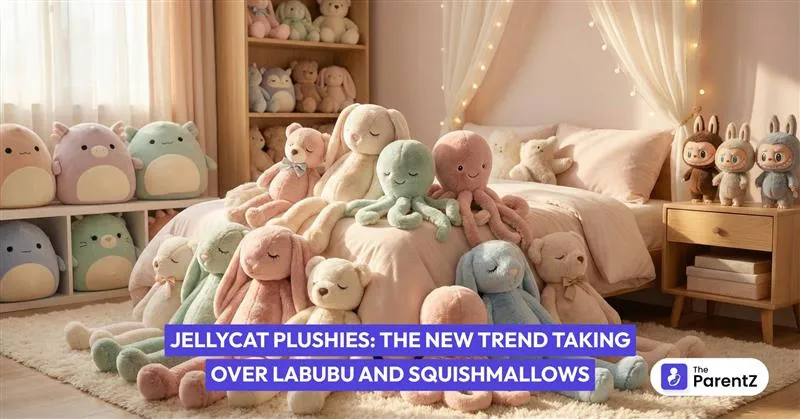
Remember when your kid begged you for that one toy, and you thought, "This too shall pass"? Well, buckle up, because the plushie world just got a whole lot more interesting and expensive.
If you’ve skipped social media lately, here’s the update: plush toys aren’t just toys anymore. Kids, teens, and adults are deep into plush culture, and names like Squishmallows, Labubu, and Jellycat are everywhere.
Squishmallows were EVERYWHERE in 2023. Those super-squishy, pillow-shaped creatures with cute little faces came in every character imaginable, including cats, dinosaurs, avocados, and even a pickle with a mustache.
They were soft, affordable (starting around $10), and your kids could actually cuddle them without you worrying about sharp edges. Plus, with over a thousand designs, the collecting never stopped.
But adults made up over 20% of all plush toy sales in 2024. Gen Z and millennials were sleeping with them, carrying them in their bags, and proudly displaying collections that would make any toy store jealous. The trend wasn't just about kids anymore.
Enter Labubu, a furry, elf-like creature with pointed ears and a mouthful of sharp teeth that somehow became the "it" accessory of 2024.
Created by Hong Kong artist Kasing Lung in 2015, Labubu exploded in 2024 when Chinese company Pop Mart turned them into collectibles sold in "blind boxes," where you don't know which one you're getting until you open it.
The blind box thing was pure genius marketing. Kids and adults alike became obsessed with the thrill of not knowing which Labubu they'd get. The retail price was about $30, but some rare ones resold for thousands of dollars.
When K-pop star Lisa from Blackpink was spotted with a Labubu keychain in April 2024, it sparked a viral trend. Soon, many celebrities were spotted with these toothy monsters dangling from their designer handbags. Labubu became more than a toy; it was a fashion statement.
The craze got so intense that counterfeit versions (dubbed "Lafufus") flooded the market.
Just when parents thought they understood the plushie landscape, along came Jellycat to shake everything up.
Now, Jellycat isn't exactly new; the British brand has been around since 1999. But something magical happened in 2024. According to CNBC, Jellycat's revenue hit nearly $450 million in 2024, up 66% from about $270 million in 2023. Their profit more than doubled.
What makes Jellycat different? They're making plushies of things you'd never expect. We're talking coffee cups, avocados, croissants, hard-boiled eggs, and even fish and chips, all with adorable little faces and personalities.
In the US, Jellycat sales grew by 41% from the first half of 2023 to 2024, while general stuffed-animal sales only rose 2%. That's a massive gap. The brand is sold in fancy department stores like Selfridges in London and Harrods, with prices ranging from around $20 for small items to hundreds for larger pieces.
According to reports, Selfridges described Jellycat as their fastest-selling toy brand. The company has that premium, sophisticated vibe that makes both kids and adults feel like they're buying something special, not just another toy.
Why are people, including YOUR kids, going absolutely bonkers over these plushies?
TikTok is basically running the toy industry now. Kids see their favorite influencers unboxing Labubus or creating "Jellycat cafes" in their bedrooms, and suddenly they NEED one.
Life is kind of hard right now, even for kids. According to Jennifer Lynch from the Toy Association, there's been an "undoing of the stigma of owning toys past a certain age," especially during the pandemic when people sought comfort through play.
For Gen Z and young millennials, plushies offer comfort without judgment. Marketing experts note that this generation prioritizes mental health, and if a squishy avocado helps someone feel better, that's valid self-care.
Both Labubu and Jellycat have mastered the art of FOMO (fear of missing out). Limited releases, exclusive collaborations (like Jellycat's experiential pop-ups or Labubu's blind boxes), create urgency. Kids feel like if they don't get it NOW, they'll miss out forever.
These plushies aren't cheap. Jellycats can easily cost $30-50 for a medium-sized one, and don't even get us started on the limited editions. Labubus start around $30, but rare ones? Good luck.
But here's what you should know:
The plushie world is wild right now. From Squishmallows' comfort-focused appeal to Labubu's mysterious blind boxes to Jellycat's sophisticated charm, each trend reveals what this generation values: authenticity, emotional connection, and a little bit of whimsy in an increasingly complicated world.
Whether your kid is begging for their first Jellycat or showing you their 50th Labubu, try to see it from their perspective. In their world, these aren't just toys; they're companions, collectibles, and sometimes even coping mechanisms.
TheParentZ offers expert parenting tips & advice, along with tools for for tracking baby and child growth and development. Know more about Baby Growth and Development Tracker App.It serves as an online community for parents, providing valuable information on baby names, health, nutrition, activities, product reviews, childcare, child development and more
Disclaimer:
The views, thoughts, and opinions expressed in this article/blog are solely those of the author and do not necessarily reflect the views of The ParentZ. Any omissions, errors, or inaccuracies are the responsibility of the author. The ParentZ assumes no liability or responsibility for any content presented. Always consult a qualified professional for specific advice related to parenting, health, or child development.
Conversations (Comments) are opinions of our readers and are subject to our Community Guidelines.

Be the first one to comment on this story.