
Most Moms Report Slower Recovery After a Second Birth
Jul 19, 2026By Dr. Akanksha Priya
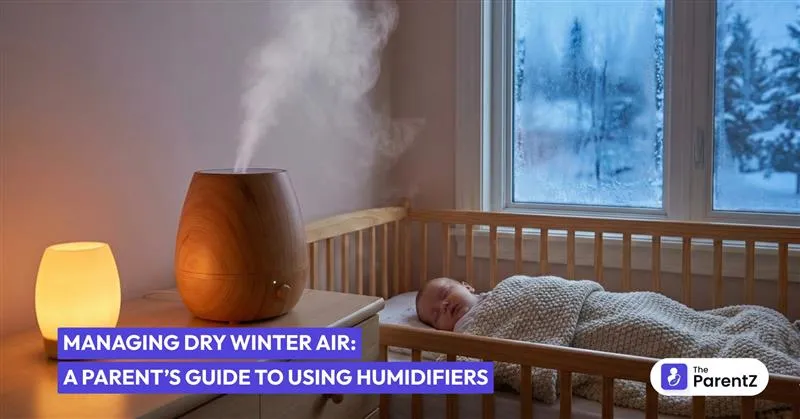
It's mid-December. Your kid wakes up with a stuffy nose for the third morning in a row. Their lips are chapped, their skin feels rough, and that persistent dry cough just won't quit. You've tried everything your mother suggested, the ajwain potli (Carom Seed Pouch), warm water gargles, and even that kadha recipe from your neighbor.
Indian winters have brought a double challenge. Not only is the air dry (which naturally happens when temperatures drop), but cities across India are facing severe pollution.
So before we talk about humidifiers, let's understand what we're dealing with.
When winter arrives, the air holds less moisture. Think of it like a sponge; cold air is a small sponge that can't hold much water, while warm air is a bigger sponge. When you turn on the room heater, it makes the air even drier. This dry air pulls moisture from your child's skin, nose, throat, and lungs.
Medical research shows that when humidity drops below 30%, children experience:
This is where things get complicated. This year, major cities have been experiencing "very poor" air quality during winter.
Dry air makes pollution worse for your child because:
Humidifiers can help, but they're not a magic solution, and they come with their own risks if not used properly. According to pediatric experts, humidifiers mainly provide comfort. The medical benefits for reducing infection risk or illness duration, while often advocated by healthcare professionals, haven't been definitively proven in large-scale studies. That said, keeping your child comfortable is important because a comfortable child sleeps better, recovers faster, and is generally happier.
If you decide a humidifier makes sense for your family, here's what you need to know:
Cool Mist Humidifiers are recommended for children because:
However, they require meticulous maintenance.
These are the cheap, quiet ones everyone loves. The problem is that they aerosolize everything in the water, including bacteria, minerals, and mold, directly into particles small enough for your child to breathe deep into their lungs.
Experts recommend keeping indoor humidity between 30-50%. Why not higher? Because in our climate:
You'll need a hygrometer (humidity meter, available online for ₹300-800) to monitor this. Don't guess.
If you can't commit to this maintenance, don't buy a humidifier. The risks outweigh the benefits.
Research has identified something called "humidifier fever," flu-like symptoms caused by breathing in bacteria from contaminated humidifiers. In South Korea, hundreds of children were affected, with at least dozens of deaths among them, from toxic humidifier disinfectants. While that specific chemical isn't an issue here, the principle remains: a dirty humidifier is worse than no humidifier.
Signs your humidifier is causing problems:
Let's address some common myths:
"Just boil the tap water first." Boiling kills bacteria but doesn't remove minerals. Those minerals become "white dust" that your child inhales.
"Add a few drops of eucalyptus oil for better results." No. Aerosolized essential oils can irritate children's airways. Save the oils for steam inhalation (with you supervising) when your child is sick.
"Keep it running all night." Only if you're maintaining proper humidity levels (30-50%). Over-humidification causes mold.
"The more expensive the humidifier, the safer it is." Price doesn't guarantee safety. Maintenance matters more than cost.
Ask yourself these questions:
If you answered "no" to any of the first five questions, consider alternatives first.
Managing dry winter air in India today isn't just about adding moisture; it's about protecting your child from both dryness and pollution while avoiding new problems from poorly maintained humidifiers.
The truth is that most children don't need humidifiers. What they need is:
But if your child has specific conditions like eczema or chronic respiratory issues, and your pediatrician recommends added humidity, then yes, a well-maintained humidifier can help. Just remember: a dirty humidifier is worse than no humidifier at all.
TheParentZ offers expert parenting tips & advice, along with tools for for tracking baby and child growth and development. Know more about Baby Growth and Development Tracker App.It serves as an online community for parents, providing valuable information on baby names, health, nutrition, activities, product reviews, childcare, child development and more
Disclaimer:
The views, thoughts, and opinions expressed in this article/blog are solely those of the author and do not necessarily reflect the views of The ParentZ. Any omissions, errors, or inaccuracies are the responsibility of the author. The ParentZ assumes no liability or responsibility for any content presented. Always consult a qualified professional for specific advice related to parenting, health, or child development.
Conversations (Comments) are opinions of our readers and are subject to our Community Guidelines.



Be the first one to comment on this story.