
Most Moms Report Slower Recovery After a Second Birth
Jul 19, 2026By Dr. Akanksha Priya
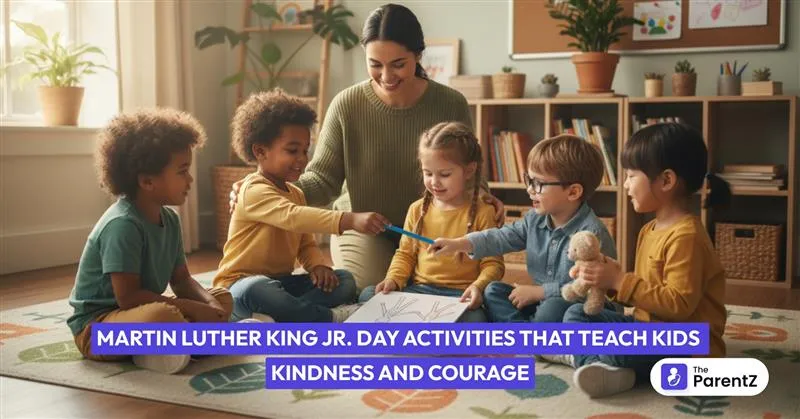
Martin Luther King Jr. Day often shows up on the calendar as a long weekend. Your kids might have the day off from school, but this day is more than just a break. It's a chance to talk about a man who changed America, and to help your children understand what real bravery looks like.
Martin Luther King Jr. Day falls on the third Monday in January each year in honor of Dr. King's birth on January 15th, 1929. But this isn't just a day to remember someone from history books. It's about understanding that one person's courage can actually change the world.
Dr. King led the Civil Rights Movement from 1955 until his assassination in 1968. In just 13 years, Dr. King helped accelerate progress toward racial equality at a pace never seen before in U.S. history. Think about that for a second. Thirteen years. One person, refusing to give up.
He used nonviolent resistance, like protests, grassroots organizing, and civil disobedience, to achieve what seemed impossible. While others said freedom should come "by any means necessary," even through violence, Dr. King believed in the power of peaceful protest and love. That itself takes a different kind of courage.
Before jumping into activities, let's give you some quick facts that actually matter:
Forget the complicated craft projects that end up half-done. Here are some activities that connect kids to Dr. King's story and actually teach something:
Give your kids paper and crayons. Ask them to draw their own dream for making the world better. It could be anything, like everyone having a home, kids being kind to each other, protecting animals, whatever matters to them.
Dr. King's whole movement started with a dream. This helps kids understand that big changes start with imagining something better. When they're done, ask them: "What's one small thing you could do this week to help your dream come true?" Suddenly, it's not just a drawing; it's about taking action.
Remember how people walked instead of taking buses for 381 days? Have your family walk somewhere you'd normally drive, like to get ice cream, to a friend's house, whatever. While you walk, talk about how those people in Montgomery kept walking every single day, even when they were tired, even in bad weather, because they believed in something bigger than their own comfort.
Kids often complain about many things, like walking to the car. This gives them a tiny taste of persistence. It's not about guilt; it's about understanding that standing up for what's right sometimes means doing hard things.
Dr. King believed that one act of love could spread to others. Start a "kindness ripple" in your house. Everyone does one kind thing for someone else, like make their bed, help with homework, whatever. Then see if that person "catches" the kindness and passes it on. Keep track for a week.
Dr. King proved that peaceful, loving actions could change hearts and minds. This shows kids, in a really practical way, that kindness actually spreads. They'll see it happen in real time.
Set up simple scenarios and let kids practice standing up for what's right. Examples: "Someone at school is being left out at recess. What do you do?" or "You see someone being mean to another kid. What could you say?"
Dr. King didn't just talk about justice; he acted. This gives kids safe practice for real situations they'll face. Role-playing takes the fear out of it. You can even share that Dr. King was scared sometimes too, but he did the right thing anyway.
Pick an age-appropriate book about Dr. King. For younger kids, try "Martin's Big Words" by Doreen Rappaport. For older kids, "Who Was Martin Luther King Jr?" works well. Read together, but stop to ask questions. "How do you think he felt when people were mean to him?" "What would you have done?"
Books about history can feel distant. Stopping to ask how your kids would feel or what they'd do makes it personal. They start seeing Dr. King as a real person who had to make tough choices.
The holiday honoring King is often celebrated as the MLK Day of Service, reflecting his legacy of addressing social problems through collective action. Do something helpful as a family, like bake cookies for neighbors, clean up a local park, or collect donations for a food bank. The project matters less than doing it together.
Dr. King taught that everyone can serve others. Service doesn't have to be some big, organized thing. It can be as simple as helping an elderly neighbor with groceries. Kids learn that making a difference is doable.
Ask your kids who they think is brave today. Maybe it's someone who stood up to a bully. Maybe it's someone fighting for the environment. Help them see that Dr. King's kind of courage, which is standing up for what's right even when it's hard, still matters now.
History feels more relevant when kids connect it to today. Dr. King's legacy isn't just about the past. It's about teaching kids that they can be brave too, in their own lives, in their own way.
Martin Luther King Jr. Day is not really about one perfect person who did everything right. Dr. King was human. He was scared sometimes. He made mistakes. But he kept going.
That's actually the best lesson for kids. You don't have to be perfect to make a difference. You just have to care enough to try.
So this year, whether you do one of these activities or come up with your own, make it count. Talk to your kids. Help them see that kindness isn't weakness and courage isn't just physical bravery. Sometimes courage is speaking up when everyone else is silent. Sometimes it's choosing love when hate seems easier.
Dr. King proved that it's possible. Your kids can learn it too.
TheParentZ offers expert parenting tips & advice, along with tools for for tracking baby and child growth and development. Know more about Baby Growth and Development Tracker App.It serves as an online community for parents, providing valuable information on baby names, health, nutrition, activities, product reviews, childcare, child development and more
Disclaimer:
The views, thoughts, and opinions expressed in this article/blog are solely those of the author and do not necessarily reflect the views of The ParentZ. Any omissions, errors, or inaccuracies are the responsibility of the author. The ParentZ assumes no liability or responsibility for any content presented. Always consult a qualified professional for specific advice related to parenting, health, or child development.
Conversations (Comments) are opinions of our readers and are subject to our Community Guidelines.

Be the first one to comment on this story.