
Most Moms Report Slower Recovery After a Second Birth
Jul 19, 2026By Dr. Akanksha Priya
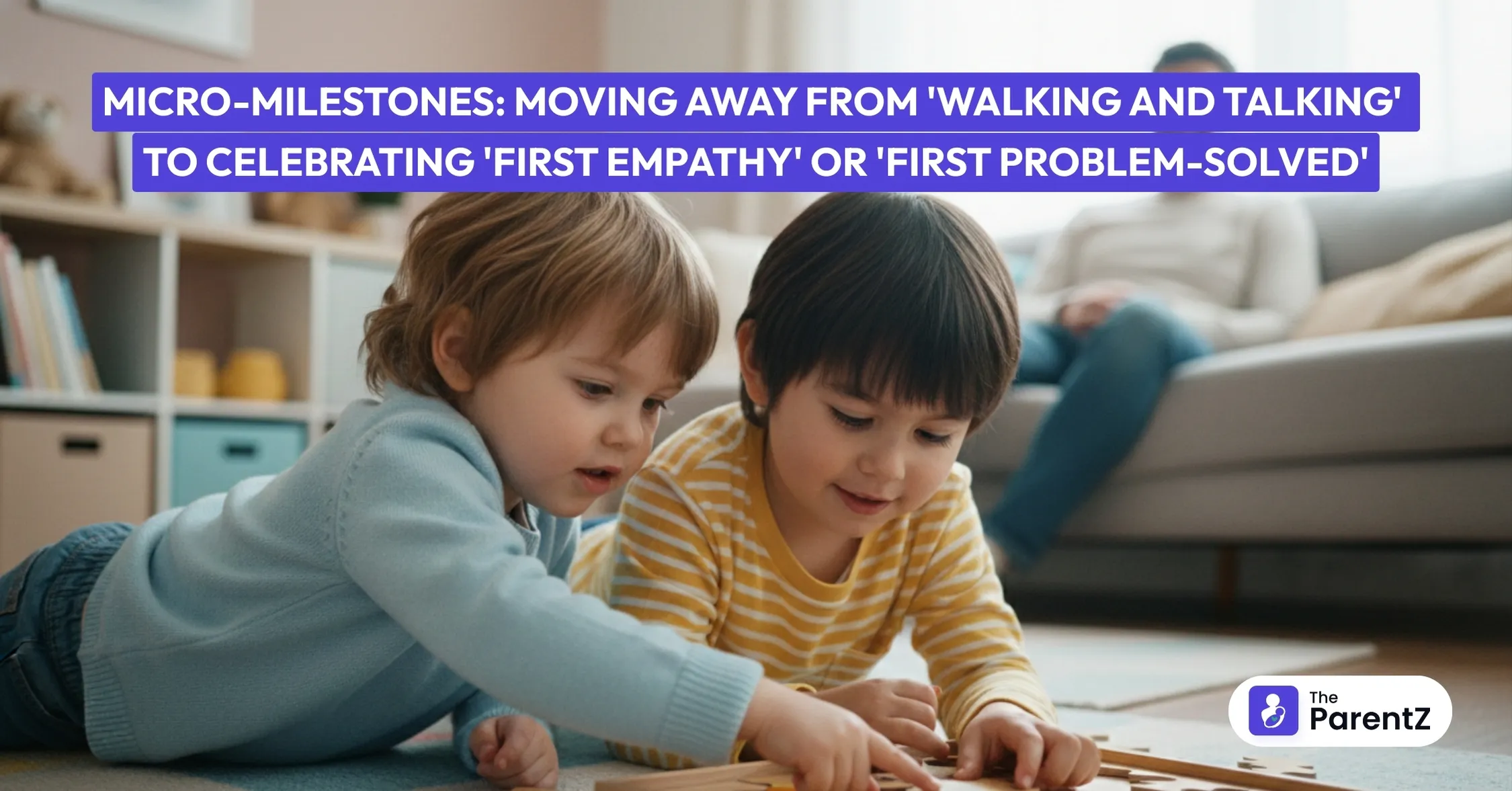
You know that moment when someone asks, "Is your baby walking yet?" and you feel that tiny knot in your stomach if the answer is no? We've all been there. For generations, parenting conversations have revolved around the same big questions: When did they walk? When did they talk? When did they sleep through the night?
Sometimes, we get so focused on these physical milestones that we miss out on celebrating the beautiful, complex ways our children are actually growing every single day.
Think of micro-milestones as the small, often overlooked moments of development that show your child's emotional, social, and cognitive growth. These aren't in your pediatrician's chart, and your relatives won't ask about them at family gatherings. But they matter. A lot.
Instead of waiting months to celebrate walking, imagine celebrating when your toddler brings you a toy because they noticed you looked sad. Or when your preschooler figures out that they can use a stool to reach something instead of crying for help. These are micro-milestones, and they're happening all around you.
Because they're not small at all. When your two-year-old pats their crying friend's back, they're developing empathy. When your child tries three different ways to open a container before asking for help, they're building problem-solving skills and resilience. These abilities will serve them far longer than knowing how to walk at ten months versus fourteen months.
We live in a world where emotional intelligence, adaptability, and creative thinking matter more than ever. The kid who can handle conflicts, manage disappointment, and think creatively will thrive, whether they walked early or late.
You're tired, you have a million things to do, and adding "observe micro-milestones" to your mental load sounds exhausting. So here's what actually works.
They still matter. If your child isn't meeting physical or speech milestones, absolutely talk to your pediatrician. This isn't about ignoring developmental delays or concerns.
This is about balance. It's about not letting the big milestones become the only measure of your child's growth or your parenting success.
Your neighbor's kid is walking at nine months while yours is happily crawling at fourteen months, but your child can already sort shapes and shows remarkable patience during frustrating tasks. Both children are developing beautifully, just differently.
When you focus only on traditional milestones, you miss your own child's unique strengths. In fifteen years, no one will care or remember who walked first. But they'll notice who can work through conflicts, who shows kindness, and who doesn't give up when things get hard.
Walking and talking are wonderful. Celebrate them when they happen. But your child is also learning to be human every single day, in ways that don't come with a chart or a timeline.
They're learning to care. To try. To understand others. To manage big feelings in little bodies. These moments deserve confetti too.
So tonight, when your child does something small that shows they're growing in these invisible ways, pause for just a second. Smile. Maybe even tell them you noticed. That's all it takes to shift from milestone-chasing to actually seeing the whole, complex, beautiful person your child is becoming.
And that's the parenting win that actually matters.
TheParentZ offers expert parenting tips & advice, along with tools for for tracking baby and child growth and development. Know more about Baby Growth and Development Tracker App.It serves as an online community for parents, providing valuable information on baby names, health, nutrition, activities, product reviews, childcare, child development and more
Disclaimer:
The views, thoughts, and opinions expressed in this article/blog are solely those of the author and do not necessarily reflect the views of The ParentZ. Any omissions, errors, or inaccuracies are the responsibility of the author. The ParentZ assumes no liability or responsibility for any content presented. Always consult a qualified professional for specific advice related to parenting, health, or child development.
Conversations (Comments) are opinions of our readers and are subject to our Community Guidelines.


Be the first one to comment on this story.