
Most Moms Report Slower Recovery After a Second Birth
Jul 19, 2026By Dr. Akanksha Priya
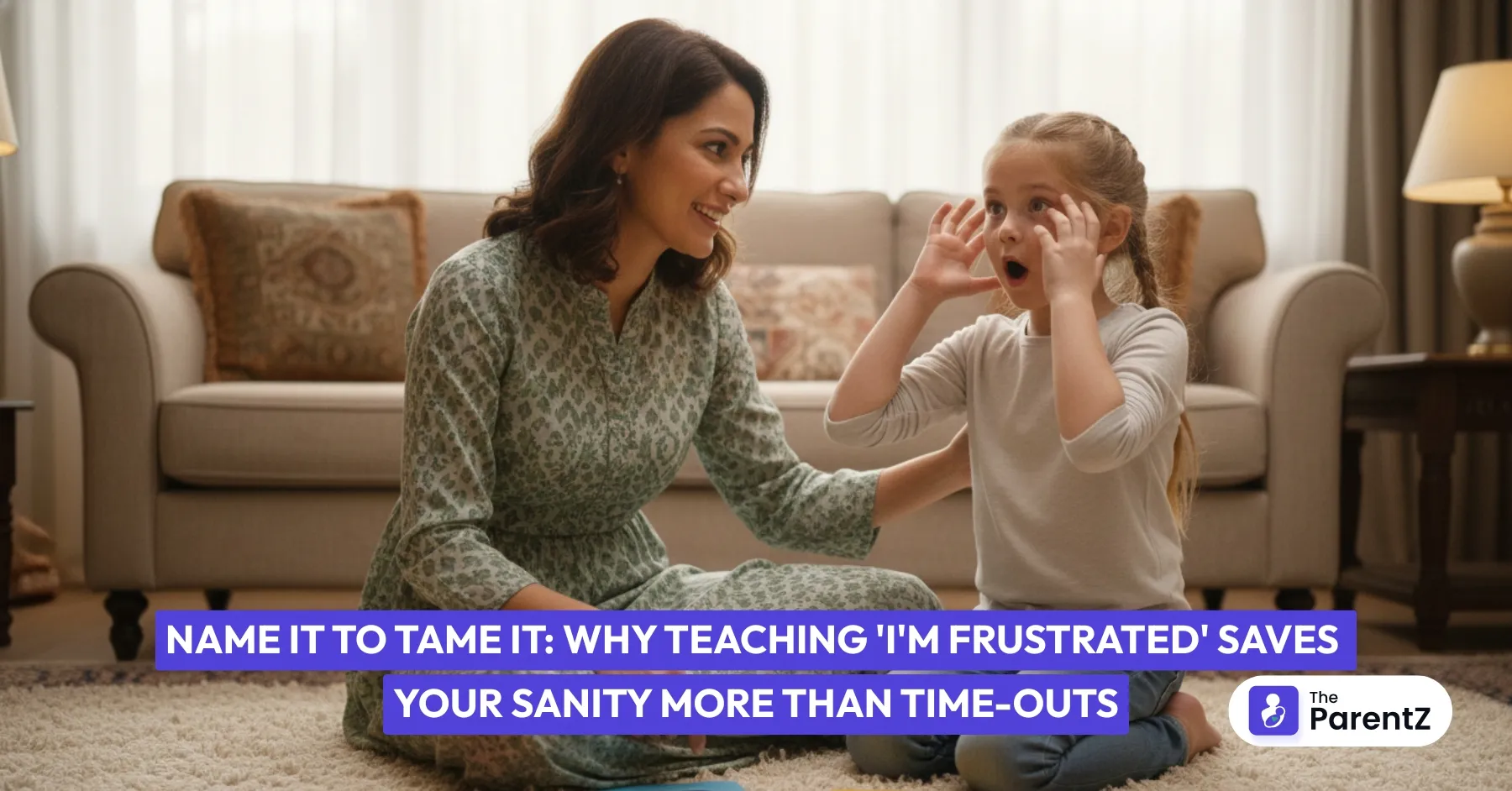
Most of us grew up with time-outs, scoldings, or silent treatment. It was normal. It was discipline. And many of us are now using the same tools with our kids, not because we’re bad parents, but because that’s what we know.
But parenting today feels harder. Kids get overwhelmed faster. Tantrums last longer. And time-outs don’t always work the way they used to.
If you’ve ever sent your child to a corner only to deal with louder crying, more anger, or a complete shutdown, you’re not alone.
This is where a simple idea called “Name It to Tame It” can quietly change things.
Time-outs were designed to give kids space to calm down. In theory, that sounds reasonable.
In real life, especially with young kids, here’s what often happens:
A dysregulated child cannot “think about what they did wrong.” Their brain is too busy dealing with the feeling. So instead of learning, they just feel bad. Or angry. Or disconnected. That doesn’t mean time-outs are evil. It means they don’t teach emotional skills.
“Name It to Tame It” is simple. When a child is overwhelmed, you help them put words to what they’re feeling. That’s it.
Instead of, “Go sit there until you calm down.” You try, “You look really frustrated right now.”
When emotions are named:
This works because emotions shrink when they are understood. Even adults feel relief when someone says, “Yeah, that sounds frustrating.” Kids are no different.
Today’s kids deal with:
They feel a lot, but they don’t yet have the language to explain it. When they can’t say, “I’m frustrated” or “I’m overwhelmed,” their body says it for them. Through crying, hitting, shouting, or shutting down.
Teaching emotional language is not spoiling them; it’s preparing them.
Let’s make this practical. For instance, your child throws their pencil because homework feels hard.
Instead of saying “Stop this drama and sit properly.” You go with, “I see you’re frustrated. Homework feels tough right now.”
Pause. That pause matters. Often, the intensity drops right there. Then you can add, “Do you want help, or do you need a short break?”
You didn’t excuse bad behaviour. You explained the feeling behind it. That’s teaching.
This is where many parents feel stuck. When emotions are very high, keep it short.
Say:
No lectures. No life lessons. Once the child calms down, then you guide. Calm first. Teach later.
No. And this is important. Naming emotions does not mean allowing harmful behaviour. You still say, “I won’t let you hit. But I see you’re angry.” This way, the boundary stays, but the connection stays too. This balance is what kids actually need.
You don’t need charts or flashcards.
Use daily moments:
Talk about your own feelings too: “I’m frustrated because traffic is slow,” or “I’m tired and need a break.”
This normalises emotions. Kids learn by watching.
Many parents worry, “Are we becoming too soft?” or “Will kids stop respecting us?”
Teaching emotions does not reduce respect. It builds trust. A child who feels understood listens better, and a child who feels safe learns faster.
We need to understand that discipline is not about fear; it’s about guidance.
Instead of a time-out, try:
These don’t take more time, and they save time in the long run. After a while, you will notice fewer power struggles, less shouting, and more cooperation.
When kids learn to say, “I’m frustrated,” or “I’m overwhelmed,” or “I need help,” they grow into adults who:
That’s not trendy parenting. That’s practical parenting for this era. You’re not raising kids for yesterday’s world. You’re raising them for today and tomorrow. And sometimes, the biggest change starts with one small sentence, “I see you’re frustrated.” That’s how you tame the moment and save your sanity too.
TheParentZ offers expert parenting tips & advice, along with tools for for tracking baby and child growth and development. Know more about Baby Growth and Development Tracker App.It serves as an online community for parents, providing valuable information on baby names, health, nutrition, activities, product reviews, childcare, child development and more
Disclaimer:
The views, thoughts, and opinions expressed in this article/blog are solely those of the author and do not necessarily reflect the views of The ParentZ. Any omissions, errors, or inaccuracies are the responsibility of the author. The ParentZ assumes no liability or responsibility for any content presented. Always consult a qualified professional for specific advice related to parenting, health, or child development.
Conversations (Comments) are opinions of our readers and are subject to our Community Guidelines.



Be the first one to comment on this story.