
Most Moms Report Slower Recovery After a Second Birth
Jul 19, 2026By Dr. Akanksha Priya
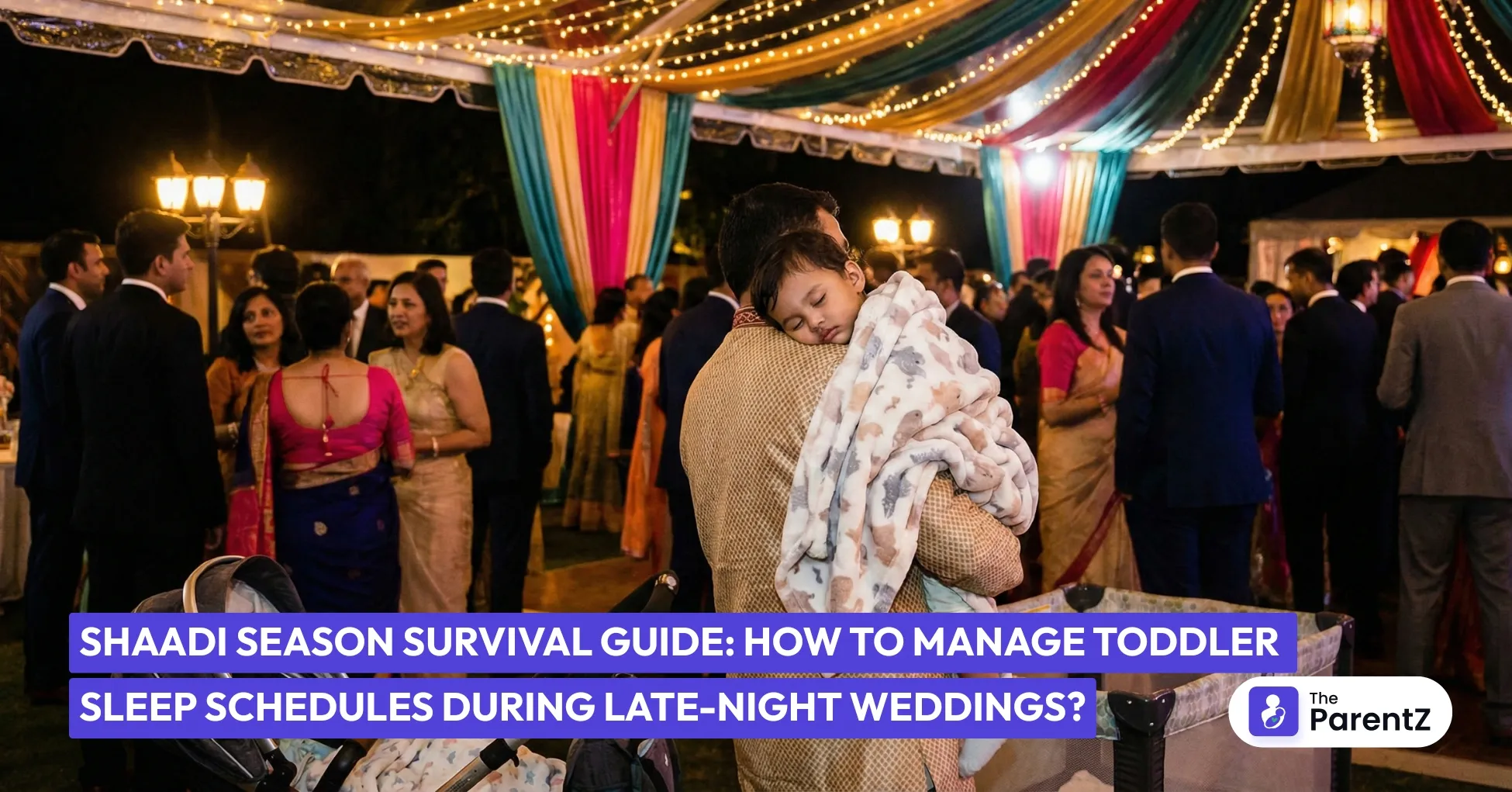
It's 10 PM. The sangeet is in full swing, your two-year-old is running around the dance floor with your dupatta in her hand, cousins are egging her on, and you just know that tomorrow is going to be rough.
If you've got a toddler and the wedding season is here, you're probably already feeling that mix of excitement and dread. Because as much as you want to celebrate, be part of family moments, and let your baby experience the joy of Indian weddings, there's that tiny voice in your head saying "but what about bedtime?"
At Indian weddings, the functions start late, and they end even later. Your toddler gets overstimulated with all the lights, music, people pinching their cheeks, and relatives they've never met trying to pick them up. Then there's the sugar from mithai, the excitement of seeing other kids, and, let's not forget, the outfit changes that take forever.
And one late night can mess up your toddler's sleep for days. But we're not suggesting you skip all the functions and lock yourself at home. That's not realistic, and it's not fair either. You deserve to be part of these celebrations. Your child deserves to experience family gatherings. The goal here is to manage it better, not avoid it completely.
Okay, so what can you actually do?
You don't have to attend every single function for the full duration. If there are five functions for one wedding, maybe commit to fully attending two or three. For the others, make a shorter appearance. Show up for an hour during the earlier part, let your toddler be seen, get your family photos, and then quietly slip out.
Yes, some relatives might comment. They always do. But your child's sleep and your sanity matter more than making sure you're there till the last song plays.
On wedding function days, protect that afternoon nap like your life depends on it. Most toddlers around 18 months take one long afternoon nap of 1.5 to 3 hours, and this is gold during wedding season.
Even if your toddler is at that stage where they're fighting naps, on wedding days, you need that nap to happen. A well-rested toddler can handle a later night much better than an already exhausted one. If they won't sleep, at least enforce a quiet time with books in a darkened room. Their body needs that rest period.
This sounds impossible, but it works. Identify a quiet corner or even your car. Around your toddler's regular bedtime, take them there for 15-20 minutes. Bring something familiar from home, like their favorite blanket, a small toy, or even play their usual bedtime song on your phone at low volume.
The idea isn't necessarily to make them sleep (though if that happens, great). It's to give their brain a signal that says, "This is wind-down time." It can take the edge off their overstimulation and buy you another hour or two of manageable behavior.
This is important. The day after a late-night function, don't have any plans. Clear your schedule. Your toddler is going to sleep in, let them. Their body is trying to recover.
When sleep schedules are disrupted, maintaining a consistent routine afterward helps children get back on track. So after they wake up, get back to your normal routine as much as possible. Normal meal times, normal nap time, normal bedtime. It helps reset their internal clock.
That gorgeous lehenga or sherwani is adorable, but if your toddler is uncomfortable, everything becomes ten times harder. Have a backup outfit that's easier and more comfortable. Once the main photos are done, it's okay to change them into something they can move and breathe in.
Comfortable kids are happier kids. Happier kids cope better with disrupted routines.
If you're going with your partner or family, work out a rotation system. One person stays with the group and socializes while the other takes the toddler somewhere quiet every 30-45 minutes for a break. Then switch.
This way, you both get to enjoy some of the function, your toddler gets regular breaks from overstimulation, and nobody is completely exhausted and resentful by the end of the night.
Your toddler probably won't make it through the whole night smiling and dancing. There will likely be at least one meltdown. There might be tears (theirs and possibly yours). And that's okay.
Set realistic expectations for yourself. You're not going to be the person dancing till 2 AM anymore. You might miss the really fun stuff that happens late. And your Instagram stories from the wedding might feature more toddler tantrums than you'd like. That's just the season of life you're in right now.
Let's talk about damage control because, despite your best efforts, sometimes everything goes sideways.
Your toddler hasn't slept well in three days. They're cranky, you're exhausted, and there are still two more functions to go. What do you do?
First, give yourself permission to tap out. Skip a function if you need to. Or go to just the ceremony part and skip the reception. Your presence at these events, while nice, is not more important than your family's well-being.
Second, don't try to force the routine back overnight. Sleep regressions don't have definite end dates and depend on the factors causing poor sleep. It might take 3-5 days of consistent routine to get back to normal. Be patient with the process and with your toddler.
Third, tag team harder. If you have a partner, let them handle bedtime for a couple of nights while you decompress, then switch. If you're doing this solo, ask for help from family or friends. One person watching the toddler for an afternoon so you can nap can make a huge difference.
Managing toddler sleep during wedding season is about balance and flexibility. You want to participate in family celebrations. Your child benefits from experiencing these cultural events and being around extended family. But you also can't completely ignore their needs for sleep and routine.
So you find the middle ground. You attend the important functions, but maybe not all of them. You stay for part of the evening but not the whole night. You let some routines slide but protect the crucial ones. You accept that your child might be a bit off for a week or two, and that's okay.
Most importantly, be kind to yourself. You're trying to handle multiple competing priorities, and there's no perfect solution. Some nights will work out better than others. Your toddler will eventually get back on schedule. And yes, one day you'll be able to dance at a wedding without mentally calculating bedtime math in your head.
Until then, stock up on coffee, pack extra clothes (for both of you), keep your expectations realistic, and remember, this phase is temporary. They won't be toddlers forever.
TheParentZ offers expert parenting tips & advice, along with tools for for tracking baby and child growth and development. Know more about Baby Growth and Development Tracker App.It serves as an online community for parents, providing valuable information on baby names, health, nutrition, activities, product reviews, childcare, child development and more
Disclaimer:
The views, thoughts, and opinions expressed in this article/blog are solely those of the author and do not necessarily reflect the views of The ParentZ. Any omissions, errors, or inaccuracies are the responsibility of the author. The ParentZ assumes no liability or responsibility for any content presented. Always consult a qualified professional for specific advice related to parenting, health, or child development.
Conversations (Comments) are opinions of our readers and are subject to our Community Guidelines.



Be the first one to comment on this story.