
Most Moms Report Slower Recovery After a Second Birth
Jul 19, 2026By Dr. Akanksha Priya
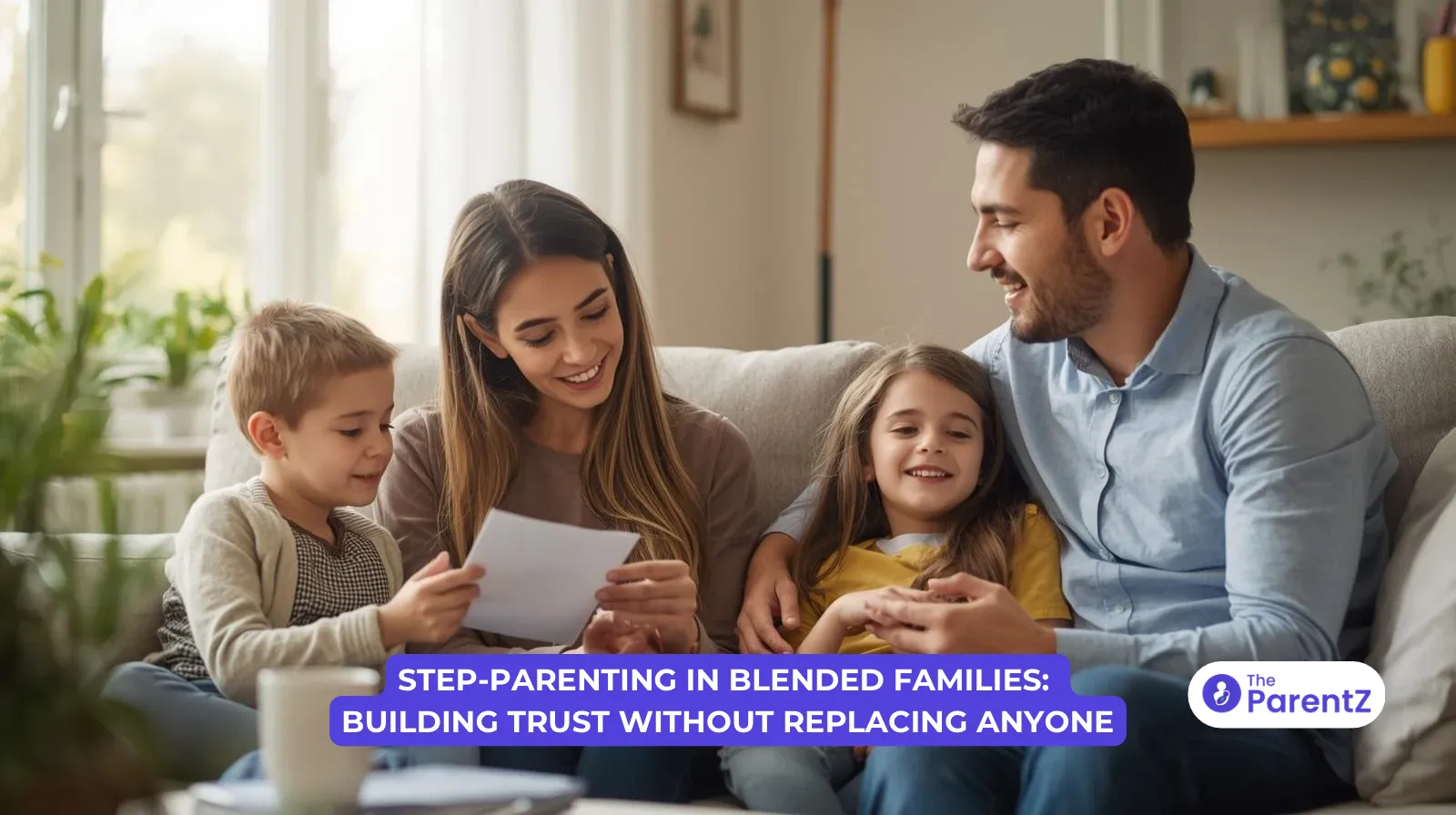
Step-parenting is awkward. Really awkward. If you're sitting there feeling like you're messing it up, wondering why this doesn't feel natural, you're not doing anything wrong. You're just in the middle of something that takes time.
A blended family, also called a stepfamily, is formed when two adults come together and bring children from previous relationships. You might have your kids, your partner might have theirs, and maybe you'll have children together too. This creates a mix of biological siblings, step-siblings, and half-siblings.
Your family might look different every time: your two kids, your partner's three kids, living together on weekends. Or you with one child, your partner with none, but their ex is still in the picture. Every blended family is unique.
What you need to understand is that you're not the villain in this story. Neither are the kids. Neither is your partner or their ex. Everyone's just trying to figure out how to make this work, and that's okay.
Everyone's dealing with something big.
Research shows it can take four to seven years for a blended family to feel stable. Kids under five might bond within a year or two. Teenagers? Much longer. Sometimes a deeply close relationship never forms, and that's okay. What matters is mutual respect and safety.
You're not here to replace their mom or dad. Even if the other biological parent isn't around, they exist in your stepchild's heart. Kids need to be allowed to love their absent parent.
You're an additional caring adult. Not a replacement. An addition. You don't have to be "Mom" or "Dad." You can be yourself, someone who cares, who's reliable, who's there. That's enough.
Don't force deep conversations. Ask about their music, games, and friends. Take them for ice cream. Build positive moments first.
For the first year or two, your partner handles discipline. You enforce basic respect, but the heavy lifting stays with their parent. This removes the "you're not my real parent" conflict.
Decide on non-negotiables: bedtime, screen time, and manners. When kids see both adults aligned, it creates security.
If they're open, spend time individually. Running errands, cooking, watching their show. Let them set the pace. Your partner should protect alone time with each child too.
When kids push buttons (they will), breathe before reacting. They're processing big feelings. If you mess up, apologize. It teaches them that adults can make mistakes and repair them.
Never argue about parenting in front of kids. Disagree behind closed doors, then present a united front.
Kids feel guilty for liking you, worried they're betraying their other parent. They might warm up, then pull back. This isn't rejection; it's them managing emotions. Never make them choose.
You won't be perfect next month or next year. There will be hard days. Progress isn't linear. Celebrate small wins, like a smile, a good conversation, or a moment when they asked for help.
You're the bridge. Your kids need to see you supporting your partner while knowing your love for them hasn't changed. Talk about making space for your partner while keeping love for their other parent alive. Protect your partner from disrespect, but give them grace when they mess up.
Your blended family won't look like anyone else's or what you imagined. And that's okay.
You're building a space where everyone can coexist, where kids feel secure, where you and your partner grow together, and where trust develops over time.
You're not replacing anyone. You're creating something new that honors everyone's history while building a shared future.
It's messy. It's slow. It's worth it.
Be patient with yourself and the kids. Keep showing up. That's what building trust looks like, not in grand gestures, but in small moments of consistency and care.
TheParentZ offers expert parenting tips & advice, along with tools for for tracking baby and child growth and development. Know more about Baby Growth and Development Tracker App.It serves as an online community for parents, providing valuable information on baby names, health, nutrition, activities, product reviews, childcare, child development and more
Disclaimer:
The views, thoughts, and opinions expressed in this article/blog are solely those of the author and do not necessarily reflect the views of The ParentZ. Any omissions, errors, or inaccuracies are the responsibility of the author. The ParentZ assumes no liability or responsibility for any content presented. Always consult a qualified professional for specific advice related to parenting, health, or child development.
Conversations (Comments) are opinions of our readers and are subject to our Community Guidelines.


Be the first one to comment on this story.