
Most Moms Report Slower Recovery After a Second Birth
Jul 19, 2026By Dr. Akanksha Priya
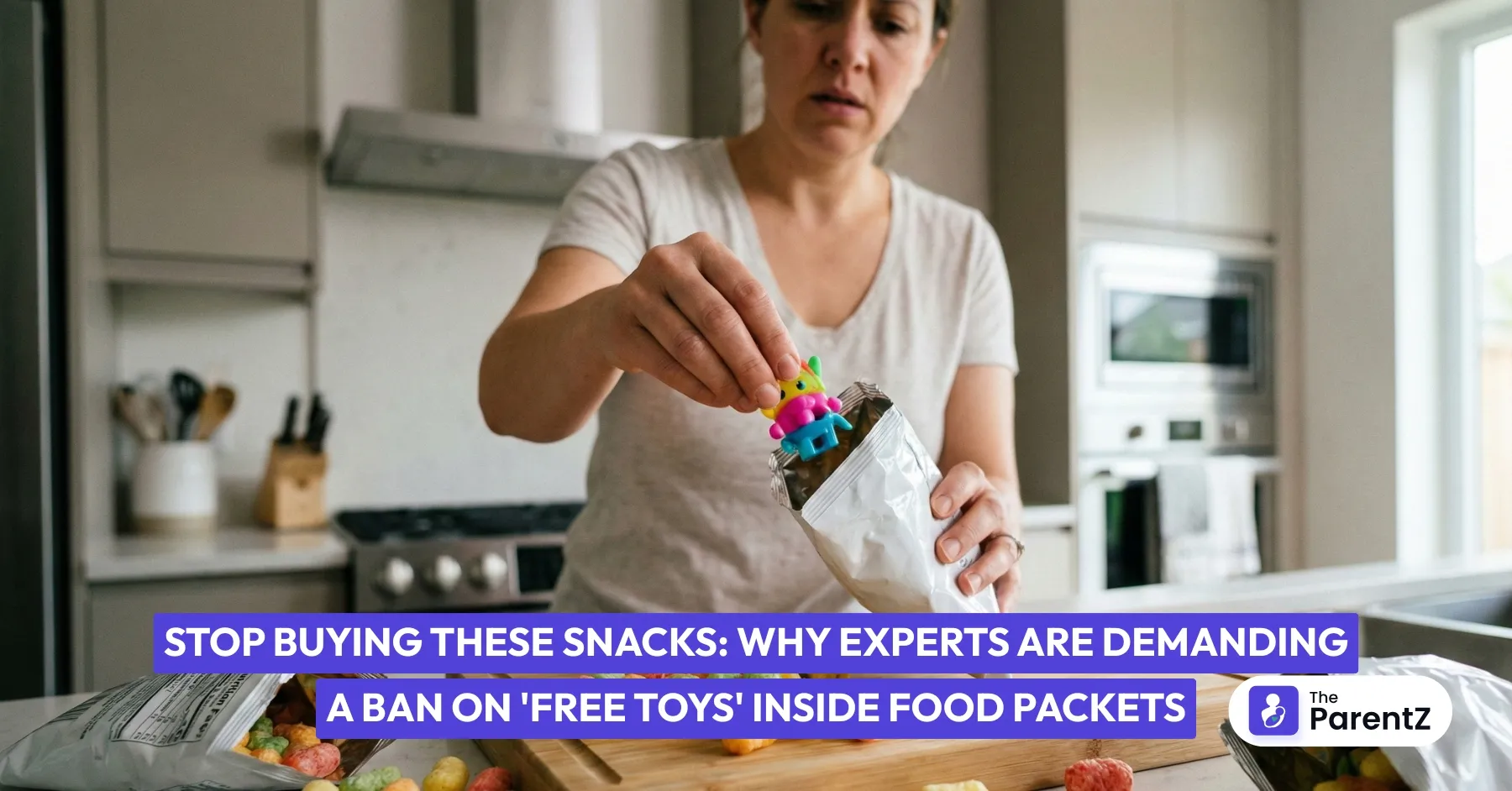
Remember when we used to get excited about those little toys in chip packets? That plastic ring, the tiny car, or those collectable cards?
Just last week, a four-year-old boy in Odisha died after swallowing a miniature plastic toy that came inside a chips packet. Bigil Pradhan came home from his anganwadi centre and started eating chips his father had bought from the market. The toy got stuck in his throat. His family tried to help, but by the time they rushed him to the hospital, it was too late.
This isn't an isolated case.
You might think, "My child knows not to eat toys." But that's not how it works with young kids. Children under five don't always understand the difference between what's food and what isn't, especially when both are in the same packet.
Medical officer Jakesh Samantara explained that children mistake these toys for edible items, and when the toy blocks a vital airway, it leads to suffocation. It happens fast. Within minutes, a child can lose consciousness. Within six to ten minutes, it can be fatal.
The problem gets worse because these toys are often:
Bigil's death wasn't the first. Similar incidents were reported in Andhra Pradesh's Vizianagaram district in October 2020 and West Godavari district in November 2017, where two more children died the same way, choking on toys from snack packets.
Globally, the numbers are alarming. Choking on foreign objects resulted in 103,915 deaths worldwide in 2021. Among children's products, latex balloons are the number one cause of choking deaths, with a majority among children ages five and younger. And on average, a child dies every 5 days in the United States from choking on food; imagine adding toys to that mix.
In 2000, three families who had lost children to choking on toys inside edible eggs campaigned for products to be withdrawn from the European Union. The issue isn't new. It's ongoing. And it's preventable.
Doctors aren't mincing words about this. They want action, and they want it now.
Dr. Subash Sahu, a private practitioner, stated clearly, "FSSAI should strictly monitor packaged snacks and ban toys inside packets. Companies indulging in this practice should face stringent action."
Paediatrician Dr. Nilamadhab Jena went further, saying these toys should be banned completely. His advice to parents? "Parents should give home-cooked healthy food to their children instead of junk food. If kids are eating anything outside, keep a strict eye on them."
Even health officials who handle broader public health concerns are worried. SK Nayak, chief district medical and public health officer, warned that the risk isn't limited to children; it's hazardous for adults too if such objects get stuck in the windpipe or food pipe.
The Food Safety and Standards Authority of India (FSSAI) already issued an advisory about this back in August 2019.
The advisory stated there was a need to discourage food businesses from providing toys or gift items inside food packages, especially for food likely to be ingested directly by infants or small children.
The directive was clear: promotional free toys or gift items should be provided separately or packed separately, and their color, texture, and nature should not resemble the food product inside the food package.
But it was an advisory, not a ban. Companies can still technically include toys if they follow certain guidelines. And clearly, enforcement has been lacking, because children are still dying.
It's simple: it works. Kids want the toys. They nag their parents. Parents buy more chips. Sales go up. Marketing campaigns with collectible items like Tazos became massively successful in boosting sales.
But at what cost? Is a company's profit margin worth a child's life?
First, understand that these incidents happen when we least expect them. Bigil's father bought those chips from a regular market. Nothing seemed wrong. Within hours, his son was gone.
Here's what you can do right now:
We need:
The FSSAI advisory exists. The medical evidence is clear. The tragic cases are documented. What's missing is the will to enforce a complete ban and the public pressure to demand one.
Your child's safety is more important than a free plastic toy. That excitement of finding a surprise in a chips packet isn't worth the risk.
Next time you're at the store, and your child asks for chips with a toy inside, remember Bigil. Remember that his parents thought it was just a normal snack too. Remember that this could happen to any family.
Choose products without toys. Push for change. Speak up. Because until companies stop this practice, or are forced to, more children are at risk.
TheParentZ offers expert parenting tips & advice, along with tools for for tracking baby and child growth and development. Know more about Baby Growth and Development Tracker App.It serves as an online community for parents, providing valuable information on baby names, health, nutrition, activities, product reviews, childcare, child development and more
Disclaimer:
The views, thoughts, and opinions expressed in this article/blog are solely those of the author and do not necessarily reflect the views of The ParentZ. Any omissions, errors, or inaccuracies are the responsibility of the author. The ParentZ assumes no liability or responsibility for any content presented. Always consult a qualified professional for specific advice related to parenting, health, or child development.
Conversations (Comments) are opinions of our readers and are subject to our Community Guidelines.


Be the first one to comment on this story.