
Most Moms Report Slower Recovery After a Second Birth
Jul 19, 2026By Dr. Akanksha Priya
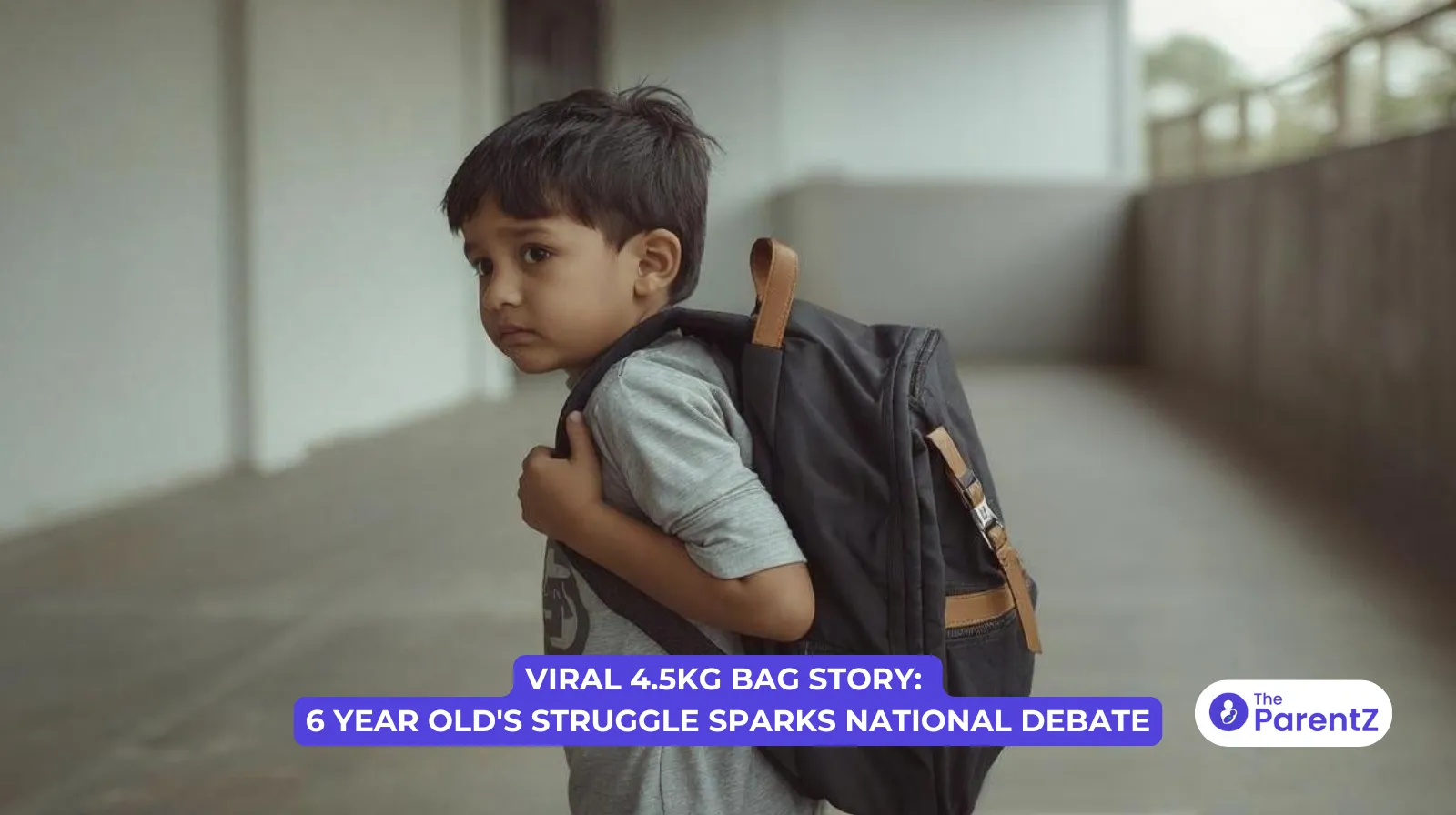
Picture this: your six-year-old son weighs just 21 kilograms. His schoolbag? It weighs 4.5 kilograms. That's more than 20% of his body weight, double what experts say is safe. Now imagine watching him bend forward every morning just to balance that load on his tiny shoulders.
This isn't a made-up scenario. It's exactly what happened to Balu Gorade, a father from Sambhajinagar, Maharashtra, whose recent post on social media has sparked a conversation about schoolbag weights. And it's about time.
Early January 2025, Gorade shared a simple but powerful image on X (formerly Twitter): his Class 1 son's schoolbag and tiffin box sitting on a weighing scale. The numbers told a story that words couldn't quite capture.
In his post, Gorade mentioned he'd raised this concern with the school multiple times. The responses? Polite but ultimately ineffective. His simple message to other parents, "Check how much your child is carrying," hit home for thousands of families across India.
This isn't just about one child in Maharashtra. Parents everywhere started sharing their own stories. One parent from Delhi said, "We talk about digital classrooms and smart schools, yet children still carry huge loads on their backs every day. They're barely out of kindergarten."
Another parent from Gurugram shared that her Class 3 son often carries nearly 7kg, and he weighs just 24 kilos. How is this acceptable? It's a question many of us should be asking.
The medical side of this isn't pretty either. Paediatric orthopaedic specialists warn that excessive weight on developing spines can lead to chronic back pain, muscle strain, nerve compression, and posture problems that stick around into adulthood.
Under the National Education Policy (NEP) 2020, the message is crystal clear: schoolbags shouldn't exceed 10% of a child's body weight. The policy pushes for lighter textbooks, minimal homework in early classes, flexible timetables, digital learning tools, and locker facilities.
On paper, it sounds great. In reality? Many parents say it's nowhere close to what actually happens in classrooms. The problem isn't that we don't have the rules—it's that enforcement is patchy at best.
There is some good news. In early January 2025, Kerala's State Curriculum Steering Committee approved a draft plan to reduce schoolbag weights and eliminate the concept of "backbenchers" in classrooms. These changes aim to create more inclusive, student-friendly learning environments.
The draft was open for public feedback until January 20, 2025, and the government plans to roll out these changes in the next academic year, starting June 2026. It's a step in the right direction, one that shows what's possible when authorities actually listen and act.
This whole situation isn't just about heavy bags; it's about priorities. Are schools valuing their convenience over children's health? Why are policies celebrated in seminars but ignored in actual classrooms?
As parents, here's what we can actually do, right now:
It is amazing to see how one photograph did what years of complaints couldn't. It forced people to look at the problem. That visual of a 4.5kg load meant for a six-year-old made the invisible burden suddenly very visible.
We live in a world where we have smart boards, tablets, and countless digital tools in classrooms. Yet somehow, first-graders are still hauling physical loads that would make an adult think twice. The contradiction is hard to ignore once you see it clearly.
The outrage this story sparked isn't just about one child or one school. It's about recognizing a systemic issue that's been hiding in plain sight. Children shouldn't have to fight their schoolbags just to get an education. They should carry books for learning, not burdens that could affect them for life.
If this conversation leads to real changes like lockers being installed, timetables getting redesigned, and digital alternatives being embraced, then it will mark the beginning of something important. But that change won't happen unless parents, educators, and policymakers keep pushing.
So the next time you watch your child struggle with their schoolbag, don't just accept it as normal. Weigh it. Question it. Talk about it with other parents and with the school. Because this 4.5kg bag that went viral could just as easily be your child's bag tomorrow.
The question isn't whether this matters. It clearly does. The question is: what are we going to do about it?
TheParentZ offers expert parenting tips & advice, along with tools for for tracking baby and child growth and development. Know more about Baby Growth and Development Tracker App.It serves as an online community for parents, providing valuable information on baby names, health, nutrition, activities, product reviews, childcare, child development and more
Disclaimer:
The views, thoughts, and opinions expressed in this article/blog are solely those of the author and do not necessarily reflect the views of The ParentZ. Any omissions, errors, or inaccuracies are the responsibility of the author. The ParentZ assumes no liability or responsibility for any content presented. Always consult a qualified professional for specific advice related to parenting, health, or child development.
Conversations (Comments) are opinions of our readers and are subject to our Community Guidelines.



Be the first one to comment on this story.