
Most Moms Report Slower Recovery After a Second Birth
Jul 19, 2026By Dr. Akanksha Priya
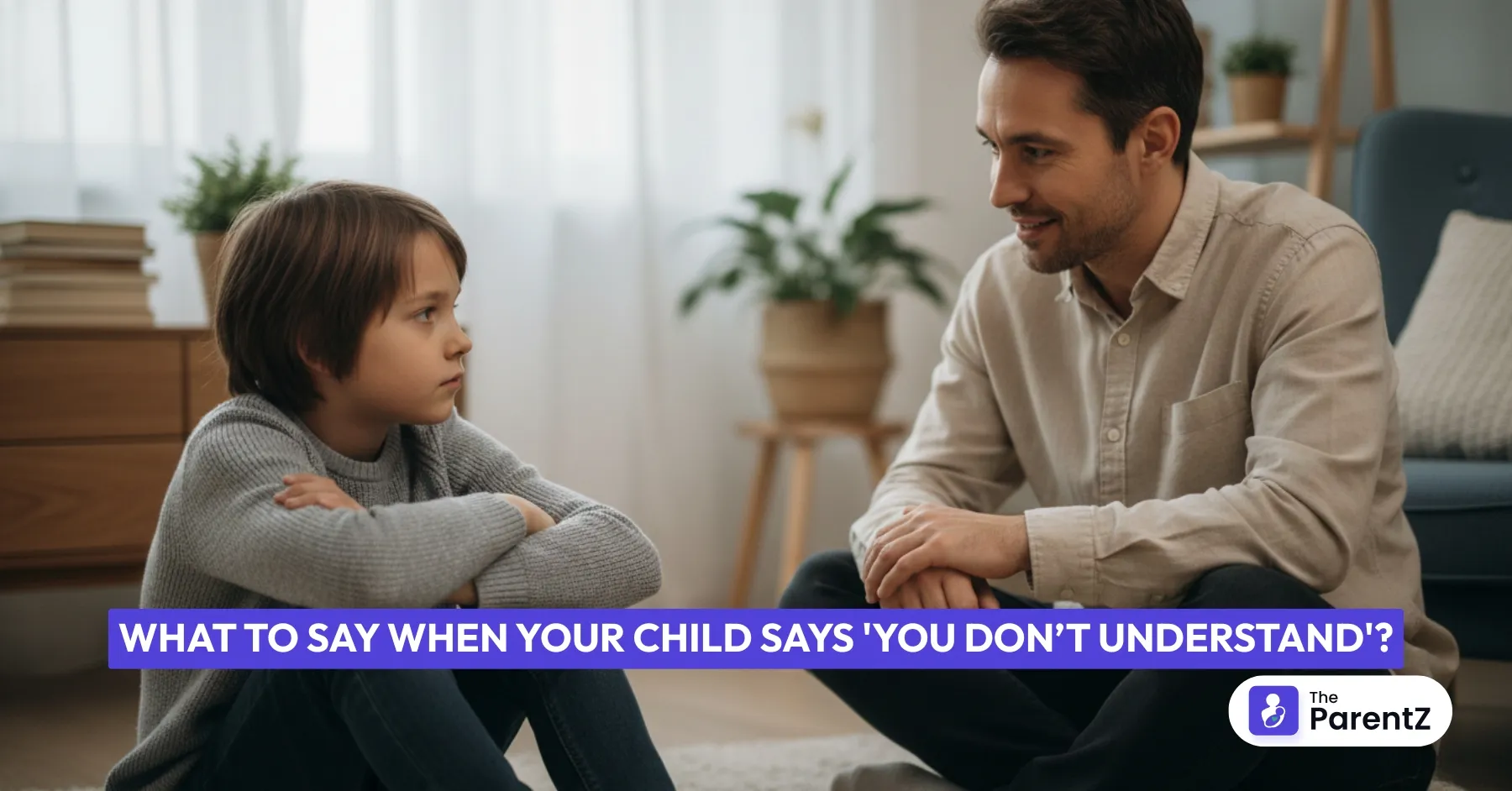
"You don't understand!"
Your child shouts this, tears streaming, and storms off. The door slams. Your heart sinks.
You were just trying to help. Maybe you were explaining why they can't skip homework, or why they need to wait for that new toy, or why they can't go to their friend's house today. You thought you were being reasonable.
But somehow, your words didn't land. Instead, they pushed your child further away. And now you're standing there, feeling helpless, frustrated, maybe even a little hurt.
If this sounds familiar, take a deep breath. You're not alone. This happens in homes every single day, from Mumbai to Delhi, Chennai to Bangalore. And today, we're going to talk about what's really happening in these moments and, more importantly, what you can say and do to bridge that gap.
When your child says, "You don't understand," they're not attacking you. They're not trying to be difficult or disrespectful, even though it might feel that way in the moment. Research on child development and emotional intelligence shows this statement is actually a cry for emotional connection.
Think about your own life for a moment. Remember the last time you were stressed about work, worried about money, or frustrated with a family member. When you tried to share your feelings with someone, and they responded with "just don't think about it," or "it's not that big of a deal," or "you're overreacting," how did that feel?
Probably not great, right? You likely felt dismissed, misunderstood, maybe even more upset than before. That's exactly what our children feel when we minimize or dismiss their emotions, even when we're trying to help them feel better.
Most of us, with the absolute best intentions, respond in one of these ways:
"But I do understand! I was a kid once too!"
"You're overreacting. It's really not that big of a deal."
"Stop being so dramatic."
"Just calm down, and we'll talk about it."
"When I was your age, I had it much harder..."
These responses come from a place of love. We're genuinely trying to make our children feel better, to give them perspective, to help them see that things aren't as bad as they seem. We want to fix the problem and stop their pain.
But when children (and adults too) are in the grip of strong emotions, the emotional part of the brain, the amygdala, takes over. The thinking, reasoning part of the brain, the prefrontal cortex, essentially goes offline. In young children, whose brains are still developing, this is even more pronounced.
So when we jump straight to logic, explanations, or minimizing, we're basically trying to reason with someone whose reasoning brain isn't even accessible yet. And worse, we're unintentionally confirming their deepest fear, that we really don't understand, that their feelings don't matter, that they're alone in this big feeling.
Your child doesn't always need you to fix the problem or agree with them. What they need first is to feel heard and understood.
There's neuroscience behind this. When we validate emotions, it activates calming systems in the brain. Stress hormones decrease. The emotional brain settles. Only then can the thinking brain come back online.
Studies found that children whose emotions are validated develop better emotional regulation, stronger relationships, higher self-esteem, and better problem-solving abilities. On the flip side, children whose emotions are regularly dismissed learn to suppress feelings and may struggle with emotional expression as adults.
So before you explain, fix, or solve, your first job is to help your child feel heard. Everything else can wait.
When your child says, "You don't understand," here are specific things you can say:
"Fair point. I realize I’m looking at this from my perspective, not yours. Can you help me understand?"
This is powerful because it validates their feeling (you're not getting defensive) and it invites them to share more. It opens a door instead of closing it.
"You seem really upset about this."
"I can see this is really important to you."
"You're feeling hurt right now."
"You look really disappointed."
You're not interpreting, judging, or solving. You're simply reflecting back what you observe. This helps children feel seen.
"It makes sense that you'd feel disappointed about not making the team."
"I know I’d be feeling just as frustrated as you are right now."
"That sounds really hard."
"It's okay to feel sad about this."
Notice that you're validating their emotion, not necessarily agreeing that the situation is unfair or that their interpretation of events is correct. Feelings and facts are separate things.
"Tell me more about what happened."
"What was the hardest part for you?"
"How did that make you feel?"
"What do you wish had happened instead?"
These open-ended questions help them process their feelings while feeling supported. You're not interrogating, you're genuinely trying to understand their world.
Validate first, then hold the boundary: "I hear you want to go to Priya's house. You're disappointed. That makes sense. And we still need to stay home today. I know that's hard."
This approach reduces tantrums over time because children feel respected even when the answer is no.
Sometimes you genuinely, truly don't get why your child is so upset. They're having a complete meltdown over something that seems objectively small to you. Their favorite YouTuber stopped posting videos. They can't find the "right" socks. Someone at school looked at them funny.
You want to understand, but you just... don't. And that's completely okay.
Try saying this: "I can see this is really tough right now. Can you walk me through what the hardest part of this is for you?"
When you give children space to explain without judgment, they often help you understand. And even if you still don't fully get it after they explain, that's okay too. Your role isn't to understand perfectly; it's to be present with them in their emotion.
Pro Tip: Don't compare ("When I was your age..."), minimize ("It's not that bad"), fix too fast, get defensive, or dismiss their feelings.
"You don't understand" isn't an attack. It's an invitation to connect, to see them, to be with them.
Yes, it's uncomfortable. Yes, it takes time. But it works. This builds trust, strengthens bonds, and gives your child skills for life. Next time your child says, "You don't understand," take a breath. Get on their level. And simply say, "Help me understand."
Then listen. Really listen.
TheParentZ offers expert parenting tips & advice, along with tools for for tracking baby and child growth and development. Know more about Baby Growth and Development Tracker App.It serves as an online community for parents, providing valuable information on baby names, health, nutrition, activities, product reviews, childcare, child development and more
Disclaimer:
The views, thoughts, and opinions expressed in this article/blog are solely those of the author and do not necessarily reflect the views of The ParentZ. Any omissions, errors, or inaccuracies are the responsibility of the author. The ParentZ assumes no liability or responsibility for any content presented. Always consult a qualified professional for specific advice related to parenting, health, or child development.
Conversations (Comments) are opinions of our readers and are subject to our Community Guidelines.



Be the first one to comment on this story.