
Most Moms Report Slower Recovery After a Second Birth
Jul 19, 2026By Dr. Akanksha Priya
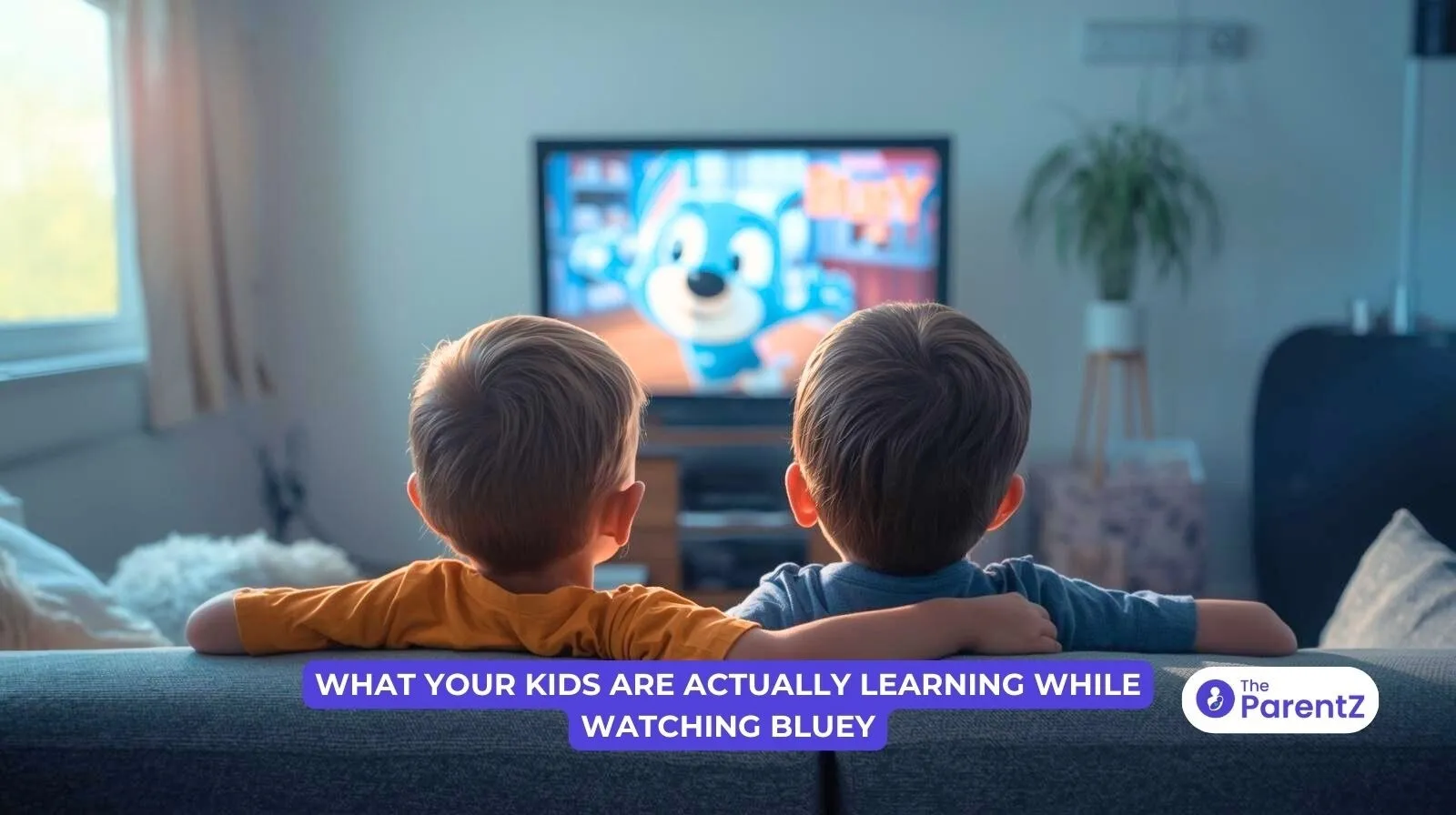
There's a good chance your child has watched the same Bluey episode four times this week. Maybe five. And somewhere between "Keepy Uppy" and "The Show," you've gone from tolerating it to genuinely looking forward to it yourself.
That's not an accident.
Bluey, the Australian animated series about a six-year-old Blue Heeler pup and her family, became the most-watched show across all programming in America in 2024, not just kids' TV, all shows, clocking 55.62 billion minutes on Disney+ alone. It has held a spot in Nielsen's streaming ratings for over 143 consecutive weeks. That kind of staying power doesn't come from cute animation alone. It comes from something the show is quietly doing that most children's programming simply doesn't bother with.
It's teaching kids how to feel things. And then what to do about those feelings.
Bluey is curious, a little bossy, wildly creative, and deeply empathetic. She's not a perfect kid. She pushes boundaries, gets frustrated, and sometimes doesn't listen. That's exactly the point. Kids watch her and see themselves.
Bingo, her younger sister, is sweeter and more sensitive, but she also has big emotions she's still learning to manage. Her arc across episodes is quietly one of the most honest portrayals of what it's like to be four and still figuring out how the world works.
Bandit, the dad, is a gem. He's genuinely fun, often ridiculous, and completely present. He's not the bumbling dad stereotype, and he's not the emotionally absent kind either. He's just a dad who shows up, tired sometimes, imperfect always, but always there. The show's creator, Joe Brumm, based the character and many storylines on his own experience parenting his daughters, which is why it lands the way it does.
Chilli, the mum, brings the emotional grounding. She's the one who models how to sit with a feeling, name it, and move through it.
Together, these four show kids what a functional family actually looks like in motion. Not a perfect one, a real one.
A 2025 study published in the Educational and Developmental Psychologist journal had researchers watch all 150 episodes from seasons one through three. Their finding? Nearly half of all episodes (48.7%) featured resilience as either a primary or secondary theme.
Resilience, the ability to face challenges, handle setbacks, and keep going, is directly linked to better emotional regulation, stronger relationships, and improved academic outcomes in children. The same research found that in nearly two-thirds of those resilience moments, a parent character was the one modeling the behavior. Most often, it was Chilli.
Take The Show (Season 2, Episode 19). Bingo and Bluey put on a homemade play for their parents. Bingo, playing the mum, drops a tray and dissolves into tears, thinking she's ruined everything. Chilli leans in and explains her own personal checklist for when things go wrong: "I have a little cry, I pick myself up, dust myself off, and keep going."
That's not a lecture. It's a mom showing her kid how she handles disappointment, out loud, in real time, in a way a four-year-old can actually absorb. By the end of the episode, when something else goes wrong, Bingo repeats those exact words back to herself. She didn't read it in a workbook. She watched her mum do it, and then she did it too.
Or look at Wagon Ride (Season 1, Episode 24). Bluey keeps interrupting Bandit mid-conversation. Instead of snapping at her or ignoring the behavior, Bandit shows her something simple: place your hand on my arm when you need me. He'll put his hand over hers to let her know he knows she's waiting. It's a practical, physical cue for patience and acknowledgment, and teachers have since reported kids with autism, among others, using this exact technique in classrooms after watching the episode.
Then there's Keepy Uppy (Season 1, Episode 3), where the whole game falls apart when the last balloon pops. The girls could spiral. Instead, they adapt, get creative, and keep playing. It's eight minutes of what psychologists call adaptive coping, shown, not explained.
Copycat is another one. Bluey watches Bandit comfort an injured bird they find. He's gentle, patient, and present even when the outcome is uncertain. Later, Bluey mimics that same tenderness with a toy bird at home. She didn't sit through a lesson on compassion. She watched her dad be compassionate, and something clicked.
One thing Bluey gets right that a lot of other children's shows miss: it treats play as serious business.
Every episode is essentially built around a game, like taxi, magic xylophone, grannies, and pirates. But what's happening inside those games is sophisticated. Kids are negotiating rules, handling disappointment when games don't go their way, taking turns holding power, and learning perspective-taking. In Magic Xylophone, Bluey and Bingo "freeze" Bandit and move him into ridiculous positions. He goes along with it completely. That's not just funny. That's a dad showing his kids that their imagination matters, that they have power and agency, and that adults can be silly too.
Imaginative play like this is directly tied to emotional intelligence and cognitive development. The show doesn't announce this. It just does it, episode after episode.
The lessons aren't directed at children the way they are in older educational programming. There's no character turning to the camera and explaining what just happened. The emotional intelligence is baked into the story itself.
So when your child watches Chilli come back from a hard day and still choose to be present for the girls, they're absorbing something about what care looks like under pressure. When they watch Bingo cry over a burst balloon and then pick herself back up, they're watching emotional regulation in real time. When Bandit admits he got something wrong, they're learning that adults make mistakes and that's survivable.
Kids are far more perceptive than we give them credit for. They notice the texture of how people treat each other. Bluey gives them incredibly rich material to observe and internalize.
A registered social worker and director of Peachey Counselling and Family Support summed it up well when she told Today's Parent that while kids learn from the show, so do adults, specifically around positive parenting techniques and how to manage difficult emotions alongside children.
The researcher who led the 2025 resilience study noted that parents around the world are watching Bluey with their kids and quietly modeling their own parenting on the Heeler family. That's remarkable for a cartoon. It's also not surprising at all once you've actually spent time with the show.
The next time your child asks to watch Bluey for the sixth time this week, know that something is happening in that small head of theirs that's genuinely worth letting happen.
TheParentZ offers expert parenting tips & advice, along with tools for for tracking baby and child growth and development. Know more about Baby Growth and Development Tracker App.It serves as an online community for parents, providing valuable information on baby names, health, nutrition, activities, product reviews, childcare, child development and more
Disclaimer:
The views, thoughts, and opinions expressed in this article/blog are solely those of the author and do not necessarily reflect the views of The ParentZ. Any omissions, errors, or inaccuracies are the responsibility of the author. The ParentZ assumes no liability or responsibility for any content presented. Always consult a qualified professional for specific advice related to parenting, health, or child development.
Conversations (Comments) are opinions of our readers and are subject to our Community Guidelines.

Be the first one to comment on this story.