
Most Moms Report Slower Recovery After a Second Birth
Jul 19, 2026By Dr. Akanksha Priya
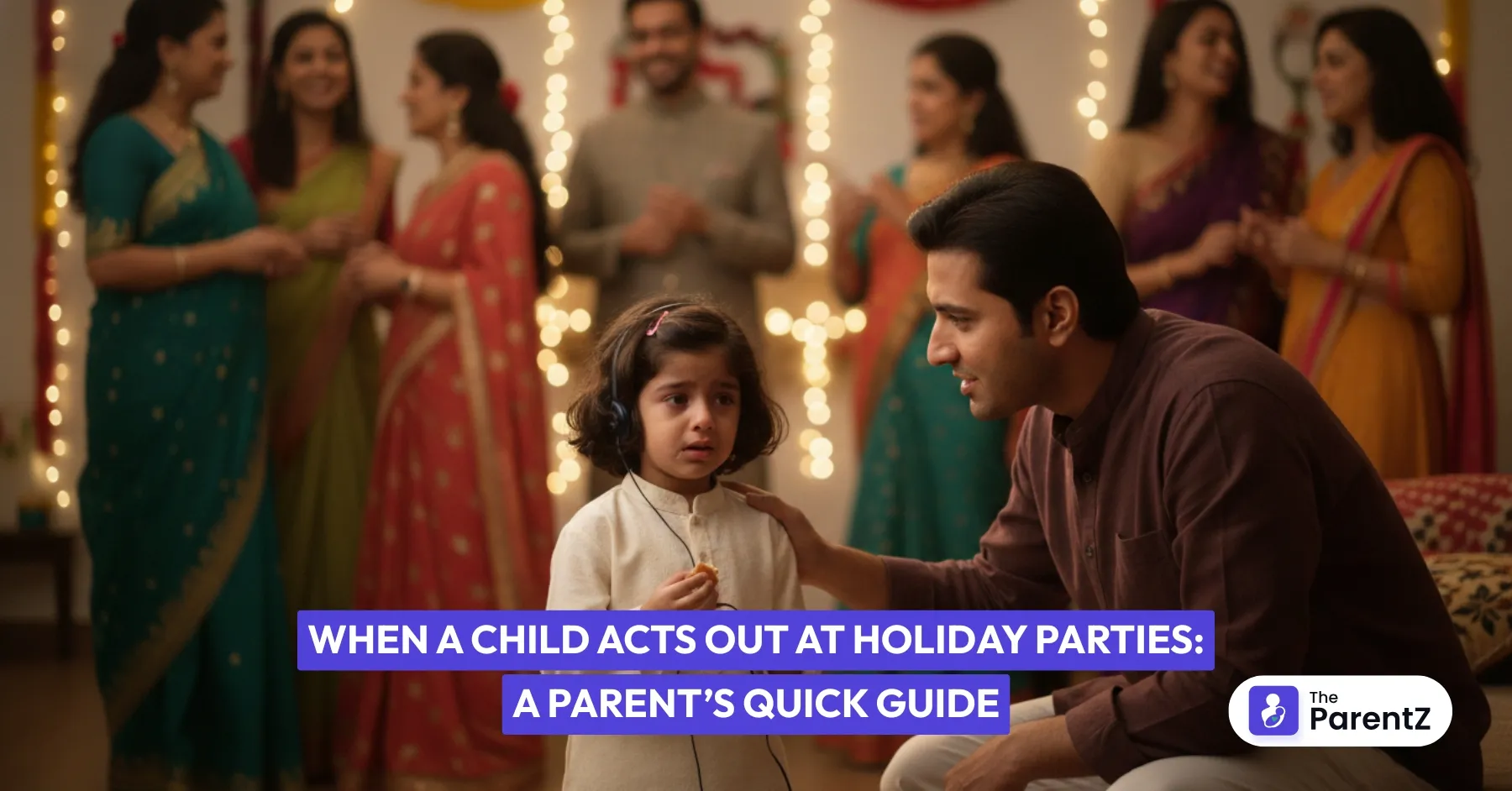
You're at your in-laws' place. The house is buzzing with aunties, uncles, cousins you haven't seen in months, and someone's brought homemade ladoos that everyone's raving about. Your child was doing fine for the first thirty minutes. Now, they're on the floor, screaming about wanting to go home, or they've just pushed their cousin for no apparent reason.
Every parent in that room is either looking at you with sympathy (because they've been there) or judgment (which stings even more). Your stress level shoots through the roof. You're juggling your own emotions, your child's meltdown, and the social pressure of being at a family gathering.
Holiday parties are a perfect storm for kids. Too many people, disrupted routines, sugar overload, late nights, uncomfortable clothes, and everyone wanting hugs from a child who just wants to play on their tablet. And parents are already stretched thin trying to manage everything.
Before we jump into solutions, let's understand what's happening. Your child isn't trying to ruin your evening or embarrass you. Their brain is literally overwhelmed.
When you've had a long day at work, dealt with traffic, and then someone asks you to attend yet another meeting, you feel irritable, right? Kids experience the same thing, except they don't have the vocabulary or self-regulation skills to say, "I'm feeling overstimulated and need a break."
What's actually happening in their brain:
When their brain hits capacity, they go into fight-or-flight mode. That tantrum? It's not manipulation. It's their nervous system saying, "I can't handle this anymore."
When your child is already having a meltdown at the party, you need quick, practical steps.
Find the quietest spot you can, like a bedroom, balcony, or even your car. This isn't a punishment; this is giving their overwhelmed brain a chance to reset. Stay calm and say something like, "Let's take a break together." Your presence matters more than your words right now.
Don't worry about what people think. Any parent who's judging you hasn't had enough parenting experience yet. Take your child away from the audience; they need to calm down, not perform better behavior.
Skip the lecture. Their rational brain is offline right now. Instead:
This usually takes 5-15 minutes. Be patient. You can't rush nervous system regulation.
Once they're a bit calmer, help them identify the emotion: "You seem really tired," or "All those people felt like too much, didn't they?" You're not excusing the behavior, but you're validating that their feelings are real.
This teaches emotional intelligence. Over time, they'll learn to identify these feelings earlier and communicate before the meltdown.
Once everyone's calm, maybe even the next day, talk about what happened. "Yesterday, when you pushed your cousin, that hurt him. When we're upset, we use words, not hands. What could you say next time when you feel frustrated?"
Keep it simple. Keep it about actions, not character. "That was unkind" is better than "You were so naughty."
Sometimes, the best solution is to leave. And that's okay. Really. Your child's well-being matters more than staying for the full three hours. You can leave early, recharge, and try again another day. This isn't giving up; it's respecting your child's limits and your own sanity.
Prevention is honestly easier than damage control.
The day before, have a simple conversation, "Tomorrow we're going to Aunty's house. There will be lots of people, and it might feel busy. If you need a break, just tell me, and we'll find a quiet spot."
Set realistic expectations for yourself too. Your child might not be their "best" at this party, and that's normal.
Pack a small bag with:
Try to preserve nap times or at least some downtime before the party. An already-tired child plus a stimulating environment equals guaranteed disaster. If the party's in the evening, consider arriving later and leaving earlier rather than doing the full event.
This is tough because festivals mean sweets. Try this: let them eat a proper meal before the party. When they're not running on empty, they won't crash as hard from the sugar. You don't need to be the parent who says "no sweets", but you can limit the damage.
We're often dealing with extended family who have opinions. Lots of opinions. About everything.
"Kids these days are so spoiled."
"In our time, children knew how to behave."
"Just give them one tight slap; they'll straighten out."
You can respect elders and still parent your child the way you believe is best. You can nod politely at unsolicited advice and then do what actually works for your family.
If someone criticizes your child or your parenting in the moment, a simple "We're handling it" or "Thank you, we've got this" is enough. You don't owe anyone an explanation when your child is struggling.
And remember that every generation thinks they had the hardest job. The truth is, we're all doing our best with the tools and knowledge we have.
Holiday parties will come and go. Your relationship with your child is what lasts. Sometimes that means leaving a party early. Sometimes that means dealing with judgment from relatives. Sometimes that means taking your crying child to a quiet room while everyone else enjoys biryani.
And that's okay. You're teaching your child that they matter more than appearances, that their feelings are valid, that you're their safe person even when things get hard.
TheParentZ offers expert parenting tips & advice, along with tools for for tracking baby and child growth and development. Know more about Baby Growth and Development Tracker App.It serves as an online community for parents, providing valuable information on baby names, health, nutrition, activities, product reviews, childcare, child development and more
Disclaimer:
The views, thoughts, and opinions expressed in this article/blog are solely those of the author and do not necessarily reflect the views of The ParentZ. Any omissions, errors, or inaccuracies are the responsibility of the author. The ParentZ assumes no liability or responsibility for any content presented. Always consult a qualified professional for specific advice related to parenting, health, or child development.
Conversations (Comments) are opinions of our readers and are subject to our Community Guidelines.



Be the first one to comment on this story.