
Most Moms Report Slower Recovery After a Second Birth
Jul 19, 2026By Dr. Akanksha Priya
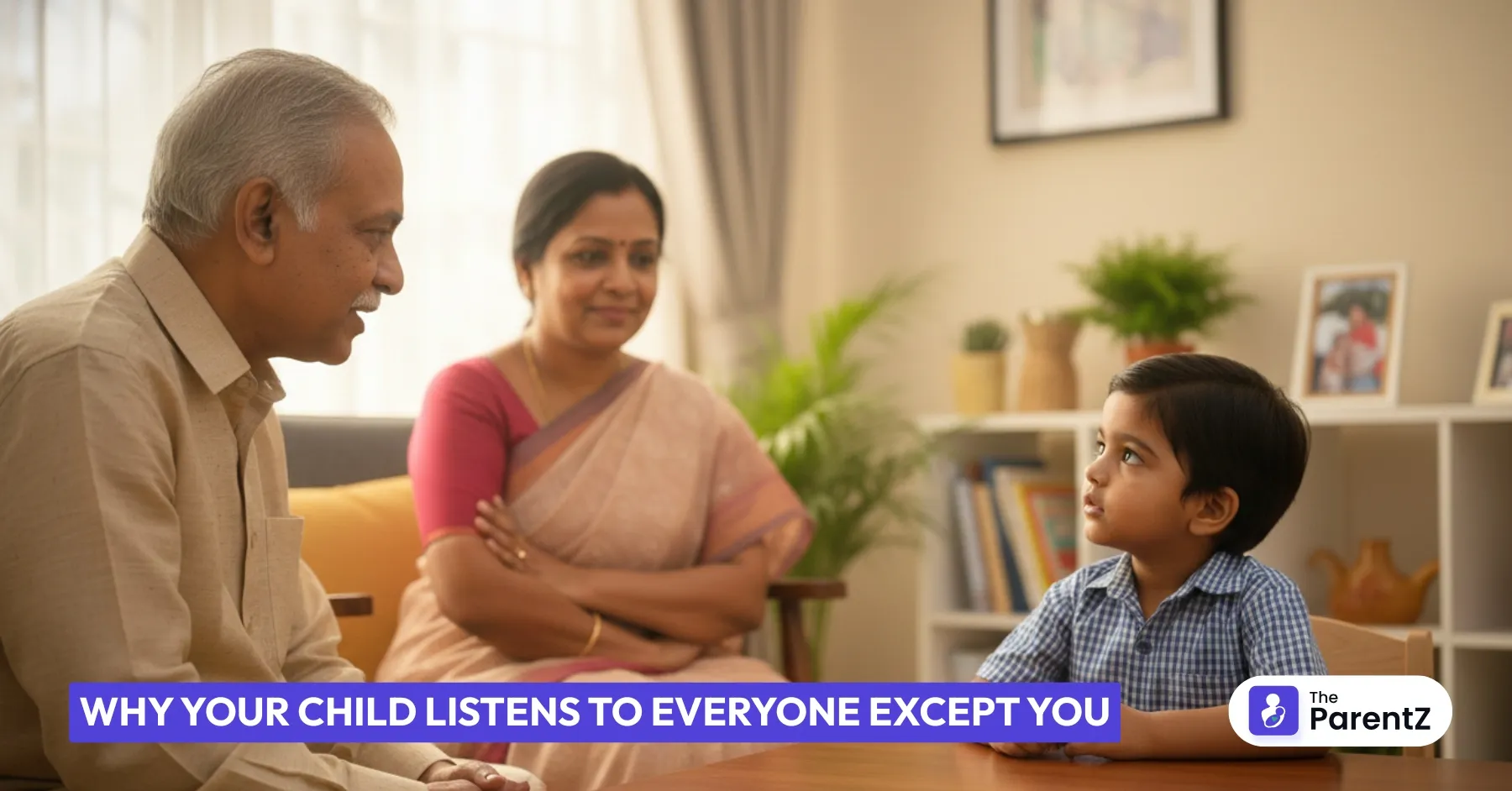
You've just told your child for the third time to put their shoes on. Nothing. Your mother-in-law walks in and says it once, and shoes are on in seconds. Or your child's teacher mentions homework, and suddenly it's done without drama. But when you say the exact same thing? Zilch.
It hurts. It feels disrespectful. And it feels unfair.
Before you blame yourself or your child, pause. This behaviour is far more common than you think, and it does not mean you are a bad parent. Let’s understand what’s really going on.
Children behave differently at home because home is where they feel safest. With parents, they do not feel the need to impress or behave perfectly. They know they can express frustration, delay tasks, or even refuse instructions and still be loved. This sense of safety is healthy, even though it can be exhausting for parents.
Outside the home, children are more alert and controlled. They are careful about how they behave because they are being observed and evaluated. At home, that pressure disappears. What looks like disobedience is often an emotional release.
At home, children hear instructions constantly throughout the day. Over time, even important reminders start blending into the background. The brain naturally filters out repeated information, especially when it sounds the same every day.
When the same instruction comes from a new voice, such as a teacher or elder, it feels different and fresh. Children are more likely to respond because their attention is activated. This is not intentional ignoring; it is how the human brain works.
When parents speak, their words often come with worry, stress, and expectations. Children can sense this emotional load very clearly. Even a simple instruction can feel heavy when it carries concern about marks, behaviour, or future success.
On the other hand, teachers or relatives usually speak in a calmer and more neutral way. Their instructions feel lighter and less emotionally charged, which makes it easier for children to accept and follow them.
Many children behave well outside but struggle at home. This happens because they spend the entire day controlling their behaviour at school or in social settings. When they return home, they finally feel free to let their guard down.
This emotional release may show up as stubbornness, silence, or refusal to listen. It is not disrespect. It is often exhaustion and emotional overload.
Most parents react instinctively when they feel ignored. Repeating instructions louder, comparing children with others, threatening consequences, or bringing up past mistakes feels natural in the moment. However, these responses usually increase resistance instead of cooperation.
When children feel pressured or judged, they either shut down or push back. Over time, this creates a cycle where parents talk more and children listen less.
One effective change parents can make is to reduce the number of instructions they give. When everything becomes an instruction, children stop distinguishing what is important. Speaking less but more clearly often leads to better listening.
Saying something once in a calm tone and allowing time for a response can be more effective than repeating it multiple times. Silence can sometimes communicate seriousness better than raised voices.
Children listen better when they feel emotionally connected. Before giving instructions, sitting beside them, making eye contact, or gently touching their shoulder can change how your words are received.
This connection signals safety, not control. When children feel understood, they are more open to guidance.
Not every habit needs immediate correction. Constant correction makes children defensive and overwhelmed. Parents who focus on a few important boundaries instead of controlling everything often see better cooperation.
Asking yourself whether something truly matters in the long run helps reduce daily conflict and preserves emotional connection.
Instead of constant reminders and warnings, allowing children to experience natural consequences helps them learn responsibility. Forgetting homework, misplacing items, or facing feedback teaches lessons more effectively than lectures.
This approach builds independence while reducing power struggles at home.
If your child listens to another adult, see it as support, not competition. Parenting has always been a shared responsibility. Positive influence from teachers, relatives, or coaches strengthens a child’s learning.
You are still the emotional anchor in your child’s life, even if others help reinforce values.
A truth many parents need to hear is that children do not need louder voices or stricter control. They need calm guidance, emotional safety, and consistency. Modern parenting is about building trust, not fear. When trust grows, listening follows naturally.
If your child listens to everyone else except you, it does not mean you are failing. It often means your child feels safe enough to be real with you. That is not something to fix; it is something to understand and nurture. You are doing more right than you realise.
TheParentZ offers expert parenting tips & advice, along with tools for for tracking baby and child growth and development. Know more about Baby Growth and Development Tracker App.It serves as an online community for parents, providing valuable information on baby names, health, nutrition, activities, product reviews, childcare, child development and more
Disclaimer:
The views, thoughts, and opinions expressed in this article/blog are solely those of the author and do not necessarily reflect the views of The ParentZ. Any omissions, errors, or inaccuracies are the responsibility of the author. The ParentZ assumes no liability or responsibility for any content presented. Always consult a qualified professional for specific advice related to parenting, health, or child development.
Conversations (Comments) are opinions of our readers and are subject to our Community Guidelines.


Be the first one to comment on this story.