
Most Moms Report Slower Recovery After a Second Birth
Jul 19, 2026By Dr. Akanksha Priya
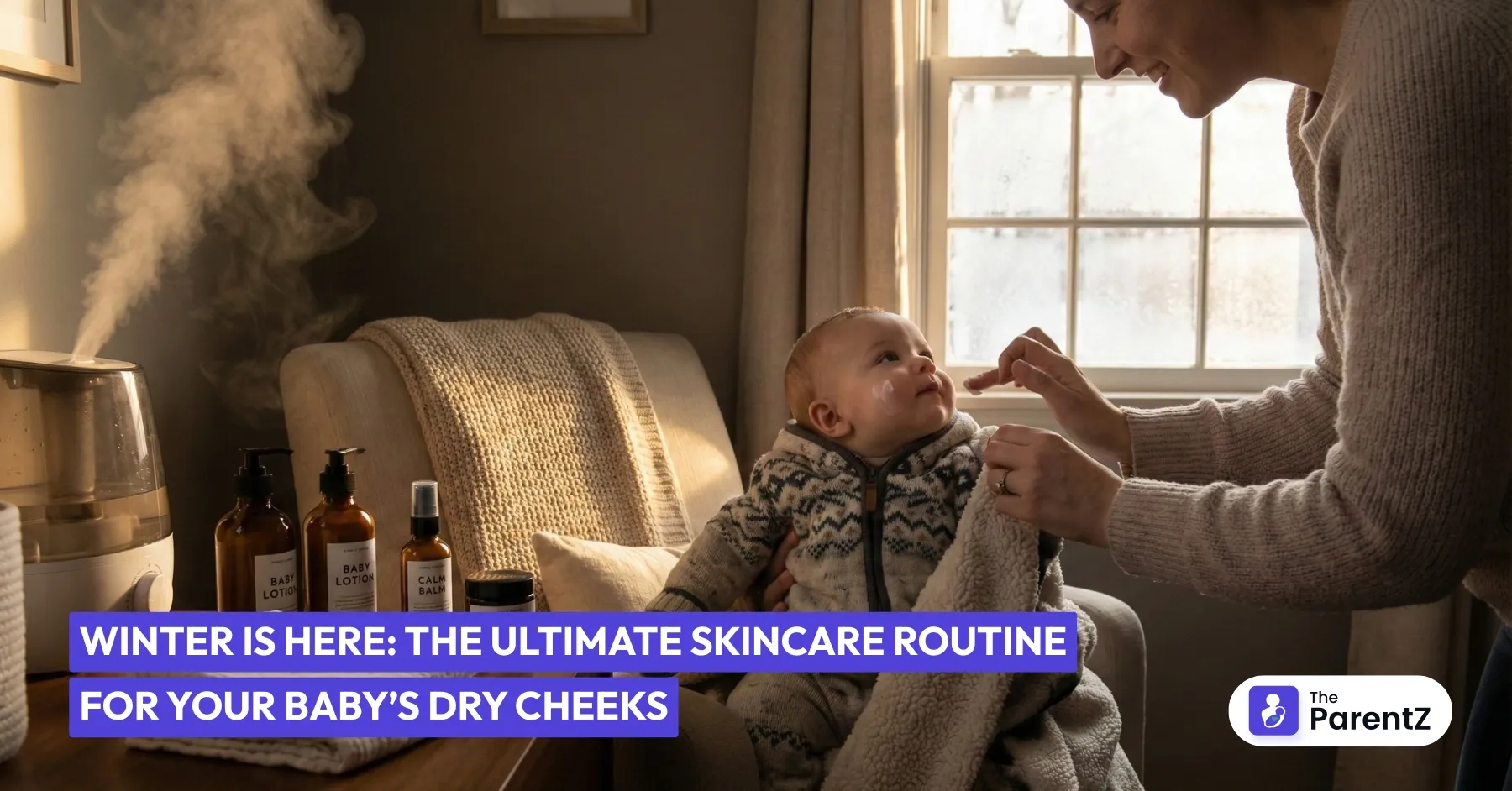
You touch your baby's cheek, and instead of that soft, buttery skin, it feels rough like sandpaper. Winter does that. And if you're reading this at 2 AM because your BABY won't stop scratching their face, take a breath. You're not alone, and this is fixable.
Let's talk about why winter turns your baby's perfect skin into a dry, flaky mess, and more importantly, what actually works to fix it.
Baby skin barriers are about 30% thinner than adult skin and take two to four years to develop fully. That protective outer layer we adults have? Babies are still building theirs. So when winter hits with cold air outside and dry heating inside, their skin loses water much faster than ours does.
Johns Hopkins pediatric dermatologist Katherine Puttgen explains that the cold, dry outdoor air and indoor heating can rob skin of its natural moisture.
And if your family has a history of allergies, asthma, or eczema, your baby's skin is even more sensitive. About 10-20% of children worldwide have eczema, which affects up to 20% of infants, and winter is when it flares most.
Forget complicated 10-step routines. Babies squirm. They cry. You're sleep-deprived.
You'd think baths would help dry skin, but they can actually make it worse if you're doing it wrong. Here's what dermatologists say really works:
Apply moisturizer to damp skin right after bathing while skin is still moist, within 3 minutes if you can manage it with a wiggly baby. This seals in the water from the bath.
What to look for in a moisturizer:
The gold standard ingredient is ceramides. Ceramides help restore and maintain a baby's skin barrier, which helps skin retain moisture. They're naturally found in skin and help seal in hydration.
Also helpful: hyaluronic acid (holds moisture), glycerin (attracts water to skin), and vitamin E (soothes irritation).
What to avoid:
Fragrances, dyes, parabens, and alcohol. These can irritate sensitive skin and make dryness worse. Even if a product smells nice, if it has added fragrance, skip it for now.
Affordable options:
For very dry patches, consider a thicker cream or ointment. Ointments contain the most oils and are very helpful for extremely dry, irritated areas. Plain petroleum jelly works perfectly and costs about ₹50 for a jar.
How Often to Moisturize:
At a minimum, moisturize after every bath. But in winter, you'll probably need to apply it twice a day, once after the morning routine and once before bed. If you notice dry patches during the day, especially on cheeks and hands, add another layer. There's no such thing as over-moisturizing baby skin.
Before you step out into cold, windy weather, apply a protective layer of petroleum jelly or a thick moisturizer on your baby's face, especially their cheeks. The wind is brutal on baby skin.
This is confusing because everyone's grandmother swears by coconut oil. Coconut oil can help some babies, but it doesn’t replace ceramides. Oils don’t fully repair the skin barrier. If you like using oil, apply it on top of a ceramide moisturizer, not instead of it.
For eczema-prone babies, check with your doctor, as coconut oil may irritate broken skin.
Sometimes those red, dry patches aren't just winter dryness—it could be eczema. If it's not itchy, it's not eczema, according to Johns Hopkins dermatologists. Regular dry skin might look flaky, but it shouldn't make your baby scratch constantly or wake them up at night.
If you notice:
See your pediatrician or a dermatologist. They might prescribe a gentle hydrocortisone cream or recommend specific eczema treatments. Don't feel bad about needing help, as eczema is super common and very manageable with the right treatment.
Winter and baby skin don't get along, but you can absolutely make it better. The routine is simple: short lukewarm baths with a gentle cleanser, immediate moisturizing on damp skin, and reapplying throughout the day. Look for fragrance-free products with ceramides, and don't overthink it.
Your baby's skin will get stronger as they grow. And, if something isn't working or you're worried, talk to your pediatrician.

TheParentZ offers expert parenting tips & advice, along with tools for for tracking baby and child growth and development. Know more about Baby Growth and Development Tracker App.It serves as an online community for parents, providing valuable information on baby names, health, nutrition, activities, product reviews, childcare, child development and more
Disclaimer:
The views, thoughts, and opinions expressed in this article/blog are solely those of the author and do not necessarily reflect the views of The ParentZ. Any omissions, errors, or inaccuracies are the responsibility of the author. The ParentZ assumes no liability or responsibility for any content presented. Always consult a qualified professional for specific advice related to parenting, health, or child development.
Conversations (Comments) are opinions of our readers and are subject to our Community Guidelines.



Be the first one to comment on this story.