
Most Moms Report Slower Recovery After a Second Birth
Jul 19, 2026By Dr. Akanksha Priya
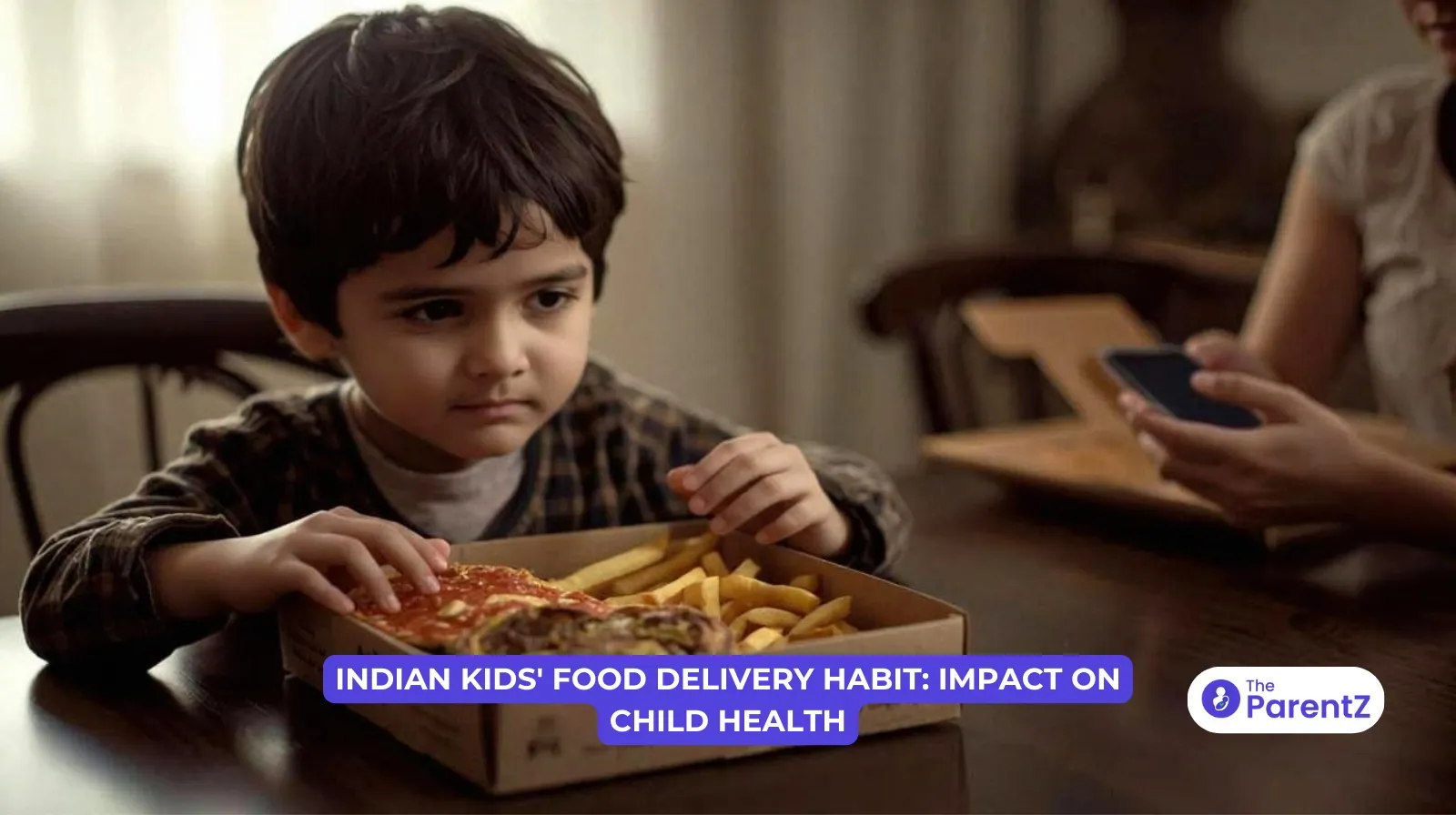
When you were growing up, getting outside food meant either a birthday treat or convincing your parents after an exam. Today? Your 12-year-old can order biryani with three taps while sitting in their room.
In 2025, Indians ordered 93 million biryanis. That's 3.25 biryanis every single second. And it's not just biryani; burgers, pizzas, rolls, and desserts. The numbers are huge, and your child is probably part of this statistic.
Before we panic, let's understand what's actually happening.
Your teenager isn't ordering food because they're rebellious or spoiled. They're doing it because it's ridiculously easy. Open Swiggy, Zomato, or any other food app. Scroll through those tempting photos. See that "50% off on orders above ₹299" offer. Add one burger. Oh, wait, just ₹50 more for free delivery. Add nuggets. Done. Food arrives in 20 minutes.
The apps are designed to make you spend. That's their business model. And kids? They're the perfect target. They have phones, pocket money, or access to saved cards, and zero understanding of nutrition labels or monthly budgets.
Between 3 PM and 7 PM, the snack time, the ordering frenzy peaks. People ordered 6.3 million chicken burgers and 4.2 million veg burgers during these hours alone. That's not counting the pizzas, rolls, and 3.42 million samosas that accompanied 2.9 million cups of adrak chai.
Think about it. Your child comes home from school, tired and hungry. Instead of asking you for food, they're scrolling through Blinkit, Zomato, or Zepto. Why? Because it feels like freedom. Like being grown-up. Like having control.
That pizza your child ordered? It's loaded with refined flour, processed cheese, and enough sodium to mess with their blood pressure. The burger? High in trans fats. The chocolate cake that topped dessert charts with 6.9 million orders? Pure sugar crash waiting to happen.
Indian kids are now eating Mexican, Tibetan, and Korean food regularly. Sounds cosmopolitan, right? Except most of these dishes arrive deep-fried, heavily sauced, and nutritionally empty.
The weight gain is obvious. What's not obvious? The insulin resistance developing quietly. The fatty liver that doesn't show symptoms until it's serious. The vitamin deficiencies because no app delivers sabzi that kids actually want to eat.
And addiction to food. That dopamine hit from ordering, waiting, and eating? It's real. Kids start craving it. They get irritable without it. They lose interest in home food because it doesn't come with the excitement of an app notification saying "Your order is arriving."
Let's talk money because this affects your household budget directly.
Remember when ₹100 was enough for a week's pocket money? Now kids can blow ₹500 on a single meal without blinking. Those discounts? They're traps. Minimum order values push kids to order more than they need. "Free delivery above ₹199" means they'll add items just to cross that line.
They're learning terrible money habits. Instant gratification. No planning. No understanding of value. When eating out becomes this easy, saving becomes a joke.
Food delivery is just one piece, but it's a big one.
Why would kids go to a restaurant with friends when the food arrives home? Why play outside when you can order snacks, play games online, and never leave your room? The social aspect of eating, which is going out, sitting together, and talking, is vanishing.
Physical activity? Dropping. Face-to-face interaction? Reducing. And we wonder why anxiety and isolation are increasing among kids.
Let's get practical. You're busy. You're tired. You can't fight technology. But you can set boundaries.
Food delivery apps aren't evil. Convenience isn't bad. But when your child's default response to hunger is opening an app instead of walking to the kitchen, something's broken.
This isn't about being a perfect parent or serving home-cooked organic meals daily. It's about awareness. About helping your kid understand that those 3.25 biryanis ordered every second aren't just statistics; they're choices affecting real bodies, real health, and real futures.
Your child is growing up in a world where instant gratification is normal. Your job is to teach them that some things are worth the wait, including good health.
TheParentZ offers expert parenting tips & advice, along with tools for for tracking baby and child growth and development. Know more about Baby Growth and Development Tracker App.It serves as an online community for parents, providing valuable information on baby names, health, nutrition, activities, product reviews, childcare, child development and more
Disclaimer:
The views, thoughts, and opinions expressed in this article/blog are solely those of the author and do not necessarily reflect the views of The ParentZ. Any omissions, errors, or inaccuracies are the responsibility of the author. The ParentZ assumes no liability or responsibility for any content presented. Always consult a qualified professional for specific advice related to parenting, health, or child development.
Conversations (Comments) are opinions of our readers and are subject to our Community Guidelines.



Be the first one to comment on this story.