
Most Moms Report Slower Recovery After a Second Birth
Jul 19, 2026By Dr. Akanksha Priya
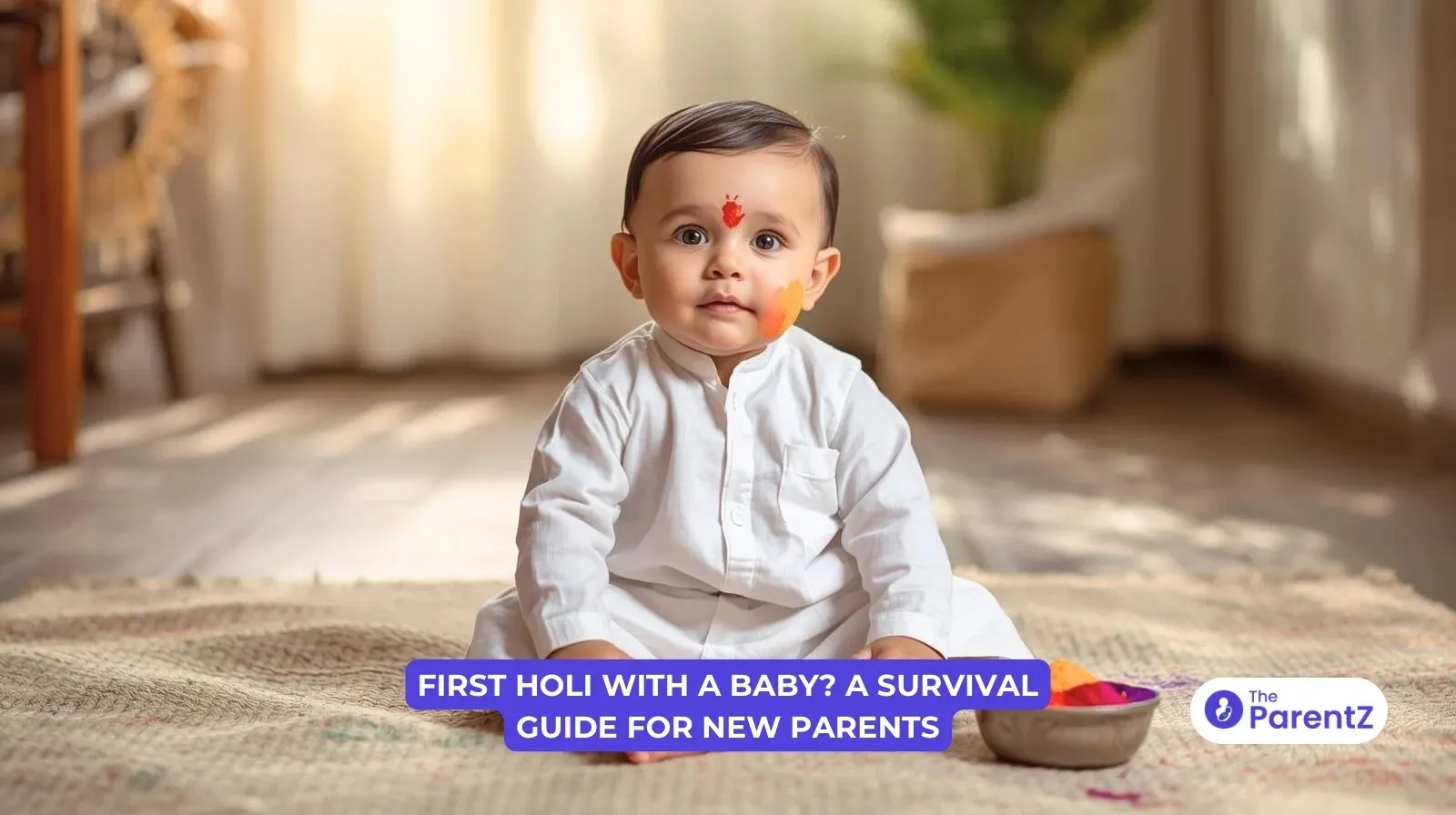
There is something really special about a baby's first Holi. The tiny outfit. The one careful smudge of gulal on the cheek for the photograph. The family gathered around, delighted. It is a moment every new parent looks forward to, and rightfully so.
But underneath that excitement, most new parents are also quietly anxious. Is it safe? How much color is okay? What if someone puts color on the baby's face? What about the noise, the crowd, the sun?
These are not overthinking. These are exactly the right questions. And we are here to answer all of them.
A baby's skin is not just smaller; it is fundamentally different from adult skin. Pediatric dermatologists explain that infant skin is thinner, has a less developed barrier function, and absorbs substances applied to it at a much higher rate than adult skin. This means that chemicals present in synthetic Holi colors, including lead, mercury compounds, industrial dyes, and chromium, can enter a baby's bloodstream through skin contact far more easily than they would in an older child or adult.
Beyond the skin, babies are nose-breathers. Fine color powder that an adult might inhale briefly and recover from can cause genuine respiratory distress in an infant whose airways are narrow and whose lungs are still developing.
Add to this the fact that babies explore everything with their mouths, and the picture becomes clear. This is not a festival to be casual about when a baby is involved.
These are not suggestions. These are clear boundaries.
The cultural tradition of putting a small tilak or smudge of color on a baby's cheek for their first Holi is beautiful and worth preserving. You just need the right color.
Use natural, single-ingredient colors you have made at home. A tiny amount of turmeric mixed with a drop of coconut oil makes a safe, skin-friendly yellow that can be gently dabbed on the cheek for the photograph. Beetroot juice on a cotton swab gives a soft pink. These are genuinely safe because you know exactly what is in them. No hidden chemicals. No industrial dyes.
Apply the minimum amount needed for the photo, take your pictures, and wipe it off gently with a damp cotton cloth within minutes. Do not leave any color on a baby's skin for extended periods.
Full-sleeved cotton clothing that covers the arms and legs is your first line of defense. Cotton is breathable, gentle, and reduces direct skin exposure significantly. Avoid synthetic fabrics, as they trap heat, which is already a concern on a warm Holi day, and they offer less of a natural barrier against particles.
A soft cotton cap covers the scalp and keeps color out of the hair. Booties or soft shoes prevent color-stained floors from reaching the feet.
Apply a thin layer of coconut oil on any exposed skin, face, hands, and feet, before the baby joins any part of the celebration. This is standard pediatric advice before any potential chemical exposure and creates a barrier that makes cleanup gentle and easy.
A baby's eyes are particularly vulnerable. Color near the eyes, even natural color, can cause irritation and conjunctivitis. Keep all colors away from the eye area completely. If any color accidentally reaches the eyes, flush immediately with clean room-temperature water for 10-15 minutes and call your pediatrician if redness or irritation persists.
Plan your baby's Holi participation around their schedule, not the other way around. A well-rested, recently fed baby handles new stimulation far better than a tired, hungry one. Bring the baby out for a short, contained window of 20 to 30 minutes maximum, ideally in a quieter part of the celebration, and return them indoors before they become overstimulated.
Watch for the signs that they've had enough, like fussiness, turning the face away, arching the back, or sudden crying after a period of calm. These are your baby's way of saying the festival is done for them today, and that signal is always worth listening to.
Bath time after any Holi exposure, even limited, should be gentle and warm. Use a mild, fragrance-free baby wash. Do not scrub. Pat dry rather than rubbing, and apply a generous layer of baby moisturizer immediately after to restore any moisture lost.
Check the entire body carefully after the bath, like between fingers, behind the ears, and in the neck folds, for any redness, rash, or irritation. Mild redness that resolves within a few hours is usually just sensitivity to new stimulation. Redness that spreads, blisters, swells, itches, or is accompanied by fever warrants a same-day call to your pediatrician.
New parents often face the hardest pressure not from the festival itself, but from well-meaning family members who want to include the baby fully in every tradition. A grandmother who wants to put gulal on the baby's face. An uncle who thinks the baby should experience the full celebration.
It helps to set expectations gently but clearly before the day begins. Explain that the baby will absolutely be part of Holi, dressed beautifully, photographed, and included in the family gathering, but that the color touching the baby will be safe and minimal. Most family members, when they understand the reason, are completely supportive. And for those who push back, your pediatrician's advice is always a gentle, unchallengeable shield.
Your baby's first Holi does not need to be a full sensory experience to be meaningful. It needs to be safe, warm, and photographed well, and that is entirely achievable. The full, chaotic, color-everywhere Holi is waiting for them in just a few years, when they will run into it with absolute joy.
For now, a safe smudge of turmeric on one cheek, a beautiful outfit, and a family gathered around them with love, is a perfect first Holi.
And it is more than enough.
TheParentZ offers expert parenting tips & advice, along with tools for for tracking baby and child growth and development. Know more about Baby Growth and Development Tracker App.It serves as an online community for parents, providing valuable information on baby names, health, nutrition, activities, product reviews, childcare, child development and more
Disclaimer:
The views, thoughts, and opinions expressed in this article/blog are solely those of the author and do not necessarily reflect the views of The ParentZ. Any omissions, errors, or inaccuracies are the responsibility of the author. The ParentZ assumes no liability or responsibility for any content presented. Always consult a qualified professional for specific advice related to parenting, health, or child development.
Conversations (Comments) are opinions of our readers and are subject to our Community Guidelines.


Be the first one to comment on this story.