
Most Moms Report Slower Recovery After a Second Birth
Jul 19, 2026By Dr. Akanksha Priya
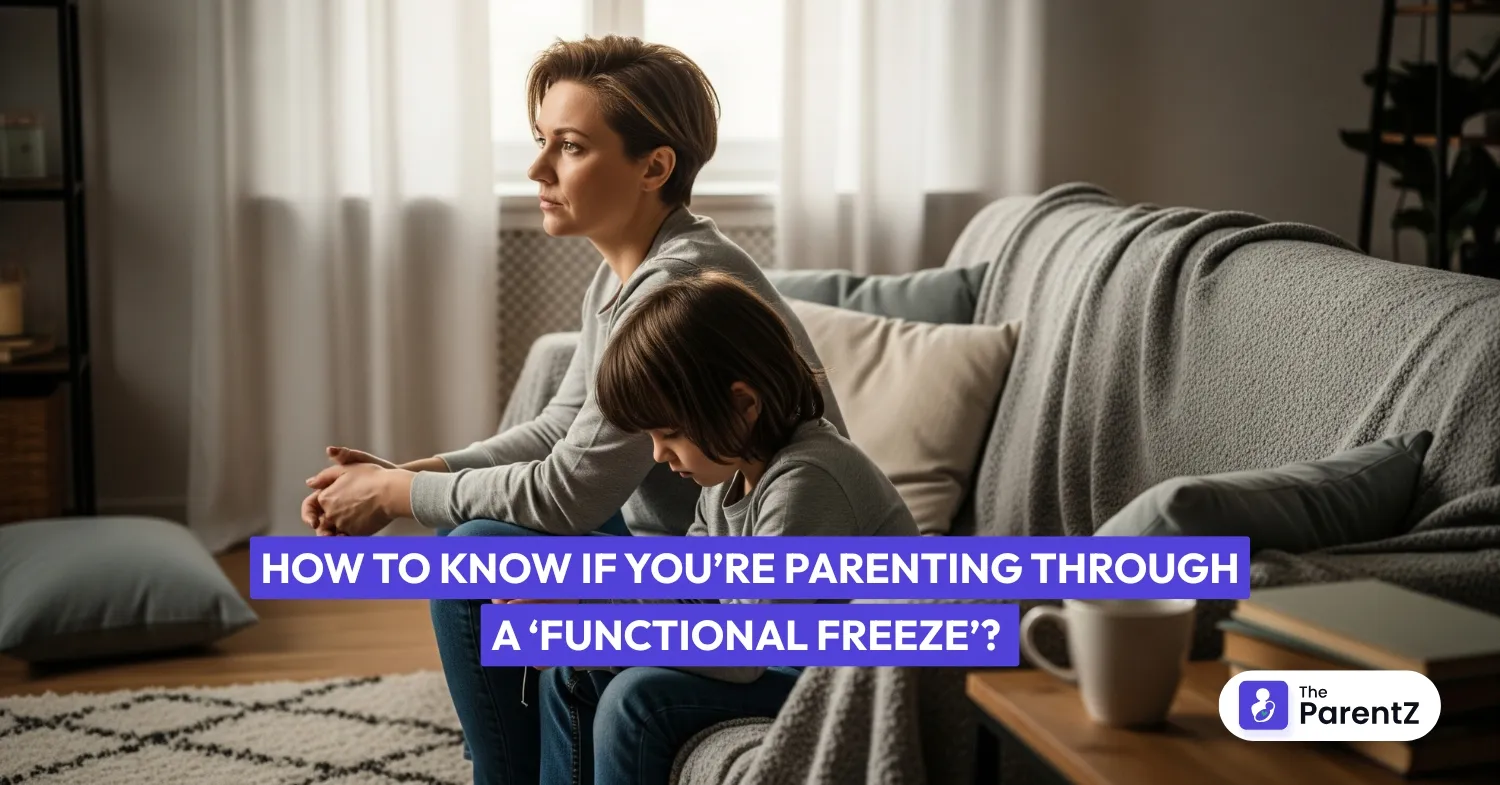
You wake up, make breakfast, pack lunches, drop the kids off, pick them up, help with homework, make dinner, and get everyone to bed. You're doing it all, checking every box on the parenting list. But somewhere deep inside, you feel 'nothing'. Or maybe everything all at once, but muffled, like you're watching your life through thick glass.
If this sounds familiar, you might be parenting through what's called a "functional freeze."
Think of functional freeze as your mind and body's way of hitting the cruise control button during overwhelming times. You're still driving the car, still parenting, still managing the household, still showing up, but you're not really there. Your nervous system has essentially said, "This is too much, so we're going into survival mode."
It's not depression, though it can feel similar. It's not laziness, as you're actually doing a lot. It's your brain's protective response to chronic stress, trauma, or just plain overwhelm. And as parents, we're dealing with all three on a regular basis.
Your body often speaks first, even when your mind hasn't caught up yet. You might notice your heart beating slower than usual, or sometimes racing for no clear reason. Your breathing feels shallow, and you catch yourself holding your breath without realizing it.
Your hands and feet feel cold, even in warm rooms. You feel heavy, like your arms and legs are weighted down. Sometimes you get headaches that won't go away, or your stomach hurts for no reason you can pinpoint. You might find yourself staring off into space or feeling dizzy and disconnected from your own body.
Some parents describe feeling "buzzy," like there's electricity running under their skin, but they can't move. Others say they feel frozen in place, even when they need to respond to their children.
Your thinking feels slow and foggy. Simple decisions like what to make for dinner or which clothes to put on your toddler feel impossibly hard. You start sentences and forget where you were going with them. Your mind goes completely blank in the middle of conversations.
You might find yourself unable to remember things that happened just yesterday, or struggling to recall details about your children's schedules or needs. Sometimes your thoughts race so fast you can't grab onto any single one long enough to act on it.
Making any kind of plan feels overwhelming. Even thinking about next week makes you want to crawl back into bed.
This might be the hardest part to recognize because functional freeze often makes you feel 'nothing'. You love your kids deeply, but you can't access those warm, fuzzy feelings right now. You're going through the motions of care without feeling the emotional connection that usually drives you.
You might feel irritated by normal kid behavior that wouldn't have bothered you before. Or you swing between feeling nothing and suddenly feeling everything like a wave of sadness, panic, or dread that seems to come from nowhere.
Some parents describe feeling like they're watching themselves parent from outside their body. You see yourself making breakfast, but you don't feel like you are making breakfast.
Parenting is inherently overwhelming. You're responsible for keeping tiny humans alive, happy, and growing into decent people. That's enormous pressure on a good day. Add in sleep deprivation, financial stress, relationship challenges, work demands, or any personal trauma you're carrying, and your nervous system can hit its limit.
Your brain doesn't distinguish between a charging lion and a toddler having their third meltdown before 9 AM. Stress is stress. And when stress becomes chronic (which it often is in parenting), your system eventually says, "We can't keep running on high alert. Time to shut down non-essential functions."
The cruel irony is that emotional connection and creative problem-solving are some of the first things to go offline. The very things that make parenting fulfilling become inaccessible right when you need them most.
First, please know this: you're not failing as a parent. Your kids are not damaged by this. Functional freeze is actually your system working exactly as it's designed to, protecting you from complete breakdown by shutting down what it perceives as non-essential functions.
The fact that you're still showing up, still feeding your children, still getting them where they need to go? That's actually remarkable. You're parenting through a survival state, and that takes incredible strength.
Your body went into freeze mode first, so start there. Take five deep breaths right now, not because it's a magic cure, but because it signals to your nervous system that you're safe enough to breathe fully.
Move your body in small ways. Stretch your arms over your head. Roll your shoulders. Take a hot shower and really feel the water. These tiny actions help your nervous system remember it can move and respond.
Cold can help too. Hold an ice cube, splash cold water on your face, or step outside in the cold air. Sometimes shock helps shake the system awake.
When you're in functional freeze, you're often either stuck replaying the past or worried about the future. Try the 5-4-3-2-1 technique: name 5 things you can see, 4 things you can touch, 3 things you can hear, 2 things you can smell, and 1 thing you can taste.
This isn't about "thinking positive." It's about helping your brain remember where and when you actually are.
Get a notebook and just dump everything out. Not pretty journaling but messy, honest writing about how you're feeling, what's overwhelming you, what you need. Sometimes seeing it on paper helps your brain process what feels too big to handle internally.
Exercise doesn't have to mean hitting the gym. Dance to one song in your kitchen. Do jumping jacks during commercial breaks. Take a walk around the block while your kids ride bikes. Movement helps process stress hormones and can wake up your system.
Functional freeze makes you want to isolate, but connection is medicine. Text a friend, "I'm struggling today." Ask for specific help: "Can you pick up my kid from school today?" or "Can you bring dinner?"
You don't have to explain everything. "I'm going through a really hard time and could use support" is enough.
This is survival mode, not thriving mode. Cereal for dinner is fine. Screen time is fine. Letting the laundry pile up is fine. Your only job right now is to keep everyone safe and fed. Everything else can wait.
If you've been in this state for weeks or months, if you're having thoughts of hurting yourself or your children, or if you can't function in basic ways, please reach out to a mental health professional.
Therapies like cognitive-behavioral therapy (CBT) or EMDR can help you work through whatever triggered your freeze response. There's no shame in getting professional support; it's actually one of the most responsible things you can do as a parent.
Functional freeze feels permanent when you're in it, but it's not. It's a temporary state your nervous system created to protect you. With patience, self-compassion, and the right support, you can help your system remember it's safe to feel, to connect, and to be fully present with your children again.
You're not a bad parent. You're a human being doing an incredibly difficult job under stressful circumstances. Be gentle with yourself as you find your way back to feeling like yourself again.
Your children need you healthy more than they need you perfect. Taking care of yourself isn't selfish; it's the foundation of everything else you want to give them.
TheParentZ offers expert parenting tips & advice, along with tools for for tracking baby and child growth and development. Know more about Baby Growth and Development Tracker App.It serves as an online community for parents, providing valuable information on baby names, health, nutrition, activities, product reviews, childcare, child development and more
Disclaimer:
The views, thoughts, and opinions expressed in this article/blog are solely those of the author and do not necessarily reflect the views of The ParentZ. Any omissions, errors, or inaccuracies are the responsibility of the author. The ParentZ assumes no liability or responsibility for any content presented. Always consult a qualified professional for specific advice related to parenting, health, or child development.
Conversations (Comments) are opinions of our readers and are subject to our Community Guidelines.



Be the first one to comment on this story.