
Most Moms Report Slower Recovery After a Second Birth
Jul 19, 2026By Dr. Akanksha Priya
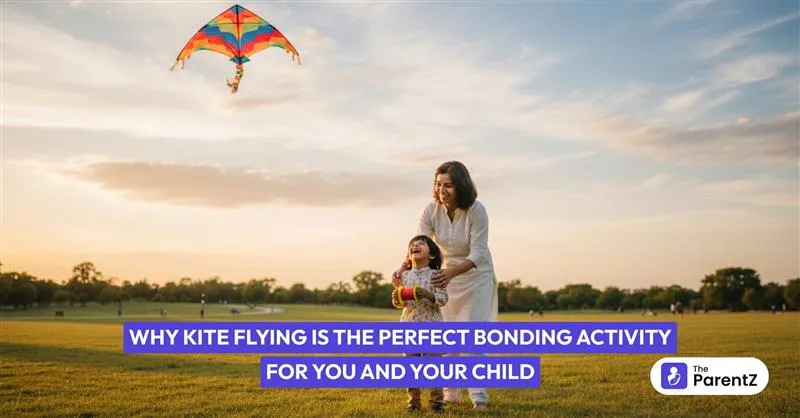
Remember standing on your terrace as a kid, neck craned upward, watching your kite dance against the blue January sky? The thrill when it caught the wind, the friendly competition with neighbors, the shouts of "kai po che!" echoing across rooftops? This Makar Sankranti, it's time to pass on that magic to your kids.
Kite flying isn't just another activity to tick off your parenting checklist. It's a thread connecting generations, a simple joy that doesn't need fancy materials or Pinterest-perfect setups. Just you, your child, some paper kites, string, and an open sky.
Makar Sankranti marks the sun's journey northward, signaling the end of winter and the arrival of longer, warmer days. In many Indian states, this harvest festival has been celebrated with kite flying for centuries. Our ancestors looked up at the sky during this time, grateful for the sun's warmth and the promise of good harvests ahead.
Flying kites during Makar Sankranti wasn't a random tradition. The winter sun's rays are actually beneficial for our skin and health, and what better way to soak them in than spending hours outdoors, faces turned skyward? Your grandparents knew what they were doing when they made this a festival ritual.
When you fly kites with your children today, you're not just keeping a tradition alive. You're giving them a piece of their heritage, a connection to their roots that no textbook can provide.
Most "fun activities with kids" require extensive preparation, specific materials, perfect weather, and somehow still end with tears and chaos. Kite flying is refreshingly simple.
You don't need expensive kites from specialty stores. A basic patang from your local market works perfectly well. Actually, it works better because when (not if) it gets stuck in a tree or tears, you won't feel that wallet pinch. Kids will be just as thrilled with a colorful paper kite as they would with an elaborate one.
There's no pressure to make it Instagram-worthy. Your terrace or local park is good enough. You don't need to travel anywhere special or create a picture-perfect setup. The sky is the same everywhere, and that's the beauty of it.
Most importantly, it's actually doable with kids. Unlike activities that require perfect focus or sitting still, kite flying is forgiving. The kite crashes? You launch it again. Your child gets distracted? The kite can wait. It happens at their pace, not yours.
You both get outdoors and moving without it feeling like forced exercise. Your child runs, jumps, and moves naturally while trying to launch the kite or keep it steady. You're getting sunlight and fresh air together, which both of you probably need.
There's real problem-solving happening. Why won't the kite fly? Is there enough wind? Is the tail too heavy? Your child learns to observe, think, and adjust. These aren't lessons from a book; they're learned through doing.
And the patience! Kites don't fly on command. Sometimes the wind isn't right. Sometimes the string tangles. Sometimes it takes ten tries before the kite catches the breeze. Your child learns to keep trying without you having to give a lecture about perseverance.
As you stand there helping your child hold the string, tell them about your kite-flying days. How you saved pocket money to buy kites. The rivalry with the kid next door. The time your favorite kite got cut and you chased it through three streets.
Your child might not understand why these memories matter to you, but they're watching your face light up. They're seeing a side of you that exists beyond "mom" or "dad." You become a person with a childhood, with stories, with a past that suddenly feels real to them.
And they're creating their own memories. Years from now, they'll remember this day. Not because you spent a fortune or created a perfect setup, but because you were there, fully present, looking up at the sky together.
Glass-coated manja is banned in many Indian states for very serious reasons. It has caused severe injuries to children, pedestrians, birds, and animals. There have even been fatal accidents involving two-wheelers when the sharp thread cuts across roads.
Always use safe cotton thread for kite flying. Never let your child fly kites unsupervised. Stay with them throughout the activity. Avoid flying near busy roads, power lines, or crowded areas. Choose open spaces like parks or terraces where there's no risk to traffic or pedestrians below.
Safety doesn't ruin the fun. It ensures the fun continues year after year without any fatal accidents.
Start small. One kite is enough for your first time. Get your child involved in picking it out from the market. Let them choose the color they like.
Pick a time when you're not rushed. Kite flying can't be squeezed into a tight schedule. Give yourself a couple of hours at least.
Lower your expectations of perfection. The goal isn't to become champion kite flyers. It's to spend time together doing something your grandparents did, creating a chain of memories across generations.
Bring water, maybe some snacks. When you take a break from flying, sit together, munch on some til-gud, and just watch other kites in the sky. Sometimes the best bonding happens in these quiet moments.
In a world of structured activities and scheduled playdates, kite flying offers unstructured, simple joy. No screens, no rules beyond basic safety, no pressure to perform.
This Makar Sankranti, give your child the gift of a memory they'll carry forever. Not because it was elaborate or expensive, but because it was real, simple, and shared with you.
After all, some of the best things in life really are as simple as paper, string, and sky.
TheParentZ offers expert parenting tips & advice, along with tools for for tracking baby and child growth and development. Know more about Baby Growth and Development Tracker App.It serves as an online community for parents, providing valuable information on baby names, health, nutrition, activities, product reviews, childcare, child development and more
Disclaimer:
The views, thoughts, and opinions expressed in this article/blog are solely those of the author and do not necessarily reflect the views of The ParentZ. Any omissions, errors, or inaccuracies are the responsibility of the author. The ParentZ assumes no liability or responsibility for any content presented. Always consult a qualified professional for specific advice related to parenting, health, or child development.
Conversations (Comments) are opinions of our readers and are subject to our Community Guidelines.


Be the first one to comment on this story.