
Most Moms Report Slower Recovery After a Second Birth
Jul 19, 2026By Dr. Akanksha Priya
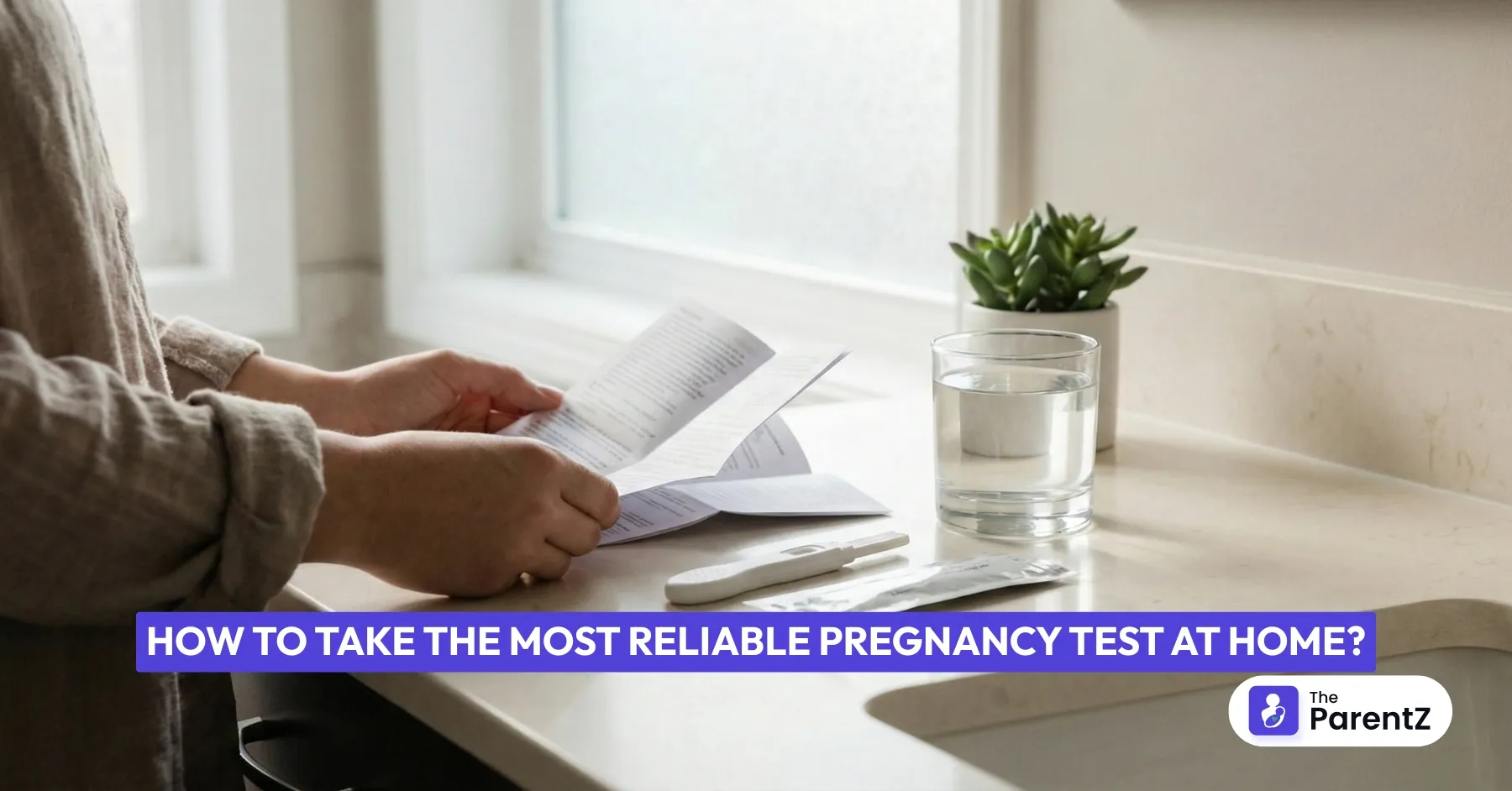
Finding out you might be pregnant brings a mix of emotions, including excitement, worry, and a need for clear answers. That’s why knowing how to take the most reliable pregnancy test at home matters. Home pregnancy tests today are simple, quick, and almost as accurate as tests done in a clinic. But the result depends a lot on when and how you take the test.
Home pregnancy tests detect hCG (human chorionic gonadotropin), the hormone your body makes during early pregnancy. According to research, hCG rises quickly after implantation — usually 6–10 days after conception.
A test becomes more reliable when:
When used correctly, most tests are about 99% accurate.
This is the biggest factor in getting a correct result.
Best time to test:
Why? Testing too early can show a negative even if you’re pregnant, because hCG may still be low.
Morning testing helps: First-morning urine has the highest hCG concentration, especially in early pregnancy. Most doctors, including ACOG experts, recommend morning testing for the best accuracy.
If you can't test in the morning, just make sure you haven’t peed for at least 3 hours before testing.
Different brands work slightly differently, but the basic steps are the same. Always read the instructions first because each test shows results in its own way.
1. Faint line: Even a faint positive line is still a positive. A faint line can happen when hCG is still low.
2. Evaporation line: If you check the test after the recommended time (usually after 10 minutes), the dried urine can create a shadow line. This is not a pregnancy.
3. False negatives: Most false negatives happen due to:
If your test is negative but your period still doesn’t come, test again in 2–3 days.
4. False positives: These are rare. They can happen if:
If anything feels unclear, always follow up with your doctor.
Most home pregnancy tests claim 99% accuracy when used correctly. But accuracy depends on:
Real-world accuracy is slightly lower because people often test early or incorrectly.
If the result is positive, here’s what doctors recommend:
Even if you get a very early positive, keep taking care of yourself until you see your doctor.
Seek urgent care if you notice:
These can be signs of an ectopic pregnancy, which still shows positive on a urine test.
Taking a pregnancy test at home can feel nerve-wracking, but once you understand the right timing and method, it becomes much simpler. Trust your instincts, follow the steps slowly, and don’t panic if you need to test again. These tests are designed to help you get clarity, and when used correctly, they are very reliable.
If your result feels confusing, like faint lines, mixed results, or a missed period with negatives, your doctor is the best person to guide you.

TheParentZ offers expert parenting tips & advice, along with tools for for tracking baby and child growth and development. Know more about Baby Growth and Development Tracker App.It serves as an online community for parents, providing valuable information on baby names, health, nutrition, activities, product reviews, childcare, child development and more
Disclaimer:
The views, thoughts, and opinions expressed in this article/blog are solely those of the author and do not necessarily reflect the views of The ParentZ. Any omissions, errors, or inaccuracies are the responsibility of the author. The ParentZ assumes no liability or responsibility for any content presented. Always consult a qualified professional for specific advice related to parenting, health, or child development.
Conversations (Comments) are opinions of our readers and are subject to our Community Guidelines.



Be the first one to comment on this story.