
Most Moms Report Slower Recovery After a Second Birth
Jul 19, 2026By Dr. Akanksha Priya
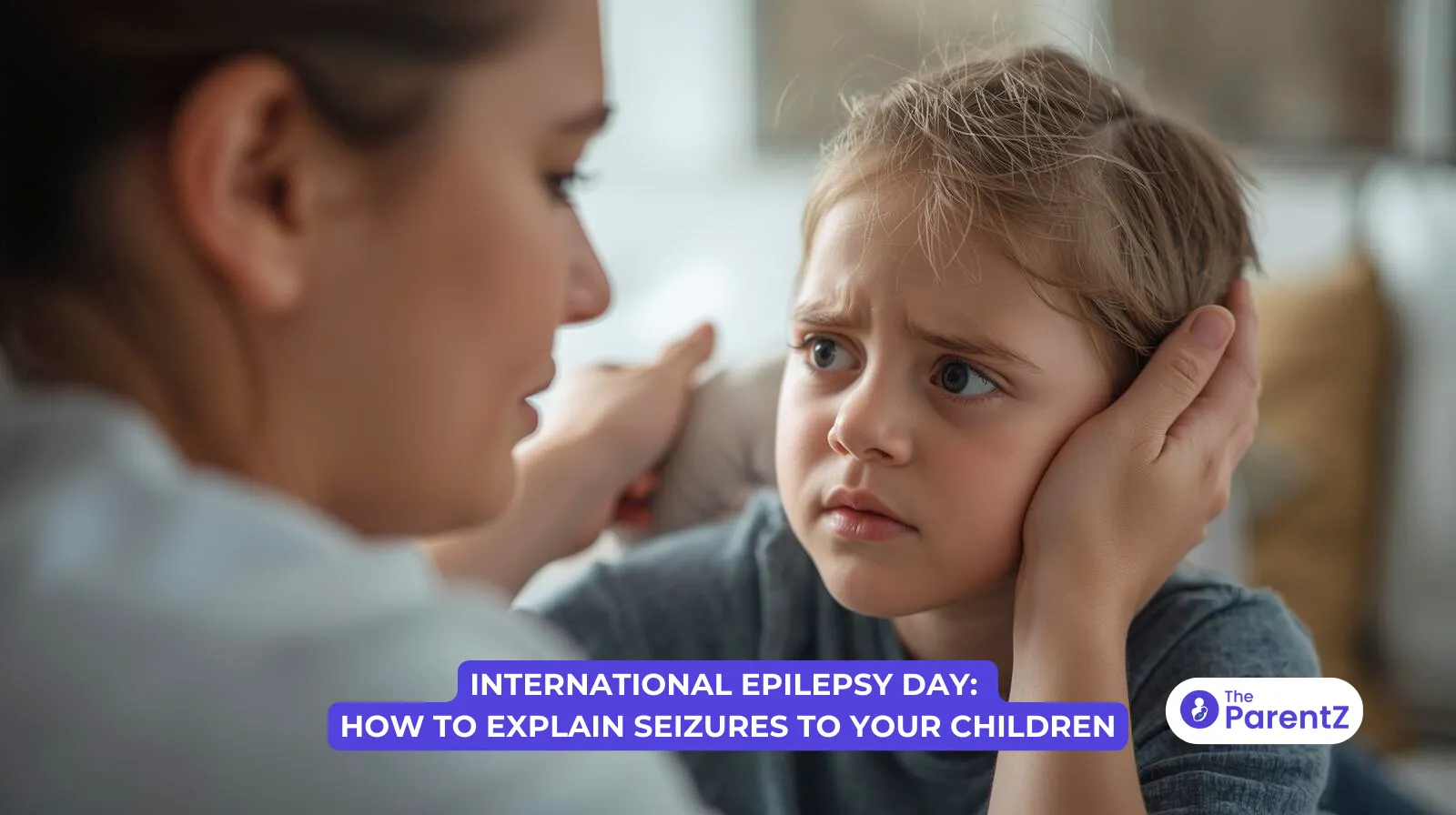
Today, February 9, 2026, marks International Epilepsy Day, a day when the world comes together to understand epilepsy better and support the 50 million people living with it globally. It’s observed every year on the second Monday of February. This year's theme is #EpilepsyPledge, moving beyond just awareness to taking real action.
So, today we are going to discuss how to talk to our kids about seizures. Whether your child has epilepsy, has a classmate or family member who experiences seizures, or you simply want them to be more understanding and less scared, having this conversation matters.
International Epilepsy Day, organized by the International Bureau for Epilepsy (IBE) and the International League Against Epilepsy (ILAE), isn't just another awareness day. It's a reminder that in India alone, over 10 million people live with epilepsy; that's more than 1% of our population. And our kids notice when someone has a seizure, and if they don't understand what's happening, they can get scared or even say hurtful things without meaning to.
The 2026 #EpilepsyPledge theme encourages everyone, including families, to take one concrete step this year toward better understanding and inclusion. Talking to your children about seizures? That's a pledge worth making.
Before you talk to your kids, let's get clear on what seizures are. Think of the brain as sending electrical signals all the time, like messages that tell our body what to do. Sometimes, these signals get mixed up or fire too quickly all at once, and that's a seizure.
There are two main types:
Here's what works in real life:
If your child has epilepsy, let them be part of the conversation. Ask what they want friends to know. Help them practice what to say: "I have epilepsy, which means I sometimes have seizures. If it happens, I'll be okay."
This is where kids need concrete steps, not theories:
Practice this with your child. Role-play it if you need to, as kids remember what they've practiced way better than what they've just heard.
It is very important to teach kids that differences don't make someone less worthy of friendship and respect.
Talk about how epilepsy doesn't change who a person is. They're still the same kid who loves soccer, draw amazing pictures, or tell terrible jokes. The seizures are just one part of their life, like someone else might have asthma or wear glasses.
Teach your child to stand up against teasing. If they hear someone making fun of a classmate with epilepsy, give them the words: "That's not cool. Seizures are a medical thing. It's not something to joke about."
About one-third of people with epilepsy don't respond fully to medication. There's still stigma, especially in our country, where cultural misunderstandings about epilepsy persist. According to the information from IBE and ILAE, people with epilepsy still face discrimination in employment, marriage, and daily life in many places.
That's exactly why raising our kids to understand and accept makes such a difference. They're the generation who can change this.
This International Epilepsy Day, make your pledge simple: have this conversation with your child. Make it comfortable, not scary. Answer their questions honestly. And remind them that showing kindness when someone is different or going through something hard is what being a good human looks like.
Whether your child has epilepsy, knows someone who does, or might meet someone someday who experiences seizures, this conversation equips them. It removes fear, builds empathy, and creates a generation that sees people, not conditions.

TheParentZ offers expert parenting tips & advice, along with tools for for tracking baby and child growth and development. Know more about Baby Growth and Development Tracker App.It serves as an online community for parents, providing valuable information on baby names, health, nutrition, activities, product reviews, childcare, child development and more
Disclaimer:
The views, thoughts, and opinions expressed in this article/blog are solely those of the author and do not necessarily reflect the views of The ParentZ. Any omissions, errors, or inaccuracies are the responsibility of the author. The ParentZ assumes no liability or responsibility for any content presented. Always consult a qualified professional for specific advice related to parenting, health, or child development.
Conversations (Comments) are opinions of our readers and are subject to our Community Guidelines.

Be the first one to comment on this story.