
Most Moms Report Slower Recovery After a Second Birth
Jul 19, 2026By Dr. Akanksha Priya
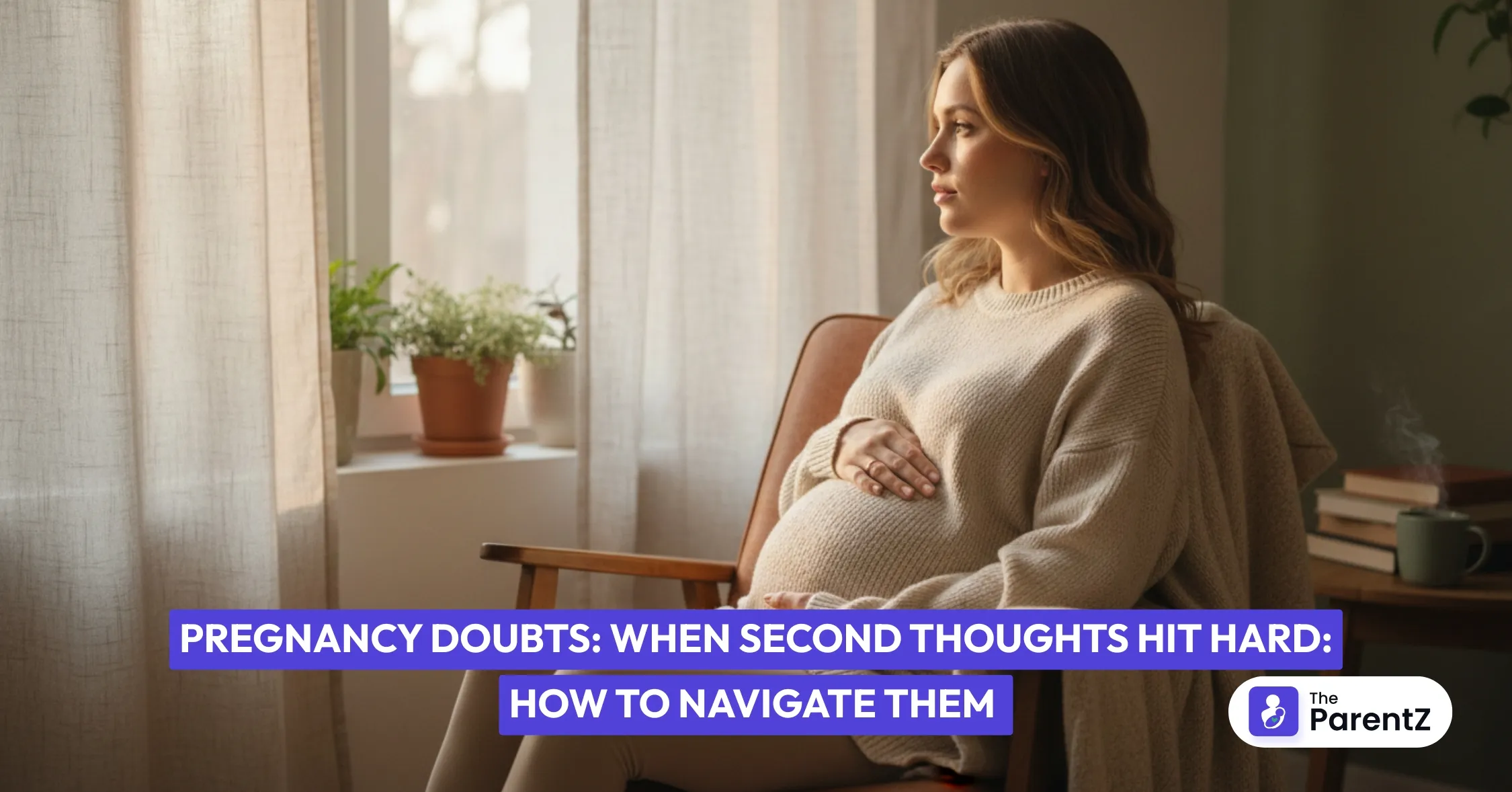
You're standing in the kitchen, chai in hand, staring at the positive pregnancy test. Everyone around you is excited. Your mother-in-law is already planning names, your husband is beaming, and your friends are congratulating you. But inside? You feel... nothing. Or worse, you feel panic. Fear. Regret.
And then comes the guilt. What kind of mother thinks like this?
The truth is that you're not alone. Not even close.
Research shows that a significant portion of pregnant women experience feelings of ambivalence, that confusing mix of both positive and negative emotions about their pregnancy. If you're in a room with ten pregnant women, five or six of them are probably feeling the same way you do. They're just not talking about it either.
Maybe you planned this pregnancy. You and your husband discussed it, you stopped using protection, and here you are. But now that it's real, your mind is racing with questions you never expected to have.
What have I done?
My life is over. I'm not ready for this.
I don't feel connected to this baby.
Does this mean I won't love my child?
Or maybe this is your second pregnancy, and the thought of another sleepless night, another round of feeding, changing, and managing feels impossible. You remember how hard it was with your first child, and you're already exhausted just thinking about it.
Or perhaps you're four months postpartum, holding your baby, and everyone keeps asking, "Isn't this the best feeling in the world?" But you're not sure. You love your baby, of course, you do, but you also miss your old life. You miss sleeping. You miss having time to yourself. You miss feeling like you.
These thoughts don't make you a monster. They make you human.
In our society, motherhood isn't just a role; it's almost sacred. We grow up hearing that a woman is complete only when she becomes a mother, that motherhood is the ultimate sacrifice, and that good mothers never complain.
Your mother-in-law probably tells you, "We never had these problems in our time. We just did what needed to be done."
Your own mother might brush off your concerns with, "This is normal, beta. Every woman goes through this. You'll be fine."
Your friends might share their Instagram-perfect photos of their babies, and you wonder why you're not feeling that same joy.
But what nobody talks about is that having a baby fundamentally changes everything. Your body, your sleep, your relationship with your partner, your career, your freedom, your identity. That's not a small thing. And feeling conflicted about such massive change is completely normal.
According to mental health research, about 10-20% of new mothers experience postpartum depression. And that's just counting the women who are diagnosed. Imagine how many more suffer in silence because seeking help feels like admitting failure.
You have doubts, but you push them down. You tell yourself:
"Once the baby is born, I'll feel differently."
"My maternal instinct will kick in."
"Everyone else manages, so will I."
"These feelings will pass."
And sometimes, they do. For some women, seeing their baby for the first time does trigger intense love and connection. But for others, it takes days, weeks, or even months. Some mothers don't feel that overwhelming rush of love right away, and that's okay too.
The problem is that we're told to expect an instant bond. We see movies where the mother holds her baby, and everything makes sense. But real life isn't like that for everyone. Research on maternal ambivalence shows that feelings about pregnancy and motherhood can fluctuate constantly. You might feel happy one hour and overwhelmed the next. This back-and-forth is normal.
The harsh truth is that sometimes, pushing down your feelings and hoping they'll disappear can make things worse. Here's why:
Having doubts about pregnancy or motherhood does NOT mean you don't love your child.
Love isn't a single emotion. It's layered, complicated, and it grows over time. You can love your child AND also feel overwhelmed. You can be grateful for your baby AND also grieve your old life. You can cherish these moments AND also desperately want a break. Two things can be true at the same time.
Think about it this way: If your best friend came to you and said, "I'm starting a new job that will last for the rest of my life. I'll never get a day off. I won't get much sleep for the first year. My body will change permanently. My relationships might suffer. And I'm scared," would you call her ungrateful? Would you tell her she's a bad person for having doubts?
You'd probably hug her and say, "That sounds really hard. What support do you need?"
So, why don't we give ourselves that same compassion?
If you're pregnant and having second thoughts, here's what you need to know:
These are some gentle suggestions:
The hardest part of experiencing pregnancy doubts is the shame. The feeling that there's something fundamentally wrong with you for not being over the moon with joy every single moment.
You're not the villain. You're the protagonist going through an incredibly challenging chapter. And protagonists are allowed to struggle. They're allowed to have moments of doubt. They're allowed to be scared, overwhelmed, and imperfect.
Your story doesn't end here. However, whatever you're feeling right now, whether it's fear, ambivalence, exhaustion, or love mixed with panic, is just one chapter. And you get to decide how this story unfolds.
You're going to be okay. Your baby is going to be okay. And having these doubts right now? It doesn't define you as a mother. What defines you is how you move forward, with honesty, with self-compassion, and with the courage to ask for help when you need it.
Take a deep breath. You've got this. And if today you don't feel like you've got this? That's okay too. Tomorrow is another day.
If you're experiencing persistent feelings of sadness, hopelessness, or thoughts of harming yourself or your baby, please reach out to a mental health professional immediately.
TheParentZ offers expert parenting tips & advice, along with tools for for tracking baby and child growth and development. Know more about Baby Growth and Development Tracker App.It serves as an online community for parents, providing valuable information on baby names, health, nutrition, activities, product reviews, childcare, child development and more
Disclaimer:
The views, thoughts, and opinions expressed in this article/blog are solely those of the author and do not necessarily reflect the views of The ParentZ. Any omissions, errors, or inaccuracies are the responsibility of the author. The ParentZ assumes no liability or responsibility for any content presented. Always consult a qualified professional for specific advice related to parenting, health, or child development.
Conversations (Comments) are opinions of our readers and are subject to our Community Guidelines.



Be the first one to comment on this story.